Indoor training: road cycling within your own 4 walls
The foundations for road bike fitness are not only laid on the tarmac: In the cycling scene between ambitious amateur athletes and professionals, indoorTraining are just as much a part of the training plan as long journeys on the road. After all, snowfall, icy roads or summer thunderstorms are no excuse not to work on your endurance or strength. Read all about road bike training at home in this TOUR overview - with training plans, tips, test reports and the latest news on roller trainers and the best training software programmes.




Road bike training at home: what are the benefits?
One major advantage of indoor training is obvious: weather conditions and seasons don't matter. Especially in winter, cyclists set up different training programmes. Driver type They can customise their training plan to suit their own four walls or fitness studios. The options are varied and range from spinning classes in a group to sessions on the Roller trainer to workouts that challenge specific muscle groups. This flexibility also allows you to utilise small time gaps of 30 to 40 minutes for a short training session.
Anyone who immediately puts their bike in the garage in bad weather or low temperatures will also feel the consequences in spring. This is because the bent position on a road bike is a matter of practice that is characterised by regularity. Otherwise, as a beginner or amateur rider, you will quickly find yourself in the situation of having to start all over again at the beginning of the new season - because your back, legs and wrists first have to get used to the demands again.
With the help of indoor training, the cold months also represent an important cut to reflect on the summer road bike routine:
- What went well this season, in which areas would I like to improve?
- Do I want to focus on strength or fitness?
- What goals do I want to achieve next year?
Such questions can be used to draw up a new training plan that can be implemented with full focus - regardless of daylight, the traffic situation and without time-consuming route planning. Well thought-out indoor training therefore forms the basis for performance on the bike.

How does a roller trainer work?
The way a roller trainer works depends on the type. For example, some trainers require the bike to be mounted without the rear wheel, while others only have the rear wheel resting on a roller. Some trainers also have a special feature: they can be connected to software and apps such as Zwift. Popular brands such as Tacx, Wahoo and Elite mainly offer these four different types of roller trainers:
- Trainer with pressure roller/wheel-on-trainerOne of the most popular roller trainers. The bike is mounted in a holder that presses the rear tyre onto the roller and thus creates resistance. Indoor cyclists can use a separate roller trainer tyre for this purpose, which is exchanged with the rear tyre. A small support stabilises the front wheel.
- Trainer with direct drive: the roller trainer with the highest performance. Here, the bracket replaces the entire rear wheel so that the cassette is mounted directly. The drive of smart trainers can simulate different surface conditions and thus create more variety with more strenuous intervals - but the price is higher than for wheel-on-trainers.
- free role: Roller training without mounts and resistance. The racing bike is simply placed on the rollers, the wheels are not attached - the rider is responsible for balance and propulsion. This type of roller trainer is therefore particularly good for developing core muscles and coordination.
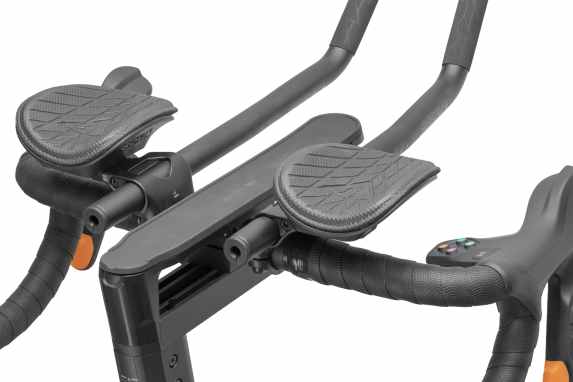
- Indoor Bike: the top device with the best performance. A racing bike is superfluous here, as a smart bike combines a bike and roller trainer in one. This promises a wide range of settings, simulation options and a variety of smart options (e.g. using the indoor bike with software such as Zwift).
How do I train properly with my roller trainer?
The weeks of winter training need to be well structured. After all, even with indoor units, it is necessary to create a healthy balance between exertion and relaxation for the body. Cyclists with a clear objective therefore have an advantage. Indoor training also offers the opportunity to try out new forms of training with more intensive intervals or to determine your FTP value (Functional Threshold Power) - in other words, to test your own limits. If you overestimate your own performance, you won't find yourself on the open road and can get straight off your bike.
Not to forget the lack of airstream during roller training, which continuously cools the body during long rides. So if you try to spend the same number of hours on the roller, you will sweat faster and more, and in extreme cases even overheat. An open window can already help here, otherwise indoor athletes need to make sure they drink enough or check their own heart rate with a heart rate monitor. A fan can also help with cooling.

Smart training with Zwift, Trainerroad and co.: road cycling in virtual space
Smart apps and programmes such as Zwift, TrainerRoad or Wahoo SYSTM are ideal for enjoying indoor cycling in winter and in bad weather. These help riders to organise their training on the bike more effectively by monitoring their performance. Cyclists can choose from various routes, training plans and workouts, which differ in terms of difficulty, length and altitude metres.
The training software can be easily connected to the roller trainer via Bluetooth. This allows the athlete to view all data relating to the ride on their smartphone, tablet or desktop. The special features here are the training films or animations that enable realistic riding. With apps such as RGT Cycling or Bkool, cyclists can ride the stages of the Grand Tours themselves and compete virtually with the pros.
The programme also analyses the pedal stroke during every race and every training session and can therefore help the rider to improve not only their fitness and FTP, but also their pedalling technique. And fun is also guaranteed: cyclists can compete against each other in races and competitions in different modes and compete live against each other.
With social rides, for example, Zwift users also have the option of riding races with just their own friends. FTP analysis, training sessions and riding fun - smart roller training combines many advantages that make workouts possible even in winter. However, the devices and apps also come at a price or require a subscription.
What is the difference between spinning and indoor cycling?
The differences between indoor cycling and spinning are only very marginal, which is why the terms are often used interchangeably. Although both sports take place indoors, spinning is often a form of group training. Under guidance, participants train on a spinning bike to rhythmic music.
The instructor also specifies the riding style and the resistance range, which each rider can adjust individually to suit their fitness level. Athletes should keep moving at all times, which is why the bike has neither brakes nor an idle speed. An effective endurance workout that also trains the thigh, core, calf and gluteal muscles.
Indoor cycling, on the other hand, refers to any training session on a spinning bike or roller trainer that takes place indoors. The sport therefore includes spinning as well as indoor training with Wahoo SYSTM and platforms such as Tacx, Zwift etc., but also simple cycling on a roller trainer.
What strength training can I do at home to improve my road bike performance?
If you want to set real top times on your bike and impress in road bike marathons and races, you should do strength training as well as cycling. Because cyclists only become really fast when they have enough power. The pros can easily pedal over 1500 watts in sprint finishes.
Maximum speeds are only possible if the muscles that the rider needs for cycling are used. This primarily includes the legs and gluteal muscles, but the upper body should also be trained regularly. The following exercises are suitable as strength training for cyclists:
- Squats
Squats are the classic exercise and primarily work the muscle groups of the lower body. The movement sequence, hip flexion and leg extension are similar to pedalling on a bike, which is why squats are ideal for maximum strength training.
TipDeadlifts train almost the same muscles as squats. However, the focus is also on the lower back - the Achilles heel of the cyclist. If this part of the body is sufficiently trained, tension and back pain are less likely to occur.
- Bench press and rowing
Bench presses are a great way to train the upper body muscles. Riders rely on the strength in their chest, back, shoulders and arms, especially when cornering, riding down bumps and descents, which is why these areas should never be neglected during training.
Cyclists can also use dumbbells to build up their upper muscles, for example by rowing with them while standing. In this way, they not only improve their posture, but also build up strength in the areas of the body that will provide them with the necessary speed in the sprint to the finish.
- Forearm support
The forearm support trains the entire abdominal musculature as well as the gluteus and back. It is therefore the ideal complement to the leg exercises and improves strength endurance and stability on the bike.
In general, cyclists should do strength training once or twice a week. This depends on how ambitious your cycling training goals are. The use of additional weights, for example for core exercises, is particularly recommended for experienced athletes.
Whether in the gym or at home - you should do your strength training where it suits you best. However, always have the movements checked by a professional. Incorrect posture or incorrectly performed exercises harbour a high risk of injury.
Conclusion: Indoor training - achieve your best performance with workouts and strength training
Indoor training with roller trainers is a great way to stay fit in winter and not get out of shape. Your own racing bike can easily be clamped into these and cyclists can do their laps at home in bad weather. Smart trainers also enable exciting interval units and workouts, varied routes and joint races.
If you want to cycle professionally, you should not only monitor and analyse your performance during roller training with Zwift and the like, but also do strength training. With the right exercises, cyclists not only improve their posture and fitness, but also their maximum strength, which can help them achieve real top times and explosive starts on the climbs.