


Cycling events: Which events are suitable for which fitness level?
Many passionate Racing bike-Hobby riders know the situation: the equipment fits, the gear is 100 per cent what you want. And the question "Where do I actually stand?" arises again and again. It's easy to find out at various cycling events.


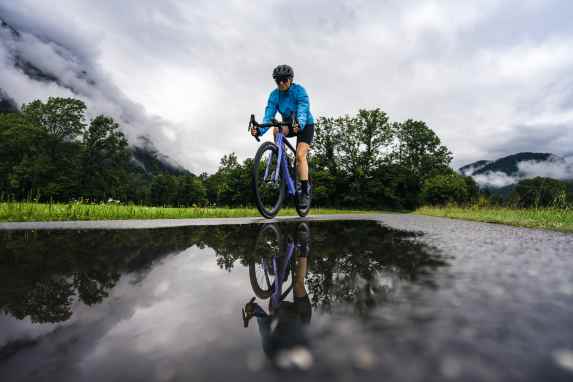

Cycling events of this kind are particularly popular and attract a large national and now also international audience. The various participants compete against each other and also take the opportunity to chat to each other after the race. In short, the likelihood of benefiting from the sporting spirit and expertise of other cyclists is high.
However, it is important to choose the right event so that you can benefit as much as possible from taking part in cycling events. After all, not every type of race is suitable for every fitness level. It is therefore important not to overtax or bore yourself with the individual routes. The following sections can help you to see things a little more clearly.
Who are everyman races and hobby races suitable for?
In a way, the name says it all when it comes to these two terms. Everyman races and hobby races are ideal for learning a little more about bike racing and getting a taste of it for the first time. The motto behind most of these events: Anyone who has a racing bike and the desire can and may take part. The routes are generally straightforward and relatively flat with no major inclines.
Many organisers also know that many cyclists take part in these events in order to prove their skills on more ambitious routes at some point in the future. It is therefore often the case that different routes are offered within an amateur race. This allows amateur riders to choose between different options and challenge themselves again and again.
Additional tip: If you have been taking part in everyman races and hobby races for a long time and realise that "more could actually be possible", you may be well advised to opt for cycling events that demand a little more from their participants.
Is it possible to take part in a time trial event alone?
In fact, it is a particularly personalised form of cycling. Many cyclists use their hobby to switch off from the stresses of everyday life. A busy schedule often means that it is not always possible to take part in the races that were actually planned. An exciting and quite challenging alternative: the time trial. As the name suggests, this is not about competing directly against other cyclists.
In time trials, the focus is on the battle against the clock. Accordingly, this type of event allows you to start as flexibly as possible within a certain time window in order to find out how well (or how much you can improve) your own fitness compares to the rest of the participants. The time is measured independently here. It is therefore all the more important to be able to rely on precise and high-quality equipment.
A basic distinction is made between individual and group time trials. Those who are active in team sports should have found a great alternative to other types of competition here.
How long does a cycling marathon take?
The cycling marathon has nothing in common with the route of a classic marathon. Instead, the long-distance rides can last one or more days, but are not usually divided into individual stages. The best-known events of this type include the Velothon in Berlin and the Ötztal Cycle Marathon.
These are events in which - depending on the distance - not only the absolute pros compete against each other. In other words, a cycling marathon can, but does not have to, last several days.
If you have a good level of fitness and a lot of cycling experience, it may be worth putting out feelers. Perhaps a cycling marathon for beginners is organised in your area?
Unfortunately, many amateur cyclists still make the mistake of only thinking of distances of several thousand kilometres when they hear the term "marathon" and rule out events of this kind for themselves. However, anyone who takes a closer look at the subject quickly realises that there are also shorter routes on offer that are ideal for putting your fitness to the test.
What is special about a stage race?
While in most cases a "0-stop strategy" is used for cycling marathons, things are very different for stage races. This is because, as the name suggests, the overall route is divided into individual stages. The rider who manages to reach the end of the stage the fastest has won the race.
After that, a break is the order of the day. Depending on the organisation, the participants then spend the night in a hotel in order to start the next stage the next day. Many cyclists have now realised how versatile the opportunities are to get to know not only other regions but also other countries as part of a stage race. Particularly popular are "excursions" of this kind to Austria and Switzerland. But Germany also has a lot to offer in terms of stage races.
Of course, you can also organise these events yourself on a smaller scale. However, if you trust the expertise of professional organisers, you can focus on the preparations without having to worry about hotel bookings and the like.
Why are tours also suitable for cycling beginners?
The classic tours are certainly what many would describe as the complete opposite of the cycle marathon or stage race. It's not necessarily about getting from A to B quickly. On the contrary! If you want to get to know the landscapes and the like better and declare war on the hectic pace and the like, you can of course also opt for a round trip.
The start and finish points are identical here. The field of participants is usually a colourful mix, so that there are also overlaps with popular rides. The motto here is the same: Everyone can take part.
The routes of many tours lead around lakes. However, there are also many forests - especially in Germany, Austria and Switzerland - that are just waiting to be discovered as part of a tour.
By the way: In connection with round trips, it should of course not be forgotten that events with the same start and finish point are of course also offered for advanced cyclists. In this case, however, the routes do not lead around smaller lakes, but rather through entire landscapes and are correspondingly challenging.
What should Speednight participants bear in mind?
A Speednight is the kind of cycling event that is aimed at people who are looking for something special. As the name suggests, the aim is to ride as fast as possible in the dark.
It is therefore all the more important to be able to rely on comprehensive and safe equipment. Many organisers of these cycling events check the bikes for lights and reflectors before the start to ensure that the safety of all participants can be guaranteed. Depending on the event, cyclists either start alone or as a team.
Ultimately, as the name "Speed Night" already indicates, it is about literally driving fast at night, so it makes sense to practise not only driving fast, but also driving fast in the correspondingly changed lighting conditions in advance. In this way, many amateur drivers often find it a little easier to feel more confident on a speed night. In this context, make sure you have the right equipment in the form of lights, reflectors etc. as part of your preparations.
Can non-professionals also take part in a 24-hour race for cyclists?
This type of event is a real cycling classic. It is not only, but at least partly, run in the dark. Teams of passionate cyclists, both amateur and professional, often take part in a 24-hour cycle race.
Interestingly, many people still believe that this is one of the cycling classics reserved exclusively for the most experienced cyclists. Perhaps this is because many events that extend over 24 hours also enjoy increased media attention.
However, a closer look at the details (and the fields of participants) shows that the assumption that the very long races are reserved exclusively for professional cyclists is a fallacy.
Nowadays, more and more people who otherwise race as a hobby are daring to join the individual teams. There are even companies that organise such events as a kind of team-building measure. So it's definitely worth taking a look at the bigger picture here too. How long each individual rider ultimately rides and which part of the route they take on accordingly can still be organised individually.
TOUR Transalp: The stage race from TOUR
The TOUR Transalp is organised by TOUR itself at regular intervals. This is a racing bike stage ride in which both individual riders and teams of two can take part. As the name suggests, the route actually leads over the Alps. It is a stage race consisting of a total of seven sections. The start is in southern Germany or Austria. The route then takes participants across the Alps to Lake Garda.
Many people find it particularly exciting that both professionals and amateurs meet on the route. Everyone tries to achieve their own goals here and for many it is an absolute success to have completed a crossing of the Alps at all. The supporting programme offered to participants should also not be underestimated in this context. The famous "pasta parties" in particular are described by many participants as "legendary".
And even if you have already completed a TOUR Transalp once, it is definitely worth taking part again next year. Because the routes always vary. This way you can get to know the world of the Alps a little better.
What personal goals can be pursued by taking part in a cycling event?
Whether it's a hobby race, stage race or time trial: Every cyclist approaches an event of this kind with their own individual goals.
Often it is simply a matter of finding out how your own fitness compares to that of other passionate cyclists. However, experience also shows that the longer a cyclist's career lasts, the more interesting it becomes to take a closer look at the details and deal with questions such as:
- Which place do I finish in a mountain finish?
- Does my fitness now go beyond cycling for fun?
- What advantages do international cycling events offer in a particularly varied landscape?
For many cycling fans, this is about much more than just speed. The individual routes are ideal for being seen as special challenges. It is therefore not just about competing with the other participants, but also with yourself.
Which cycling events are right for me?
If you are interested in events related to cycling races, time trials and the like, you will quickly ask yourself which event might be the best for your own requirements. Apart from the fact that it can be advisable to try out different events (assuming an appropriate fitness level), there are a few questions whose answers can help to narrow down the individual selection a little.
This includes the following considerations, among others:
- Would I prefer to ride alone or in a group or team of two?
- Is it important to me to "just" take part or do I want to achieve a certain performance (e.g. a certain time)?
- Does my equipment meet the requirements set by the organiser?
- Do I have enough strength and fitness to cope with the event?
- Is there enough time before the event to prepare myself optimally?
- Is it important to me that the cycling event I have chosen takes place near me, or do I want to use my participation to perhaps get to know a completely different cycling region?
- Do I just want to get a taste of "event air" or do I already know that I want to stay on the ball? If the latter is the case, it may be a good idea to take advantage of a running series. Here, the organisers also attach great importance to longer planning reliability by entering several dates in a race calendar. The classic "season" then extends from spring to autumn.
In general, it always makes sense to take a closer look at the conditions and requirements surrounding the individual events before completely ruling out a category, such as the 24-hour race, from the outset. After all, the fact that it is primarily the events that are used by professionals to compete against each other does not mean that amateur riders cannot also take part in various events.
Many cycling fans are likely to be surprised by the variety of options available to them in connection with cycling races of all kinds. It is therefore worth taking a closer look.
How do you prepare for cycling events?
Preparation for a cycling event always depends on its type, but also on the individual fitness level. Cyclists who have been active for years, for example, will probably be less challenged here than beginners who have never taken part in a relevant race.
But regardless of whether you have a lot or little experience, nobody should start a cycling race from "0 to 100". It is therefore all the more important to plan in sufficient lead time and prepare based on a training plan, for example. Workouts aimed at optimising strength and endurance don't just have to take place outdoors. Especially in winter, many cyclists also appreciate training within their own four walls with a roller trainer (or in the gym), for example. In general, however, it is of course also important to train "sometime" under "real conditions".
Additional tip: Training plans naturally work particularly well if they are meticulously adhered to as far as possible. However, especially if you train in winter or spring, the odd bad weather day may mean that your cycling trip is not going to be a success. But don't worry! The market now offers many different types of equipment that can help you face rain and the like.
The following tips will also help you prepare for a cycling event:
Tip no. 1: Train regularly and adjust your training plan if necessary
Successful participation in a cycling event requires regular training. Depending on the goals you have set yourself, it may make sense to adjust your training plan a few weeks before the event and intensify your workout.
Tip no. 2: Prepare for larger events with smaller events
The psychological component associated with major events, such as a cycling marathon or a speed race, should not be underestimated under any circumstances. Even experienced professional cyclists still get palpitations these days when they are told "To the start, please!". It therefore makes sense to familiarise not only the body but also the mind with the competition situation. At least a little routine often sets in.
Tip no. 3: Set realistic goals
The goals you set yourself with regard to cycling events should of course be realistic. Setting goals that are too high can quickly have a demotivating effect. However, those who always achieve their individual targets quickly become bored. It is therefore all the more important to set realistic goals.
Tip no. 4: The right diet
The body needs nutrients not only during preparation, but also during a cycling event. It is therefore all the more important to consider the right nutrition for the competition at an early stage. Don't worry! Nobody has to (or should) go hungry. Rather, it is best to find out a few weeks in advance how your body reacts when you eat a particularly large breakfast, for example. In this way, the ideal "competition menu" is often gradually created, from which the cyclist can of course also benefit on their "big day".
Tip no. 5: Take a look at the weather forecast
Admittedly: This tip should only be tackled one or two days before the cycling event in question. But: It makes a difference whether a mountain stage has to be tackled in bright sunshine or in the rain, for example. Those who prepare themselves not only physically, but also with regard to their equipment and clothing, have an advantage.
Cycling events often appeal to a larger target group than expected
The target group addressed by cycling events has grown over time. This is a wonderful advantage for all those who want to find out where they stand in terms of their fitness.
It would be a shame if so many amateur cyclists, who are actually keen on 24-hour races, stage races and the like, were to limit their sporting opportunities from the outset because they assume that their performance would not be sufficient to compete in the field.
However, many organisers of events of various kinds now seem to focus precisely on this aspect by clearly indicating on their websites who can be addressed. If in doubt, simply ask those responsible... and perhaps you will soon be looking forward to a very special challenge.


