


Whether on the cobblestones of Roubaix or in the final of a World Cup: jerseys are a canvas for emotions. In cycling, they tell particularly vivid stories, as they are constantly in view during the race. They get dirty, torn, defended and sometimes become immortal. Perhaps that is precisely the crucial difference: whilst football shirts at World Cups represent nations, cycling jerseys often represent individual moments. And it is precisely these moments that make them legendary.
But whether on the road or in the stadium, jerseys stick in the memory above all because they are inextricably linked to memories. Everyone is familiar with the images: the yellow jersey of the Tour de France in Paris, the sweat-soaked national jersey after a World Cup final, the jubilation, the pain, the last-minute decision. Fabric becomes a symbol because it is part of the moment.
Legendary jerseys: whether it’s the World Cup or the Tour de France
In cycling, as in football, their impact stems from repetition and recognition. Colours, patterns and cuts become emotionally charged over the years. A particular shade of yellow, a particular shade of blue, a particular design – and instantly, whole stories come to mind. It is less the individual race or the individual match than the sum of all these moments that makes a jersey meaningful.
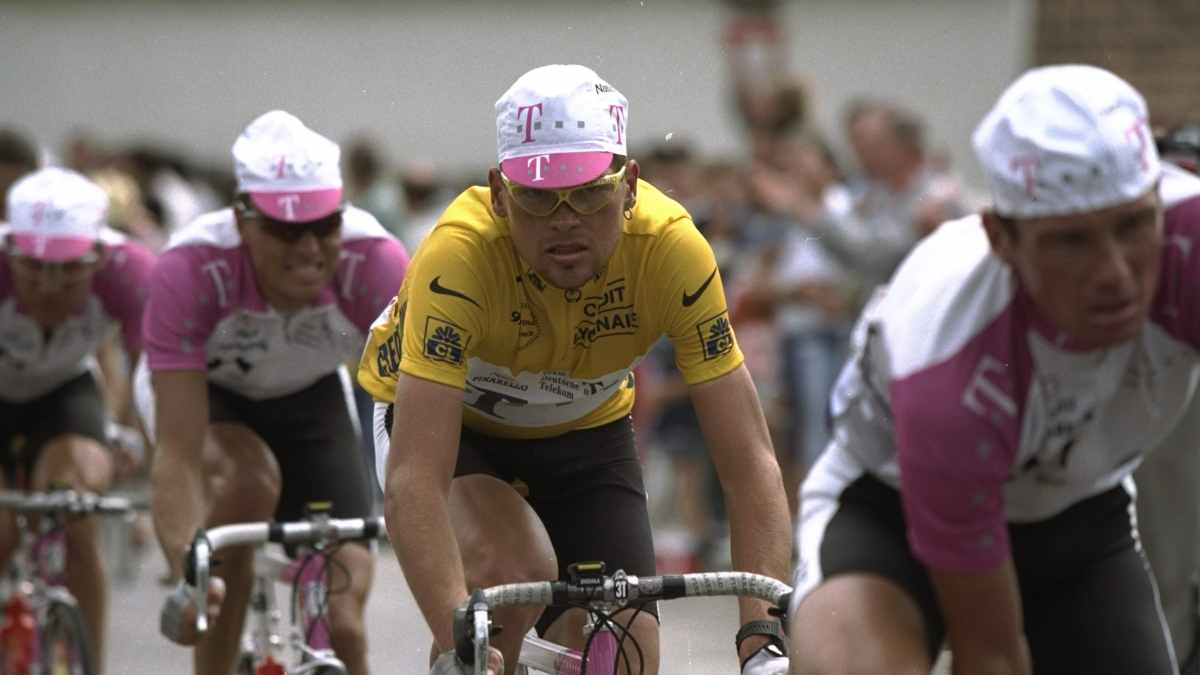
A look back at the history of cycling shows just how strongly individual designs are associated with particular riders and moments. Team Telekom’s magenta jersey is inextricably linked with Jan Ullrich, with his Tour victory in 1997, with attacks in the Alps, but also with his duels against Lance Armstrong. The same is true of the polka-dot Mapei jersey of the 1990s: a design that immediately conjures up images of classics victories, of the legendary 1996 Paris–Roubaix, when three Mapei riders rode into the velodrome together. Here, a jersey becomes the symbol of an entire era.

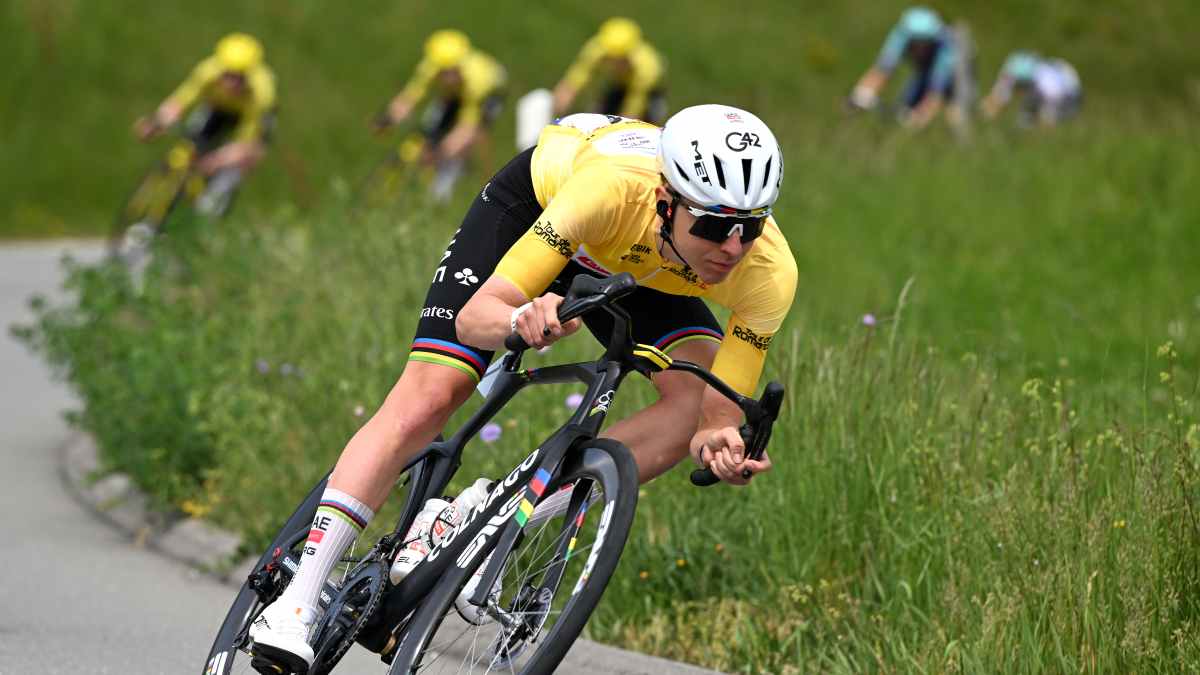
The iconic leader’s jerseys themselves also have their own stories to tell. The Tour de France’s yellow jersey represents more than just the overall lead. It is steeped in individual moments: the final ride into Paris, dramatic collapses, and heroic defences in the mountains. The pink jersey of the Giro d’Italia has a similar effect, having stood for Italian cycling drama for decades. And today, teams such as EF Education-EasyPost, with their eye-catching pink, demonstrate that modern designs can also make an immediate impression. And not just through colour, but through the stories that are written in them.
Great moments in football
But it is not only in cycling that jerseys have a significance that goes far beyond their design. The white Germany jersey from the 1990 World Cup, with its striking black, red and gold stripes across the chest, is inextricably linked to the title won in Rome. It symbolises the final against Argentina, Andreas Brehme’s penalty and an image that has remained etched in the memory for decades. The fact that this design has been reissued this year shows just how powerful such visual memories are: a single jersey is enough to instantly bring back the emotions of that time.
Equally iconic is the yellow of the Brazilian national team. Hardly any other colour in football is as evocative as this bright jersey, which inevitably conjures up images of lightness, creativity and skill. One thinks of Pelé, of Romário, of Ronaldo, of dribbles that are more dance than movement. The shirt becomes a canvas for an entire style of play, a footballing culture that has been passed down through the generations. It is not just a piece of fabric, but a promise of beauty in the game and of moments that will last.
Ultimately, it hardly matters whether we’re talking about national team shirts on the biggest stage in football or a leader’s jersey in cycling. Both work on the same principle: they make emotion visible. And that is precisely why they stick in the mind, often long after the result has been forgotten.


Leon Weidner
Editor