


Pogačar not only dominates, he determines how races are driven. A commentary on how teams often help him and what needs to change to really put UAE under pressure.
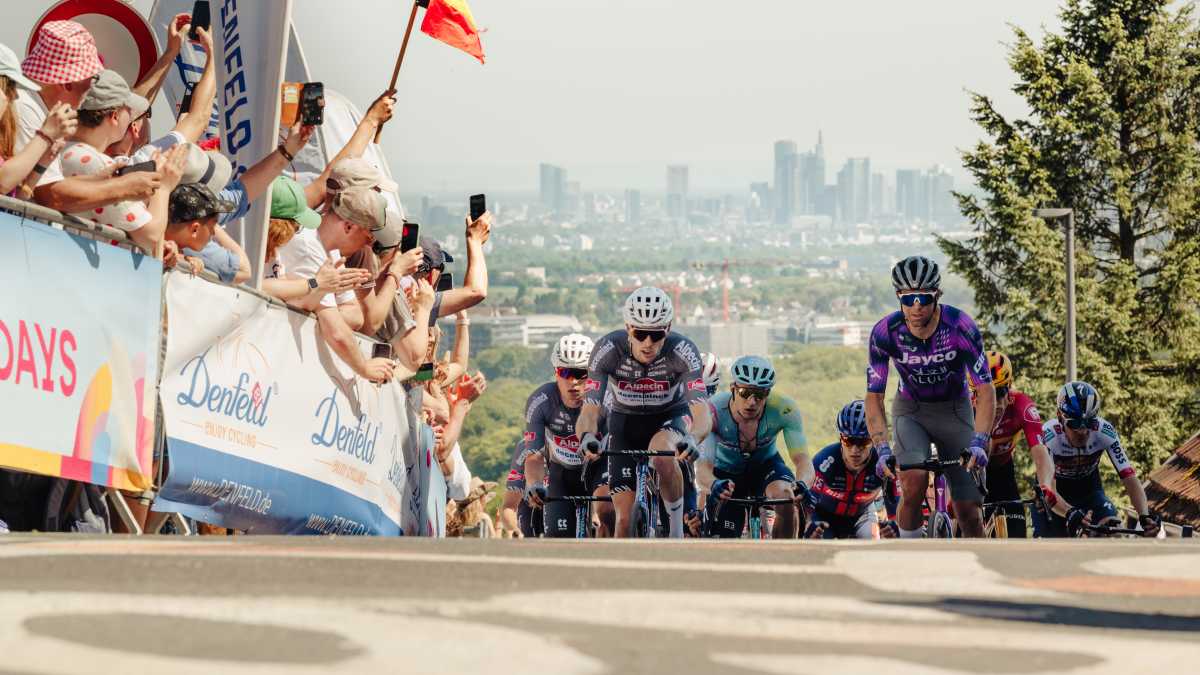
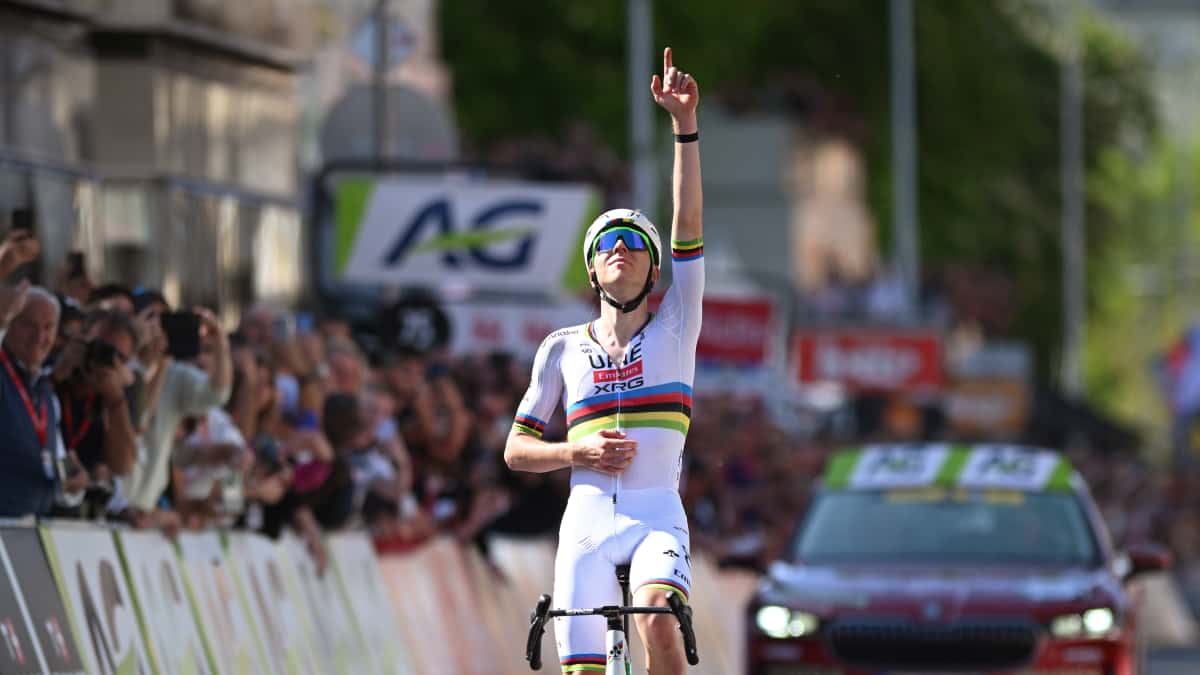
Tadej Pogačar is not just strong these weeks, he is a kind of gravity in the peloton. Wherever he appears, movements are reorganised around him, strategies shift, old reflexes take hold. This can be seen not only in what his own team does, but also in what other teams are prepared to do. Because the really striking thing about this season is not just that the Slovenian is stringing together victory after victory, but that races sometimes feel as if several teams are unconsciously writing the same dramaturgy: Pace, control, chasing, even when it obviously benefits Pogačar.
Milan-Sanremo is the best example of this. The distribution of roles is actually well known. Pogačar needs a race that burns: long, hard, selective, designed in such a way that at the Poggio there is no longer a whole train of fast men in the slipstream, but only a small, tired elite. Mathieu van der Poel, on the other hand, doesn't necessarily have to light this fire himself. He can arrive in a small group with Pogačar and, depending on the constellation, has the better cards in the sprint. And yet you can see Alpecin at the front. Like last year, Silvan Dillier rode almost 200 kilometres at the front of the peloton, chasing after the breakaway.
This is where the problem begins, and it's less tactical than cultural. There is a strange politeness towards dominance in the modern peloton. Teams tell themselves that lead-out work is neutral, a service to the race, a contribution to order. But order is actually a currency. And when you create it, you often pay the rider who can best convert it into victories. This season, that's almost always Pogačar. That's why the first reflex of many teams shouldn't be: We must not let the race slip away, but: We'll let it slip away just long enough for UAE to get nervous.
Because the roles are actually clearly distributed. UAE doesn't just have any captain, UAE has the big favourite. And whoever has the big favourite also has a duty. Not morally, but in sporting terms. If you have Pogačar in your ranks, you can't stand in a race and wait for other teams to prepare the final for you. This is not cooperation without a handshake, this is a redistribution of work. And it happens because too many teams accept it instead of openly refusing it.
This is the point at which teams need to become more consistent, including in their communication. Not just on the radio, not just in the team meeting, but visibly. If UAE wants control, they should take it. If UAE wants to keep the field within reach, let them ride. If UAE wants to sort the race so that Pogačar can attack on the decisive climbs, let them pay the price: Using up helpers, exposing resources, deploying forces.
At the moment, it often seems as if everyone is helping Pogačar in his hunt for the next victory, although many cycling fans (and I feel the same way as a journalist and enthusiast) would like to see more open races without a predetermined outcome. Maybe that's why Wout van Aert's victory at Paris-Roubaix is so good, because it brings back the feeling that cycling is really alive again. The peloton doesn't always ride for Pogačar, of course, but far too often. Hence my hope: let UAE work so that races become more open again!

Leon Weidner
Editor
