


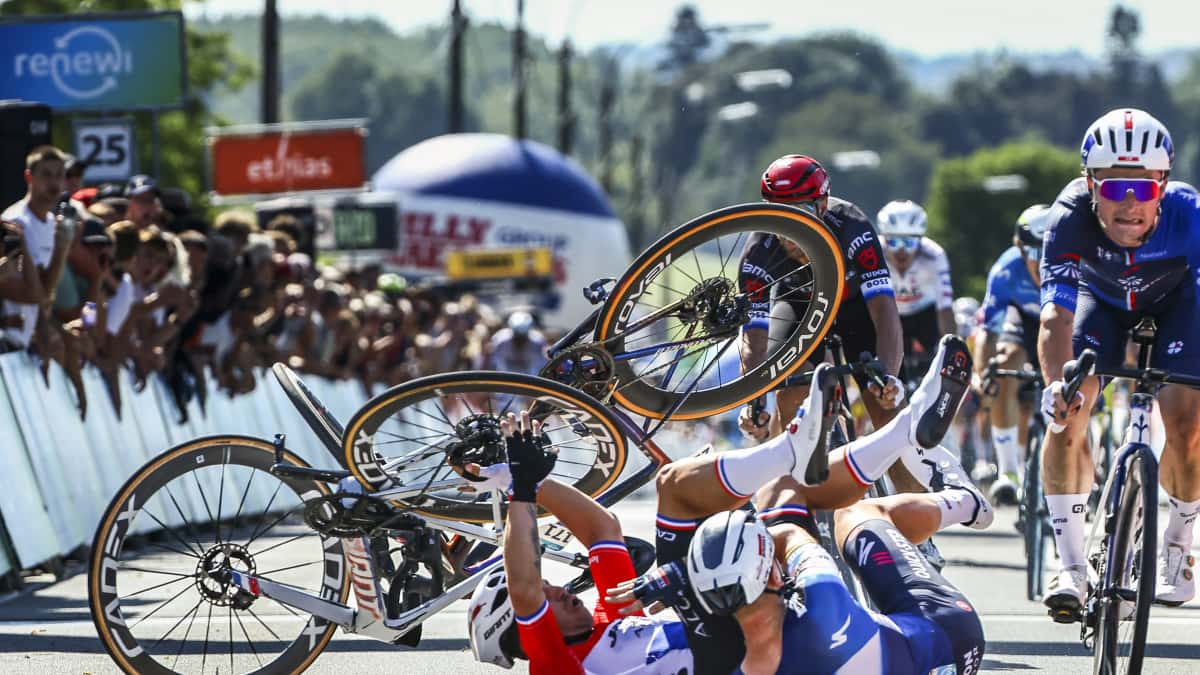
Radio in professional cycling has been the subject of debate for years, and voices calling for its abolition are raised every few months. Time and again, situations arise in which the peloton gets into dangerous situations due to instructions from the team cars: abrupt braking, hectic changes of position, risky manoeuvres on descents. As always, the question of whether direct contact between sports directors and drivers does more harm than good is a central point of discussion. Particularly controversial: championship races, such as national title fights, are traditionally ridden without radio and many observers consider these races to be much more "natural" and less chaotic.
Demand for the abolition of radio
Marc Madiot is one of the prominent voices who repeatedly call for a greater sense of proportion and a rethink of current practice. The former professional and long-time team manager has repeatedly criticised the safety situation in the peloton. He emphasises that the general conditions in cycling are becoming increasingly difficult and that the influence from the team car is also part of the problem. In 2025, his last year as manager of the FDJ United team (formerly Groupama - FDJ), Madiot called for technical aids to be more restricted or even abolished. "There are very simple solutions that can be taken. We should do away with radios," says Madiot.
You can't do without it either
On the other hand, there is the undeniable benefit of radio. Riders receive information about dangerous spots, crashes, wind edges or neutralised sections - information that can be vital in an increasingly fast and technically demanding peloton. Without radio, many of these warnings would be difficult or impossible to communicate in time. This is precisely why the debate is so complex: radio increases safety and jeopardises it at the same time.
The debate will continue, because cycling is at a crossroads. Between the desire for riders to take more responsibility and the need to warn them of dangers in real time, there is no simple solution. But one thing is clear: the question of whether the radio stays or goes has long been more than just a technical debate. It touches the very foundation of how modern professional cycling works and how safe it can be in the future. Abolishing it seems out of date; restricting it could be a good middle way to success. The success of safe cycling.

Leon Weidner
Editor
