


Flèche Wallonne 2026: The most important facts in brief
- Date: 22 April 2026, estimated finish time: ~ 16:11 (men, with a 45 average), ~ 17:42 (women, with a 38 average)
- Distance: 200.0 kilometres (men), 148.2 kilometres (women)
- Start: Herstal (men), Huy (women),
- Target: Mur de Huy
- UCI category: (Women's) WorldTour
- Organiser: A.S.O.
- Premiere: 1936, 90th edition (men), 1998, 29th edition (women)
- Last year's winner: Tadej Pogacar (men), Puck Pieterse (women)
The Flèche Wallonne has been held since 1936 and is one of the most important one-day races in professional cycling - even if it is not one of the great cycling classics. The "Walloon Arrow" is traditionally held on the Wednesday between the Amstel Gold Race and the last spring classic, Liège-Bastogne-Liège. Due to its shorter distance and changing course, the Flèche Wallonne is categorised as a minor classic, similar to Gent-Wevelgem. The Spaniard Alejandro Valverde is the record holder of the one-day race with five victories. In 1988, Rolf Gölz secured the only German triumph at Flèche Wallonne to date.
The route of the Flèche Wallonne 2026

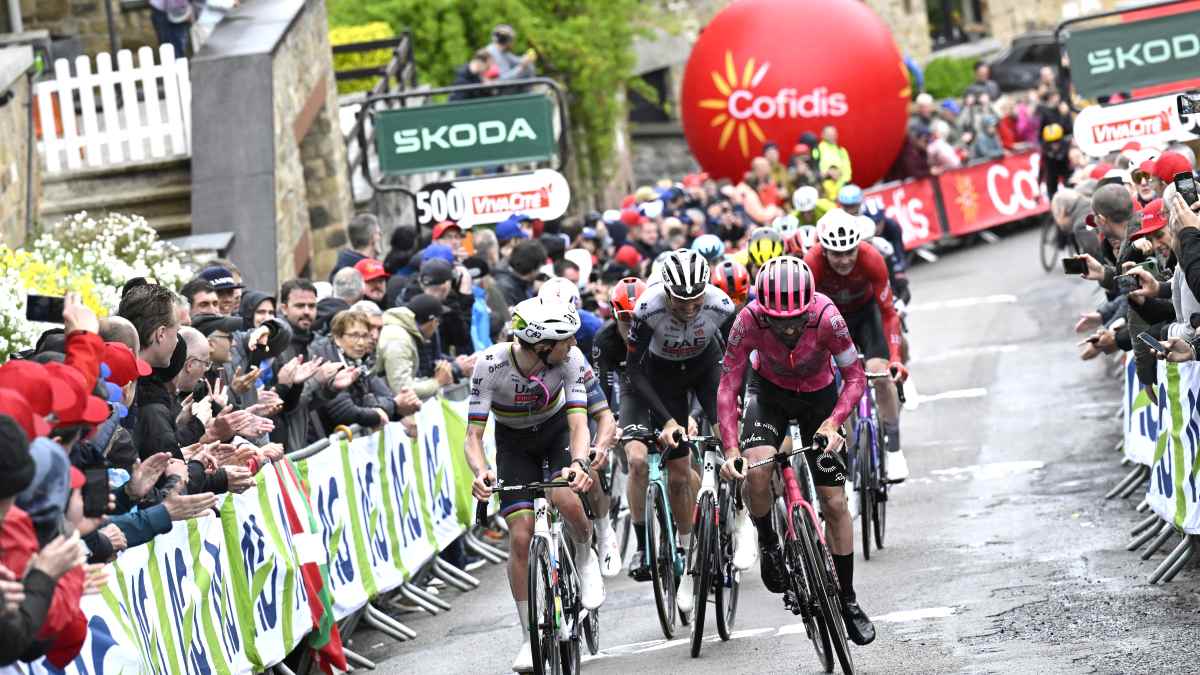
As in the previous year, this year's 200-kilometre route will take the riders over the Mur de Huy three times. The number of categorised climbs, eleven in total, also remains unchanged from the last edition. However, the first half of the route differs from the 2025 race: For the first time, the start will be in the municipality of Herstal, from where the peloton can roll in for the first 30 kilometres. With the Côte de Trasenster and the Côte des Forges, the first categorised climbs await the riders after 31.4 and 40 kilometres respectively. The 3.3 kilometre long Côte de Trasenster in particular, with an average gradient of 8.4%, will cost the first grains of energy. The route continues via Esneux and Ouffet to Modave, from where it's back onto a circuit that has to be completed two and a half times. Once again on the programme is the Côte de Cherave, which will be one of three climbs on the circuit alongside the Côte d'Ereffe and the Mur de Huy.

It remains to be seen whether there will be the first breakaway attempts before the Côte de Trasenster or whether the first two climbs will ensure greater selection in the peloton. At least there should be no selection due to rain-induced crashes this year. The weather forecast reports 15 degrees and sunshine.

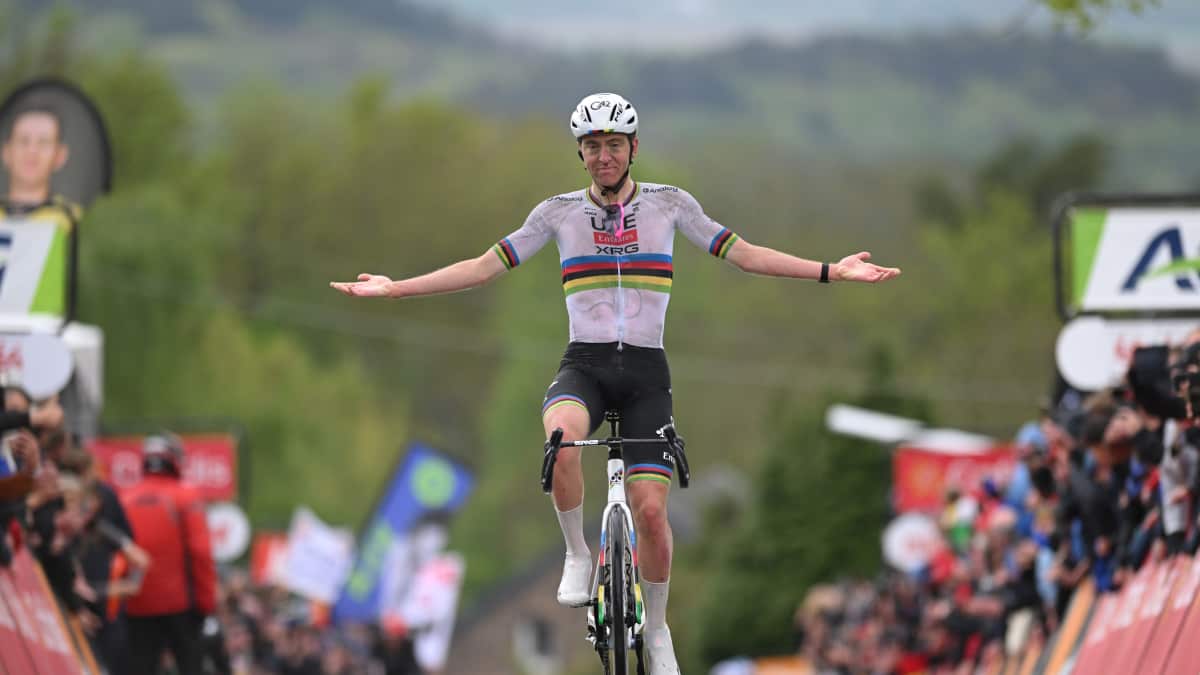
Last year, the Flèche Wallonne was won by an impressive performance from Tadej Pogacar. The Slovenian made his final attack on the last climb, the Mur de Huy, and apparently left the competition behind him effortlessly. The 90th edition of the Walloon Arrow is also likely to come down to a decision on the legendary Mur de Huy, which, with an average gradient of 10 per cent and significantly higher peaks, activates the sweat glands even as you watch.
These are the climbs of the men's race
- KM 31.4 - Côte de Trasenster - 3.3 km à 8.4 %
- KM 40 - Côte des Forges - 1.3 km à 7.8 %
- KM 107.2 - Côte d'Ereffe - 2.1 km à 5 %
- KM 120 - Côte de Cherave - 1.5 km à 8.1 %
- KM 125.6 - Mur de Huy - 1.3 km à 9.6 %
- KM 144.4 - Côte d'Ereffe - 2.1 km à 5 %
- KM 157.2 - Côte de Cherave - 1.5 km à 8.1 %
- KM 162.8 - Mur de Huy - 1.3 km à 9.6 %
- KM 181.6 - Côte d'Ereffe - 2.1 km à 5 %
- KM 194.4 - Côte de Cherave - 1.5 km à 8.1 %
- KM 200 - Mur de Huy - 1.3 km à 10 %
The route of the Flèche Wallonne Femmes 2026

The 29th edition of La Flèche Wallonne Femmes covers a record distance of 148.2 kilometres. The number of categorised climbs has also been increased from eight to nine compared to the previous year. Following its reintroduction last year, the Côte de Bohissau has once again made it onto the route. Instead of the Côte de Petite Somme (1.2 km at 8%), the Côte de Courrière (1.4 km at 7%) and the Côte de Durnal (2.3 km at 4.6%) await the riders this year. The race continues through Florée, a section in the Belgian municipality of Assesse, and Havelange, before the route leads into the men's circuit, which is ridden a total of one and a half times before the finale is also decided on the Mur de Huy. As in the previous year, the women will have to tackle the three climbs of the circuit twice.

It is quite realistic that the winner will be decided on the final climb of the Mur de Huy. Puck Pieterse was able to overtake Demi Vollering here last year with an equally impressive attack and celebrate her second professional victory on the road. Will the Dutchwoman be able to defend her title?
These are the climbs of the women's race
- KM 10.5 - Côte de Bohissau - 2.2 km à 5.5 %
- KM 38.3 - Côte de Courrière - 1.4 km à 7%
- KM 49.1 - Côte de Durnal - 2.3 km à 4.6 %
- KM 92.6 - Côte d'Ereffe - 2.1 km à 5 %
- KM 105.3 - Côte de Cherave - 1.3 km à 8.1 %
- KM 111 - Mur de Huy - 1.3 km à 9.6 %
- KM 129.8 - Côte d'Ereffe - 2.1 km à 5 %
- KM 142.5 - Côte de Cherave - 1.3 km à 8.1 %
- KM 148.2 - Mur de Huy - 1.3 km à 9.6 %
Flèche Wallonne 2026: TV broadcast and live stream
The men's and women's races will be streamed on Discovery+ for a fee. The stream of the men's race starts at 14:00, the stream of the Flèche Wallonne Femmes starts at 16:45. Eurosport is also offering a paid livestream in cooperation with HBO Max, with the men's race starting at 12.45pm.


Lukas Niebuhr
Editor