




The term is ubiquitous in cycling, as it is in endurance sports in general: VO₂max. The abbreviation is treated almost like a seal of quality. Anyone who can boast a high figure is considered fit. Anyone with a low one quickly feels left behind. On training platforms and in the menus of modern sports watches, the figure features prominently alongside calorie burn, heart rate and sleep scores. It is intended to show how capable the body is – as objectively as possible, as comparable as possible and, ideally, with an upward trend.
But what exactly does VO₂max measure? How meaningful is it for cyclists? And does everyone who wants to improve their endurance really have to do interval training to the point of complete exhaustion? The short answer is: VO₂max is an important metric. But it is neither the whole story when it comes to an individual’s fitness, nor is it automatically the most important training goal.
VO₂max refers to the body’s maximum oxygen uptake capacity during exercise. The ‘V’ stands for volume, ‘O₂’ stands for oxygen, and ‘max’ stands for the individual’s maximum. VO₂max is usually expressed in millilitres of oxygen per kilogram of body weight per minute, abbreviated as ml/kg/min.

What does VO₂max tell us?
This value describes how much oxygen the body can take in during maximum exertion, transport via the lungs and blood, and ultimately utilise in the muscles to produce energy. For this to happen, several systems must work together: the lungs must take in oxygen, the heart must pump sufficient blood through the body, the blood must transport the oxygen, and the muscles must be able to utilise it. Maximum oxygen uptake therefore reflects not just a single criterion, but the interplay of the entire endurance system.
A comparison may help: if you imagine the body as an engine, VO₂max describes the engine capacity. The greater the engine capacity, the more power is theoretically possible. An average 40-year-old man has a VO₂max of around 36 to 41 ml/kg/min, whilst a woman of the same age has a VO₂max of around 30 to 33. Cyclists who train regularly often have values significantly higher than this. Among professionals in the Tour de France, values of 70 to 80 ml/kg/min and above are not uncommon.
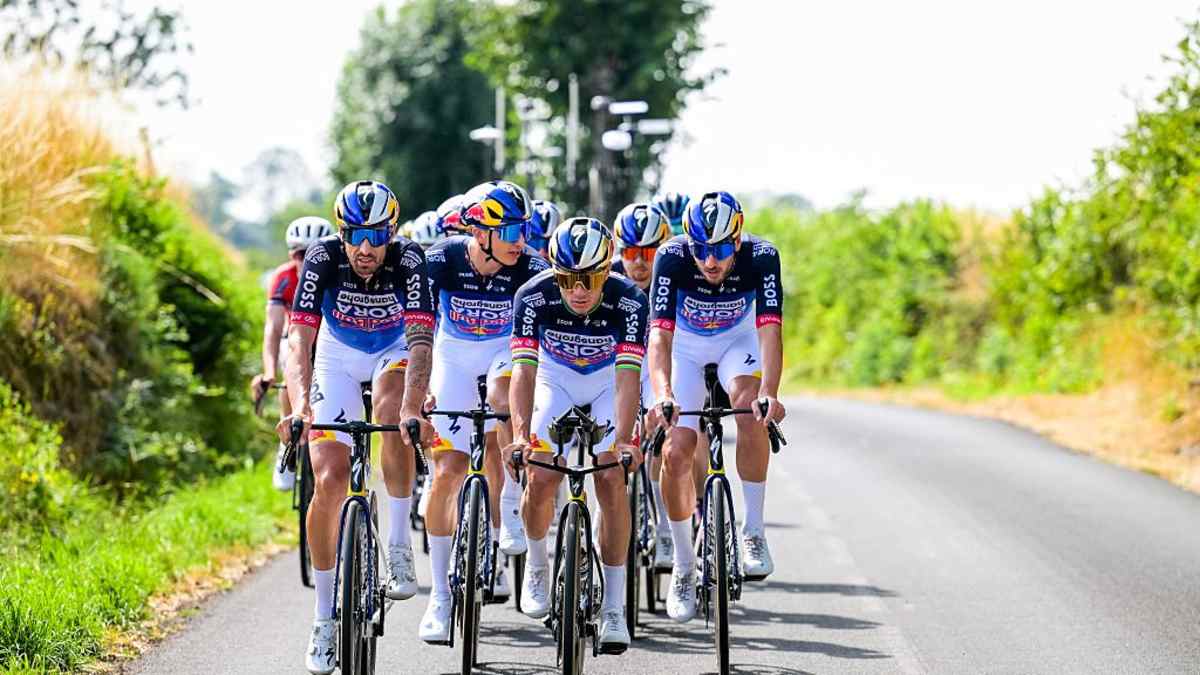
The 2024 Tour de France demonstrated just how extreme these peak values can be. A Norwegian sports scientist estimated the VO₂max of the eventual Tour winner, Tadej Pogačar, to be between 91 and 96 ml/kg/min. If this calculation is correct, it would be an extraordinary figure – and an indication that the Slovenian high-flyer is in a league of his own, not only tactically and technically, but also physiologically.
For most amateur cyclists, however, the key question is not whether we will ever come close to such figures. It is: What does VO₂max mean for your own sport?
The importance of VO₂max for health
VO₂max is more than just a fitness gimmick for training enthusiasts. It is regarded as an important indicator of endurance capacity and indirectly provides information on the resilience of the cardiovascular system. According to studies, a low value is associated with an increased risk of cardiovascular disease.
A study involving more than 5,000 people also identified a link between VO₂max and life expectancy. According to the findings, people who were fitter than average lived up to 4.9 years longer. The researchers calculated that a one-unit increase in VO₂max was associated with around 45 additional days of life.
That sounds spectacular – but it should not be misunderstood. It does not follow that an increase of exactly 1 ml/kg/min automatically guarantees an additional 45 days of life. Such studies show correlations, not a personal life insurance policy. People with a higher VO₂max often exercise more, have fewer risk factors and also differ from less fit individuals in other respects. Nevertheless, the message is relevant: endurance training is not just a way to cycle uphill faster. It can be an investment in long-term health.
Oxygen uptake whilst cycling
If your VO₂max is measured whilst cycling, it may be lower than a comparable value measured on a treadmill. This is not a cause for concern at first. When running, more muscle mass is active at the same time than when cycling. On a treadmill, in addition to generating forward momentum, you also have to stabilise your body weight and core. On a bike, you are seated, and the strain is concentrated mainly on the leg muscles.
On a bicycle ergometer, VO₂max is therefore often around five to ten per cent lower than on a treadmill. This does not mean that you are less fit on a bike. It simply means, first and foremost, that different movements and muscle groups influence the result in the two tests.
That is why standard tables should also be treated with caution. Many comparative figures are derived from treadmill tests. A keen cyclist who is tested on an ergometer and then uses a treadmill result as a benchmark may appear to be in poorer shape on paper than their actual cycling endurance suggests. It is more meaningful to always compare the same sport and, where possible, the same testing method. This makes it possible to see whether the figure changes over weeks or months.
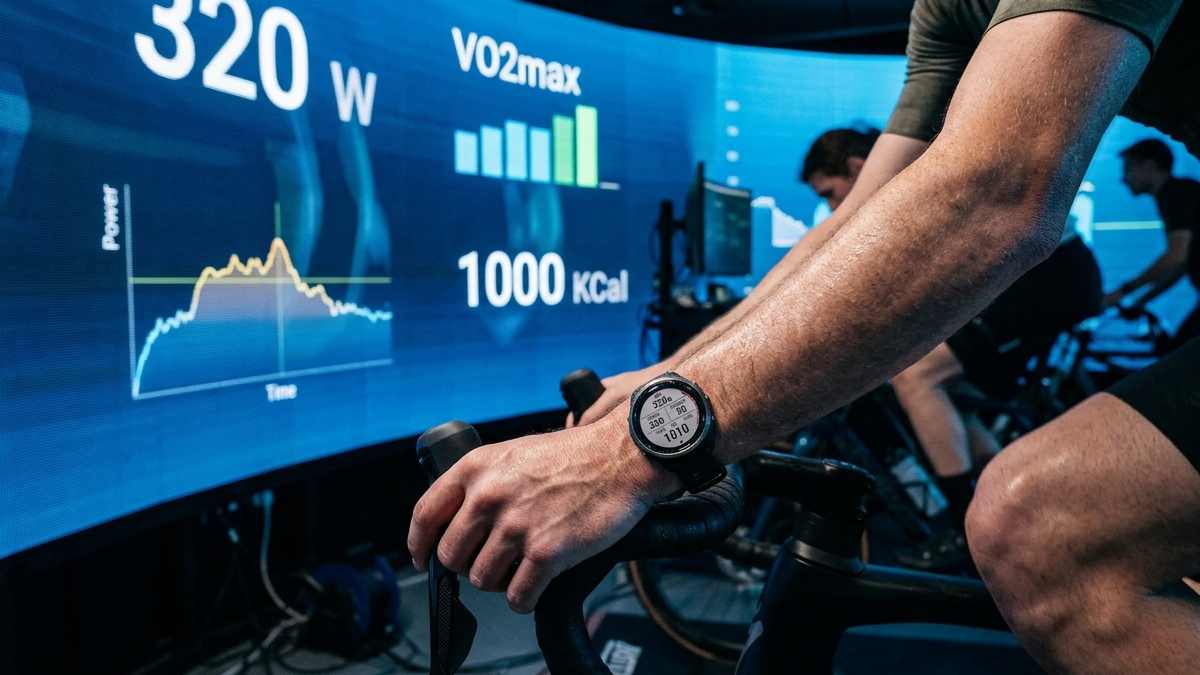
Modern smartwatches and fitness trackers now also display VO₂max. This is handy and can be motivating. However, a lab test cannot be replaced by the figure on the display. These devices do not usually measure oxygen consumption directly, but estimate it based on activity data, heart rate, pace and algorithms.
This often works better when running than when cycling, because speed, heart rate and movement are relatively clearly linked. When cycling, there are additional factors to consider: headwind, gradients, slipstream, road surface, tyre pressure and riding position. A speed of 25 km/h can feel completely different depending on the route and the weather. Without a power metre, the watch also has no way of knowing how much power is actually being applied to the pedals.
Smartwatch readings are for guidance only
That is why the VO₂max value displayed on a sports watch or fitness tracker should be regarded more as a rough guide. It is particularly problematic when a manufacturer derives the value mainly from running data and then presents it as a general fitness metric. A single spike up or down is not very meaningful. It makes more sense to monitor trends under comparable conditions – and always to assess the figure in conjunction with how you feel, your heart rate and your actual performance.
Anyone wishing to obtain a reliable assessment of their fitness level can undergo a spiroergometry test as part of a sports medicine examination. This involves cycling on an exercise bike or running on a treadmill until reaching maximum exertion. A breathing mask is used to analyse the air you breathe in and out, measuring the levels of oxygen and carbon dioxide to determine your maximum oxygen uptake. At the same time, heart rate and performance zones can be established. Depending on the provider, such a test costs approximately 150 to 250 euros.
It is important to note that spiroergometry is a maximal exercise test. Anyone who is unwell or has an infection should not use the ergometer, particularly if they have a fever or obvious symptoms of illness. Resuming training too soon after an infection can, in the worst case, put a strain on the heart.
VO2max is not FTP
A common misconception amongst many cyclists is to equate VO₂max with FTP. Both values relate to endurance, but they describe different things.
VO₂max is the capacity – that is, the upper limit of what the aerobic system can achieve under maximum exertion. FTP – functional threshold power – is, put simply, the gear you can ride in for a prolonged period without running out of steam. It indicates how much of your available capacity can be utilised in practice.
An athlete with a high VO₂max may therefore still have a disappointing FTP if they lack specific endurance, muscular capacity or the ability to ride close to their threshold for a long time. Conversely, someone with a fairly average VO₂max can deliver an impressive performance over many hours because they utilise their available ‘capacity’ particularly efficiently.
In terms of training, this means: VO₂max training raises the ceiling; FTP training helps you make better use of the space below it. Base training improves your ability to ride for long periods and efficiently. Threshold intervals increase the level of performance you can sustain over a longer period. Short, intense intervals provide a strong stimulus for the cardiovascular system and can improve maximum oxygen uptake. A good training programme requires not just one figure, but several building blocks.
Whether you train based on heart rate, watts or how you feel is, initially, of secondary importance. The key is to assess and regulate the intensity correctly. A power metre is helpful, but not essential. If you don’t have one, you can manage high-intensity sections using your heart rate and how hard you’re working. Your heart rate reacts with a delay, particularly during short intervals; that’s why you should always rely on how hard you’re working.
The unspectacular truth
VO₂max does not increase as a result of a single, heroic day’s training. It improves through repeated stimuli, sufficient recovery and a training programme that fits in with your lifestyle. If you are under a lot of pressure at work, sleep poorly or are constantly training under time pressure, you do not automatically need even tougher sessions. Sometimes, incorporating an extra half-hour of exercise into your week yields the greatest progress. And sometimes, the wisest training decision is to allow a cold to run its full course.
Age also imposes its own limits. Without targeted endurance training, maximum oxygen uptake declines by approximately five to ten per cent per decade from the age of 30 onwards. This is a natural process, but it is no excuse for inactivity. Regular exercise can slow down this decline and keep your personal level well above what would be expected without exercise.
And what happens when you take a break? After a few weeks without training, your VO₂max drops noticeably. However, a two-week break due to illness or injury is no big deal for recreational athletes. You can usually get back to your previous level relatively quickly. It is important not to pick up immediately where you left off once you have recovered. A gentle return to training protects against overexertion and lays the foundations for the next phase of training.
Ultimately, there is one simple rule: consistency is the key. Measuring and comparing your VO₂max and using it as a training guide certainly makes sense, but it does not alone determine how strong you feel on the bike, how well you tackle a long climb, or whether you still have reserves left after four hours in the saddle.
How to improve your VO2max
How quickly VO₂max can be increased depends on your starting level, age, training volume and your individual response to training. There is no one-size-fits-all solution. For those new to the sport, the most important factor is often not the intensity, but the regularity of training.
• Less than three hours a week: Start by increasing the frequency. An extra, easy day’s cycling often yields more benefits than a single hard interval session. Three short sessions often provide a better training stimulus for the body than one long ride at the weekend followed by six days’ rest. The ideal pace is one at which you can still hold a conversation, whilst your heart, muscles and musculoskeletal system get used to regular exertion.
• Four to six hours a week: Supplement your training with targeted intervals. A good way to start is with four repetitions, each lasting four minutes, at around 90 to 95 per cent of your maximum heart rate. In between: three to four minutes of easy running. This is strenuous, but manageable. The intervals shouldn’t turn into a struggle for survival after just the first set. If you don’t know your maximum heart rate, use your own perception of exertion as a guide: the final minutes may be tough, but they should remain technically sound and without complete chaos.
• More than six hours a week: The distribution of intensity is becoming increasingly important. The 80/20 rule is a useful guideline: around 80 per cent of training time should be at an easy pace, and around 20 per cent at a high intensity. The easy sessions form the foundation and enable you to cope with the hard sessions. Many amateur cyclists make the mistake of riding every ride ‘at a reasonably brisk pace’. In the long run, this can lead to fatigue without providing a clear training stimulus.


Tim Farin
Editor