


Our Summary of gravel trends for 2027
The 2027 generation of gravel bikes is characterised by an impressive level of maturity. Rather than purely cosmetic changes, innovations such as the affordable 13-speed drivetrains, increased tyre clearance of up to 50 mm and the UDH standard deliver tangible added value off-road. Combined with clever details such as integrated charging options and bespoke bag systems, the latest models are more versatile, comfortable and easier to maintain than ever before. These upgrades offer gravel riders genuine functional benefits in everyday use.
The gravel bike has finally evolved from a niche trend sport into a mainstay of the cycling industry. Whereas a few years ago, slightly modified cyclocross bikes were still being ridden along bumpy forest tracks, today the scene is dominated by highly specialised, precisely balanced off-road machines. With the current 2027 model range, manufacturers have long since moved beyond relying solely on buzzwords such as ‘even lighter’ or ‘even stiffer’. Instead, system integration, well-thought-out everyday and maintenance solutions, clever details and the consolidation of technical standards are setting the agenda. Anyone comparing the current line-ups from the leading brands will quickly recognise a series of groundbreaking innovations that are permanently transforming the riding experience on gravel, trails and long-distance routes.

1. Tyres: 50 mm is the gold standard – for now!
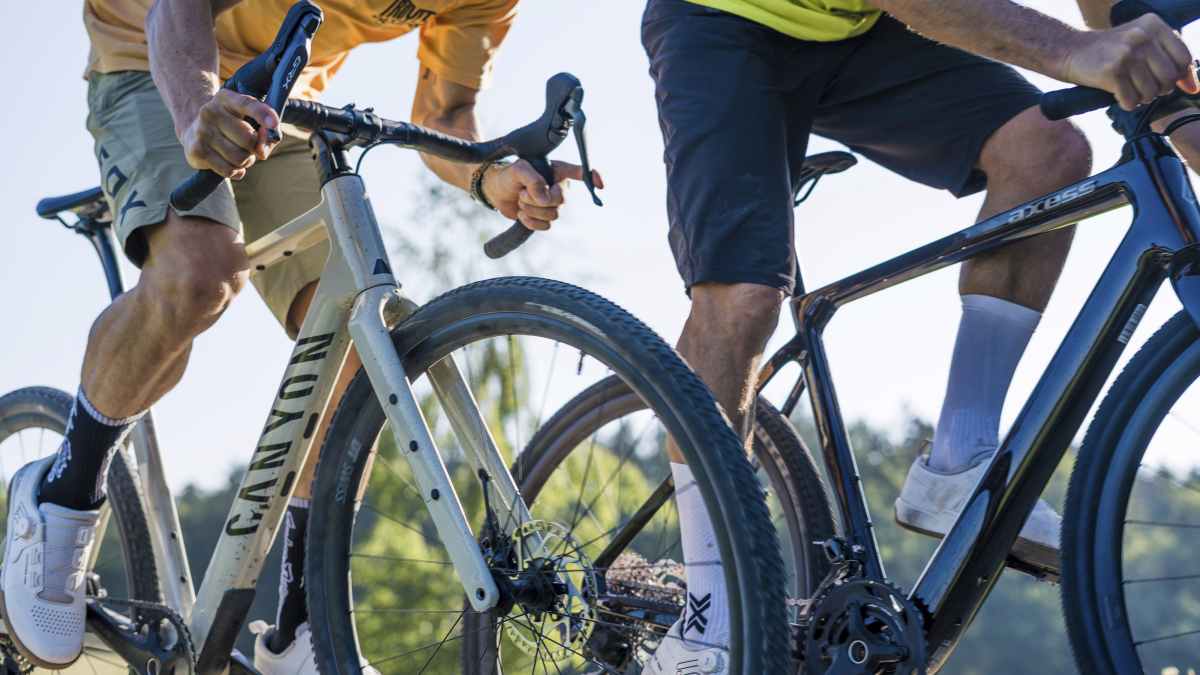
One of the most striking changes to the frames of the 2027 model range concerns the clearance for the fork and rear triangle. Whilst 40 mm was still the benchmark just a few years ago, the range has shifted significantly upwards. Almost every modern gravel bike now offers a maximum tyre clearance of at least 50 mm. Many complete bikes are currently still supplied as standard from the factory with 45 mm-wide tyres, but the trend for comfort- and adventure-oriented models is increasingly moving straight towards 50 mm. And things are set to get even wider in 2027: most new gravel models will accommodate tyres of 55 mm and above.
However, this issue is likely to be revisited by the start of next year at the latest. That is when the first 32-inch models from well-known manufacturers are expected. From what we’ve heard, some manufacturers – at least for the larger frame sizes – intend to replace 28-inch wheels entirely with 32-inch ones. The issue of tyre width will also need to be reconsidered: 32-inch tyres inherently offer better cornering traction and better roll-over performance. However, this also means a higher weight for the wheels and tyres. Tyres for 32-inch gravel wheels are currently only available in 53 and 55 mm widths – for the time being. So the issue of tyre width remains an interesting one.
- Promoted benefit: Better traction on loose surfaces, greater suspension comfort without the added weight of a suspension system, and a reduced risk of bottoming out thanks to the increased air volume.
- Actual benefit to the customer: Very high. The wider tyres transform the bike into an oasis of comfort on rough terrain and massively expand its range of use, without any significant loss of rolling efficiency on tarmac. The only drawbacks are the slightly higher weight and the associated slightly higher rotating mass.
2. 13-speed groupsets: Are two chainrings now completely redundant?
For a long time, doing without a front derailleur meant having to make compromises: riders using just one chainring had to choose between large gear steps or a limited range of gradients. With the widespread adoption of SRAM XPLR 13-speed groupsets, this trade-off is now a thing of the past. The single-chainring philosophy has now largely established itself as the standard for gravel bikes. What began in the high-end sector with the SRAM RED XPLR has, by 2027, also reached the extremely popular mid-range price bracket of around 3,000 euros, thanks to the Force XPLR and Rival XPLR variants.
- Promoted benefit: Optimal gear spacing with no large gaps, combined with an enormous range (10–46 teeth), intuitive gear changes without having to change the chainring, and maximum reliability in muddy conditions.
- Actual benefit to the customer: Very high. The 13-speed groupsets eliminate the last real advantage of 2-speed drivetrains. The fact that this technology is now available in the affordable price range represents a real step towards making high-end gear-shifting performance more accessible.
3. UDH system: Robust and available everywhere
If the derailleur hanger bent on a remote bikepacking tour, this used to often spell the end of the trip, as every manufacturer used its own specific derailleur hangers. SRAM’s Universal Derailleur Hanger (UDH) has almost completely taken over the market with its 2027 generation. Road bike frames are also adopting this standard, which originated in MTBs, making it possible in particular to fit the extremely robust ‘Full Mount’ derailleurs (SRAM Eagle Transmission).
- Advertised benefit: Spare parts available worldwide in almost every bike shop, protection of the rear derailleur through controlled decoupling in the event of a fall (the entire derailleur hanger, including the fitted rear derailleur, can rotate backwards/upwards in the event of a hard impact) and direct frame mounting for more precise shifting.
- Actual benefit to the customer: Very high. UDH takes away one of the most annoying worries for cyclists when travelling and ensures the frame is fully future-proof for the next generation of components.
4. Schwalbe Clik Valve: Is the Presta valve a thing of the past?
One of the most inconspicuous details, yet one that is most noticeable in everyday use, is the gradual replacement of the classic Sclaverand/Presta valve by the new Schwalbe Clik Valve (SCV). The intuitive click mechanism replaces the delicate process of screwing the valve stem in place and noticeably improves handling when inflating.
- Advertised benefit: The pump head clicks into place with ease, without any loss of pressure; no more bent valve inserts; and up to 50 per cent greater air flow for tubeless set-ups.
- Actual benefit to the customer: Moderate to high. The increased airflow is a real blessing, particularly when fitting tubeless tyres for the first time in your own workshop. On the road, it offers a pleasant boost to comfort, although it does require adapters until all pump heads have been upgraded.
5. USB ports and built-in power banks
Navigation devices, smartphones, lights, electronic gear systems: the list of on-board batteries is constantly growing. Manufacturers such as Rose are increasingly opting for USB-C charging sockets integrated directly into the frame, or removable power banks in the down tube, which supply power to accessories whilst riding, in models such as the Backroad FF series.
- Promoted benefit: Seamless charging of GPS devices and smartphones during long journeys, no tangled cables on the handlebars and an integrated power supply.
- Actual benefit to the customer: Great for long-distance drivers. Anyone who regularly undertakes full-day tours or long-distance races gains a great deal of independence. For an evening ride around the neighbourhood, this feature remains a nice touch, but not an essential one.
6. Bag systems: the perfect fit
Traditional bikepacking bags with Velcro fastenings rub against the paintwork and tend to swing about when riding out of the saddle. The 2027 generation relies on bespoke, frame-specific bag solutions. Brands such as Canyon (in collaboration with Apidura) and systems featuring the Fidlock Twist mechanism integrate magneto-mechanical mounts or concealed bolt-on points directly into the frame design.
- Promoted benefit: Perfect aesthetics, aerodynamic integration, a secure fit with no wobble, and complete protection of the frame’s paintwork against scuff marks.
- Actual benefit to the customer: High. The ease of attaching and detaching the bags at the refreshment station is unrivalled. The only downside is the manufacturer’s reliance on proprietary bag formats.
7. Thoughtfully designed: integrated suspension fork option
The popularity of suspension forks in the gravel segment is on the rise. Rather than retrofitting conventional rigid frames with aftermarket forks, the geometries of the 2027 generation take into account the stanchion height of 30–40 mm gravel suspension forks (such as the RockShox Rudy or Fox 32 Taper-Cast) right from the factory. Some models (Cannondale Topstone or BMC URS LT) offer buyers the choice between a lightweight rigid fork or an integrated suspension fork at the point of purchase.
- Promoted benefit: Noticeable relief for wrists and shoulders on rough terrain, greater traction at the front wheel in fast corners, and less fatigue on long rides.
- Actual benefit to the customer: High, depending on the niche. For riders tackling very rough terrain or those with upper-body issues, the suspension fork is a real game-changer. However, those who mainly ride on tarmac links and fine gravel will find they have to compromise on weight and sprint performance.

Josh Welz
Editor-in-Chief