


When it’s really serious: The taboo subject of ‘number twos’ in the professional peloton
Leon Weidner
· 15.06.2026

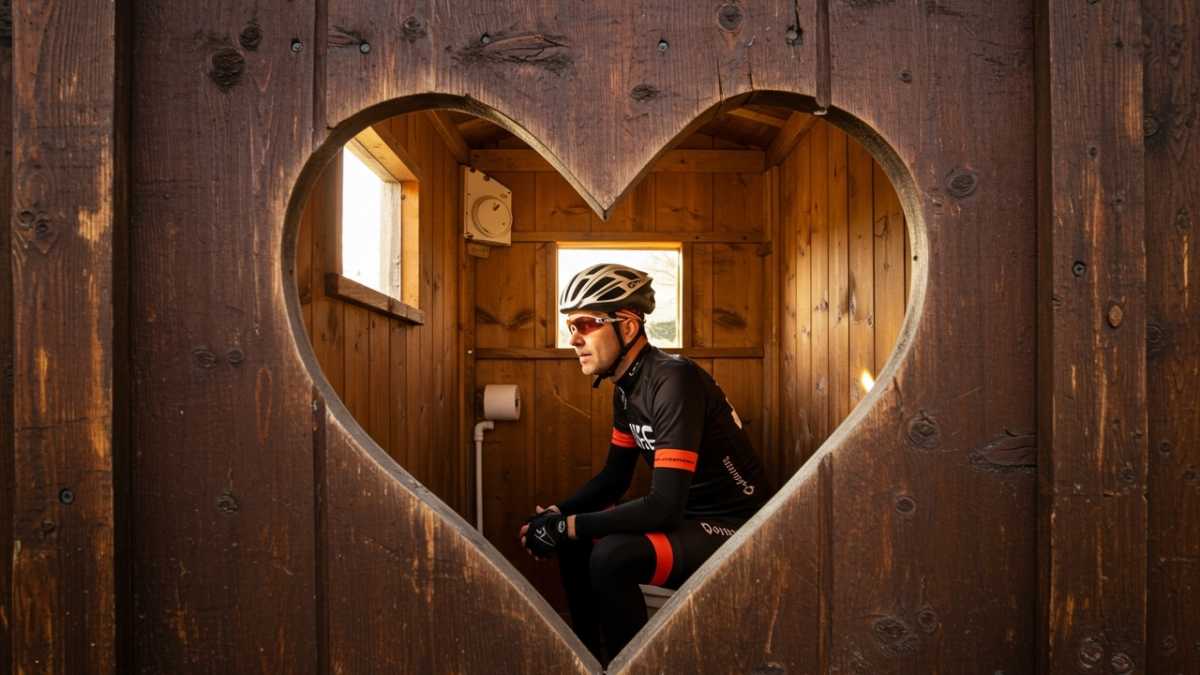
Whilst the ‘number one’ has been a hot topic of conversation in the professional peloton of late, the ‘number two’ remains a taboo subject. Rarer, more unpleasant, and yet it’s worth asking: what if? Because the few documented cases show that when things get really urgent in the peloton, there are no clean solutions, only pragmatic ones. And what has to be done... well, it just has to be done.
Legendary or just perfectly ordinary
The most legendary scene, of course, involves Jan Ullrich. During a race, the Tour winner resorted without hesitation to using his cap as an improvised aid – a move that remains to this day a symbol of the uncompromising nature of the sport. Even though such incidents rarely come to public attention, one thing is clear: the body knows no racing situation. And when it makes itself felt, there is often no time for etiquette or aesthetics. A glance at the recent past also illustrates this.
Probably the most high-profile incident of the modern era took place during the 2017 Giro d’Italia, with immediate sporting consequences. Overall leader Tom Dumoulin was struck by severe stomach problems during a key stage. He reacted instinctively: slammed on the brakes, pulled over into the verge, pulled down his jersey – as quickly as possible. But unlike during the usual toilet breaks, the peloton did not wait. Dumoulin lost more than two minutes due to the involuntary stop, thereby forfeiting a large part of his lead in the general classification.

World Cup toilet break and Nils Politt
Mathieu van der Poel also demonstrated at the 2023 World Championships that even the very top stars are not immune. During a break in the race, the eventual world champion simply knocked on the door of a private home with a clear request. The residents let him in. Van der Poel later stated that he would probably never have won the rainbow jersey without the couple.
Even more dramatic and high-profile was the case of Nils Politt at the 2024 Olympic Games in Paris. In the middle of the race, acute stomach problems forced him to stop. But unlike usual, there was no hedge, no quiet side street. Instead, as far as the eye could see, there were only densely packed rows of spectators on Montmartre. Politt had no choice but to take refuge in a café. There he relieved himself, right in the middle of the ongoing Olympic competition. His chances of a medal were gone after that. However, the scene went viral as Politt emerged from the café to cheering fans.
No rules for emergencies
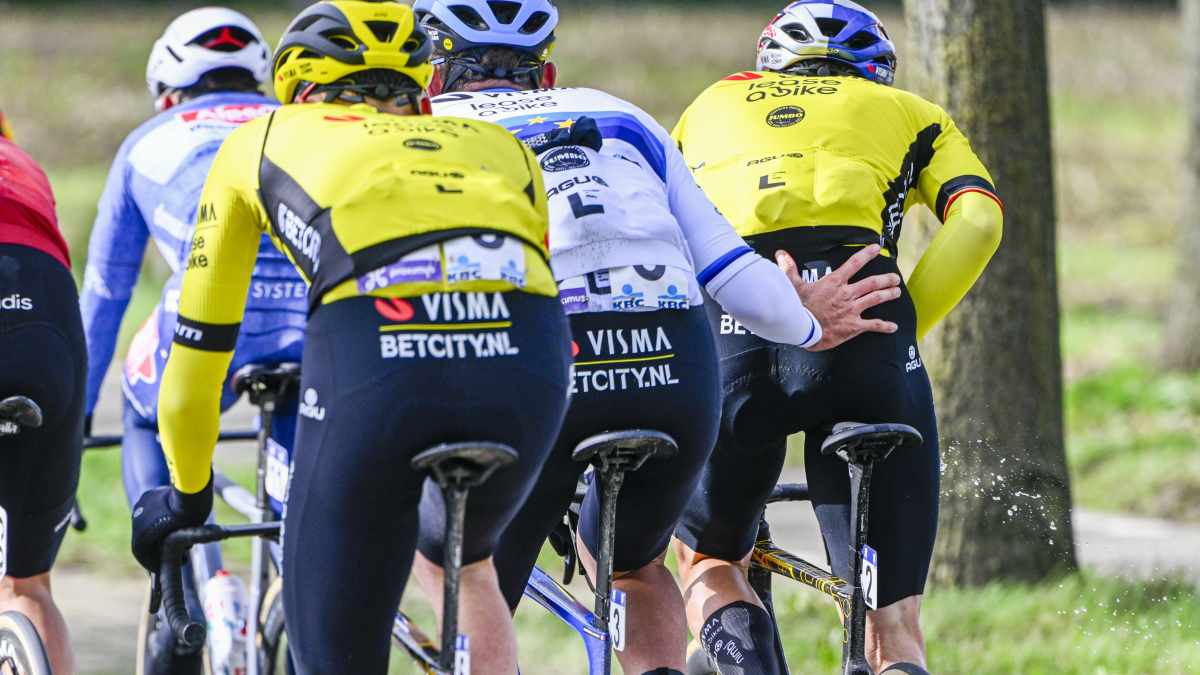
And so back to the UCI. Whilst urination has been the number one topic of conversation time and again over the last few days and weeks, the question naturally arises as to what the situation is regarding the ‘number two’. Just as with urination, there is no clear rule. However, the regulations that led to the urination sanctions are likely to result in penalties for professionals here too, should they make such a stop.
Yet it is precisely this extreme case that highlights just how out of touch with reality some of the UCI’s regulations seem. Unlike when you need to go to the toilet, there is no halfway decent ‘on-the-go’ solution here. If you need to go, you have to stop. Full stop.
Conclusion: Transparency is key
The big race in the peloton remains a side issue, but one that keeps cropping up. It shows just how much cycling operates at the very limits of what can be planned. Nutrition, hydration, heat, stress and, often, many consecutive days in the saddle. All of this can, within seconds, create a situation that is neither trainable nor tactically controllable.
Whilst the UCI attempts to control the sport’s image, the reality within the peloton serves as a regular reminder that, at the end of the day, it is still people sitting on those bikes, with all their perfectly normal needs. It is therefore high time that the UCI addressed such cases and set a good example in endurance sport in terms of transparency and support for athletes.


Leon Weidner
Editor