


Germany is bidding, with Munich as its host city, to host the Summer Olympic Games in 2036, 2040 or 2044. This is the result of a vote by the German Olympic Sports Confederation (DOSB). The next step is for the city to prevail against the international competition. It’s a long way off, but we’re already looking to the future and dreaming of Olympic cycling races: what does Munich have to offer for the road races? The answer lies in two major events where cycling in Munich went very well: the 1972 Olympic Games and the 2022 European Championships.
Cycling at the Munich Olympic Games
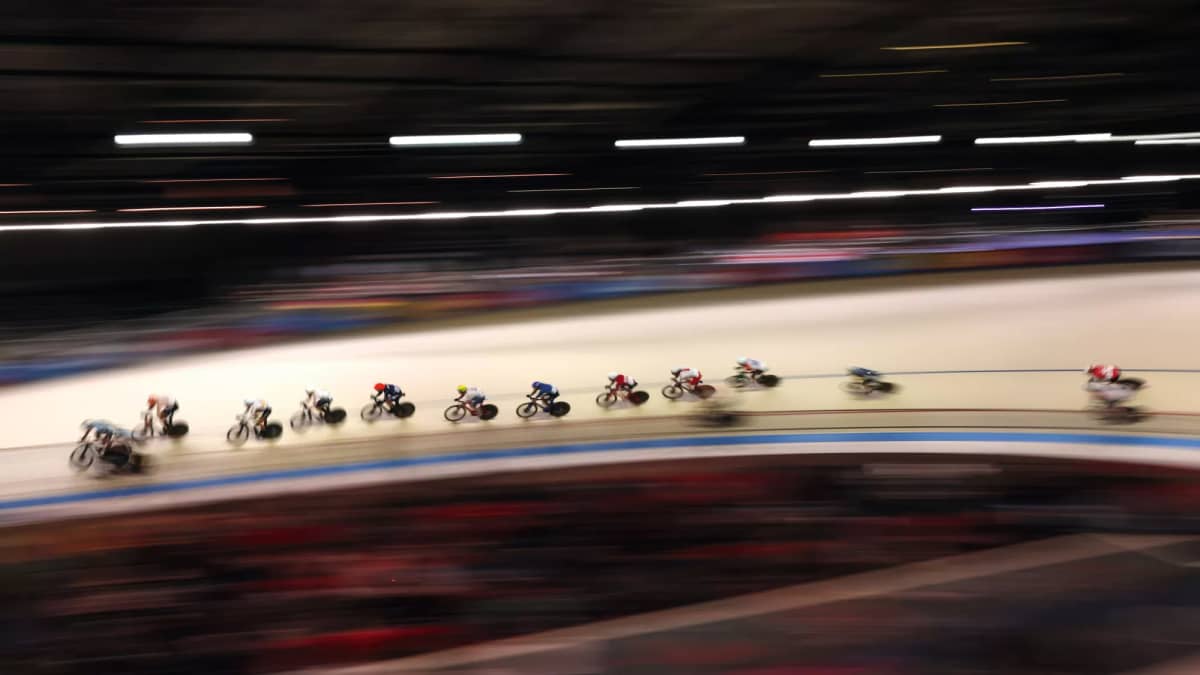
The 2022 European Championships focused on track and road cyclists. A total of 22 European titles were awarded in track cycling, two each in mountain bike cross-country and BMX freestyle, and four in road cycling (road races and time trials). One notable feature was the velodrome: the 1972 Olympic cycling stadium no longer exists – so a temporary cycling track was erected at the exhibition grounds in Munich-Riem. There was great interest in the track races, and the wooden track was dismantled again after the European Championships.

Cycling is a rare sight in Munich
Cycling fans are likely already looking forward to the road races. Road cycling is a rare sight in Munich: only a few fans will still remember the stage start of the Tour of Bavaria in Munich in 2004 or that of the Tour of Austria in 1987. The road races at the European Championships wound their way through Upper Bavarian tourist regions and provided some stunning TV footage. Spectators were packed thick and fast along the entire route. Interest was particularly high in the state capital, where a circuit race took place. Around 200,000 people lined the route for the men’s road race and 150,000 for the women’s.
A circuit for the Munich Olympic Games?
The European Championship races started outside Munich and followed two different routes into the city. The final laps in Munich city centre provided spectators with a thrilling finale.

The top spots at the 2022 European Road Cycling Championships
The route for the men’s race at the European Championships ran from Murnau am Staffelsee to Munich – including the final laps, the total distance was 209 kilometres with 1,380 metres of elevation gain. These were the highlights of the route:
1 Kesselberg
The Kesselberg is one of the top climbs for Munich’s road cyclists. It usually takes it out of you – it’s neither long nor steep, but it’s perfect for pushing yourself to the limit. Many have probably been tempted into a duel here whilst struggling for breath. At the 2011 mountain time trial, held as part of the Kesselberg Race, this was even possible with the road closed to traffic and official timekeeping. For the professional cyclists, however, the 260-metre climb was no real challenge.
2 Walchensee
A lake straight out of a tourist brochure, promising stunning TV footage. But the lake doesn’t need any advertising at all: at weekends, there’s so much holiday traffic that, as a road cyclist, you’re better off cycling round the car-free northern shore.

3 Schlossberg, Eurasburg
Generations of cyclists have used this stretch of road to lure unsuspecting fellow cyclists into a trap. Without warning, the road here rises at an 18 per cent gradient – anyone who doesn’t change gear early enough will tip over.
4 Olympiastraße
From Starnberg, the Olympiastraße leads straight to Munich without any bends, inspiring Munich’s cyclists to set speed records and undertake time trials. For the Munich Olympic Games, this would be a logical route into the city.
2022 European Women’s Road Race Championships
The women’s road race from Landsberg am Lech to Munich covered 130 kilometres and 890 metres of elevation gain. These were the highlights:
1 Seeshaupt
A must-stop on the cycle route for Munich’s road cyclists, thanks to the lovely view of the lake.
2 Degerndorf
The route wound its way through the village and then led into a very fast descent.
3 Wolfratshausen
There aren’t any long climbs around Munich. But the 100-metre climb on the outskirts of town offered some fun climbing with lovely hairpin bends. It feels like you’re on an Alpine road – even if only for a short while.

The top spots in Munich city centre
The women’s race covered two and a half laps, whilst the men’s race covered five and a half laps of the city centre circuit. This was ideal for spectators, as it meant they could see the riders several times.


Kristian Bauer
Editor