


In this article, we use so-called affiliate links. With every purchase through these links, we receive a commission from the merchant. All relevant referral links are marked with . Learn more.
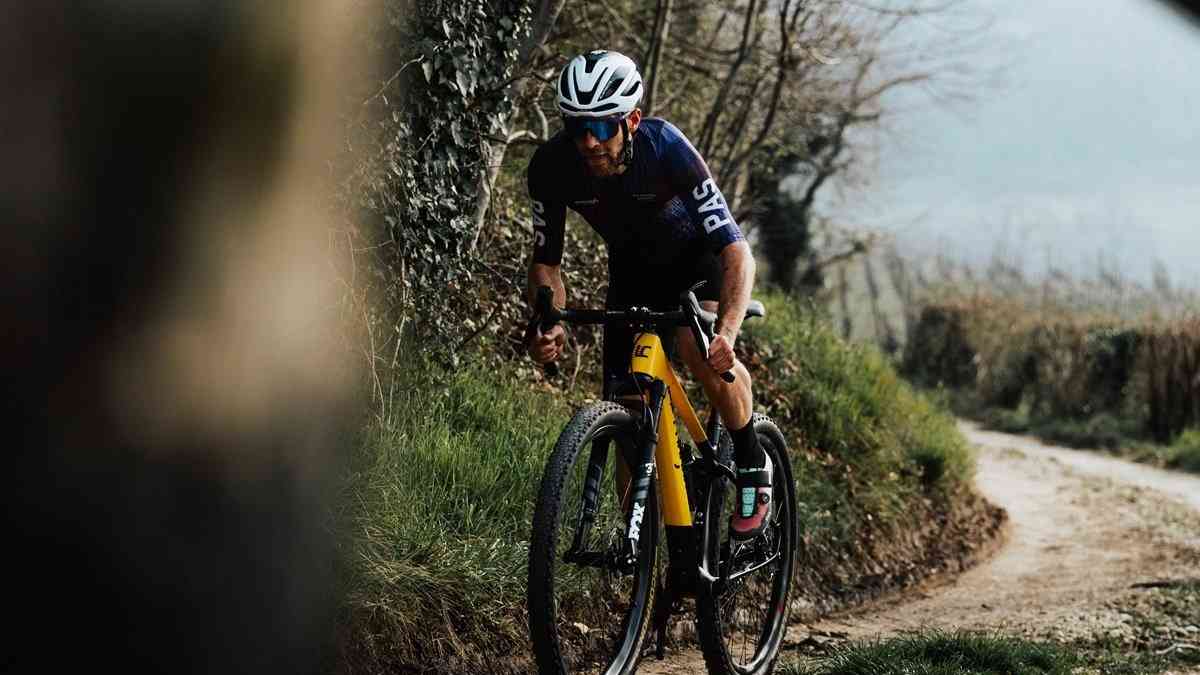
Micro suspension promises more comfort and control on a gravel bike - but how much suspension travel does freedom really need, and when does it become a burden? Four innovative gravel models.
For a long time, the gravel bike was seen as the deliberate alternative to the mountain bike: light, efficient and as simple as possible. Comfort was achieved through tyre width, air pressure and targeted frame flex - active suspension seemed to contradict the basic idea. But with the increasing speed of modern gravel races, ever rougher courses and growing ultra and adventure formats, the picture is changing. Suspension is no longer just seen as a comfort solution, but as a performance tool that improves traction, reduces fatigue and brings real measurable speed advantages.
The market is now clearly differentiated into three classes of suspended gravel bikes:
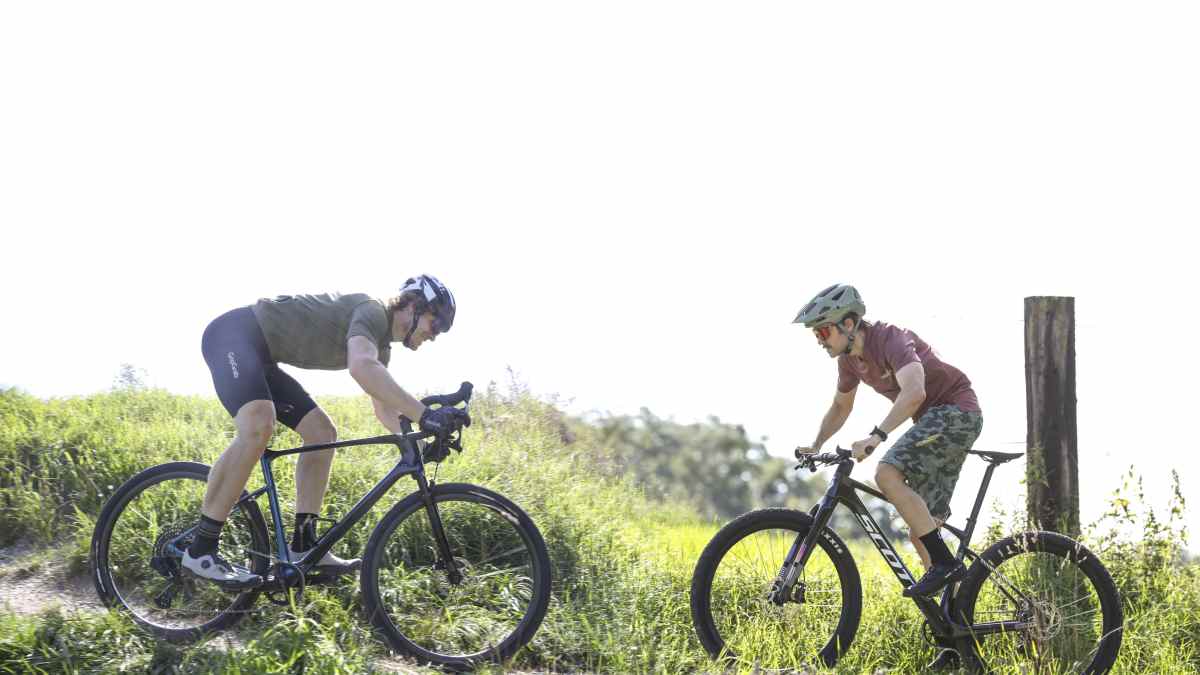
Dropbar MTBs with 60-100 mm travel, true gravel suspension with around 30-50 mm and micro-suspension gravel bikes with just 20-30 mm travel. While the former are moving strongly in the direction of mountain bikes and the middle category represents today's racing standard, micro-suspension takes a different approach: minimal intervention with maximum preservation of the gravel DNA.
Differentiation: Micro Suspension vs. True Gravel Suspension and Dropbar MTB
Dropbar MTBs use classic suspension forks and sometimes even rear shocks. They are predestined for single trails and alpine descents, but come at the cost of weight, complexity and aerodynamic disadvantages. True gravel suspension bikes, on the other hand, rely on specially developed gravel suspension forks such as RockShox Rudy or DT Swiss RIFT and are aimed at technically demanding races and adventure formats.

Micro-suspension gravel bikes take a more subtle approach: they dispense with classic suspension forks or dampers and instead work with integrated systems in the head tube, flexing rear triangles or leaf spring designs. The aim is not to "swallow" large obstacles, but to consistently filter out high-frequency vibrations that cost speed and tire the rider.
Areas of application: Where micro-suspension shows its strengths
Micro-suspension gravel bikes are particularly superior where speed, efficiency and comfort are required at the same time: on fast gravel tracks, undulating terrain, washboard sections and long distances. In gravel racing in particular, measurements show that reduced shock loads can lead to a smoother pedalling action and a higher average speed.
Micro-suspension also offers clear advantages for long-distance adventures, marathon events or ambitious touring riders - without diluting the character of a sporty gravel bike. The limits only become apparent where rooty trails, steps or real descents dominate.
Technical concepts: Three ways to micro-suspension
Technically, micro-suspension solutions can be roughly categorised into three construction principles:
- Headtube-based systems like Specialized Future Shock decouple the cockpit and frame and maintain neutral steering behaviour, as the wheelbase and fork geometry remain unchanged.
- Flex rear suspension like Cannondale's KingPin or BMC's MTT use specifically designed carbon layups and defined pivot points to create vertical flex - low-maintenance and weight-efficient.
- Leaf spring forks like Lauf Grit completely dispense with dampers and sliding surfaces. Glass fibre springs ensure an immediate response to small impacts and absolute freedom from maintenance.
Four innovative micro-suspension models in detail
Specialised Diverge Pro
The Specialized Diverge Pro is the technological centrepiece of the Diverge family. The centrepiece is the Future Shock 3.3 system with 20 mm travel, hydraulic damping and external adjustment. In contrast to classic suspension forks, the system works above the head tube, which means that the steering geometry and wheelbase remain unchanged.

At the rear, Specialized relies on targeted carbon flex instead of a shock absorber. The geometry follows the "long-and-low" approach and ensures directional stability at high speeds. The Diverge Pro is clearly aimed at performance-orientated riders who are looking for maximum efficiency, high speed and measurable comfort - without compromising on handling.
- Frame: Fact 10r Carbon with integrated flex zone and SWAT storage compartment
- Spring travel v: 20 mm
- Impellers: Roval Terra CL II Carbon (Tubeless Ready)
- Drive/gear shift: SRAM Force eTap AXS (12-speed)
- Brakes: SRAM Force hydraulic disc brakes
- Price: 7,999 euros (from 2,299 euros)
Cannondale Topstone Carbon 1 Lefty
The Topstone Carbon is a hybrid, a crossover between Mico Suspension and True Gravel Suspension. Cannondale combines the Lefty Oliver suspension fork with just under 30 mm of travel at the front and the KingPin rear suspension system with up to 30 mm of vertical flex. Despite the visible technology, the overall weight remains moderate and the system is completely low-maintenance.

Cannondale's "OutFront" geometry with a longer fork offset is characteristic and favours smooth running at high speeds. The bike also scores points for its deep system integration (lighting, radar, power supply). The Topstone appeals to riders who value comfort reserves but don't want a classic fully gravel bike.
- Frame: Topstone Carbon with KingPin suspension
- Spring travel f/h: 30 mm / 30 mm
- Impellers: HollowGram G-S 27 Carbon
- Drive/gear shift: SRAM Force eTap AXS (12-speed)
- Brakes: SRAM Force eTap AXS hydraulics (160 mm)
- Price: 5,499 euros (current prices; 5 models from 3,499 to 7,999 euros) >> available here
BMC URS 01 LT One
At the BMC URS 01 LT One The suspension is integrated almost invisibly. The MTT suspension fork offers 20 mm of travel and is embedded so slimly in the head tube that the bike looks like a classic gravel racer. It is complemented by the MTT seat stays, which provide around 10 mm of flex at the rear.

The progressive geometry with a long reach and short stem ensures stability at speed, but remains agile. The URS is aimed at riders who are looking for a fast, competition-orientated gravel bike and still want to benefit from subtle damping.
- Frame: URS 01 Premium Carbon with down tube storage space
- Spring travel f/h: 20 mm / 10 mm
- Impellers: AG 20 Tubeless
- Drive/gear shift: Shimano GRX Di2
- Brakes: Shimano GRX (180/160 mm)
- Price: 5,999 euros (URS 01 LT Two: 3,999 euros) >> available here
Run Seigla Race Wireless E1
The Lauf Seigla Race Wireless E1 takes a radically simple approach. The third-generation Lauf Grit fork uses fibreglass leaf springs and offers 30 mm of travel - without any dampers, oil or service intervals. The immediate response makes the system particularly suitable for fast gravel sections.

At the rear, a specifically tuned carbon layup ensures vibration damping. The "JAF" (Just As Fast) geometry combines a sporty riding position with plenty of tyre clearance. The Seigla is ideal for purists who prioritise maximum reliability, low weight and racing speed.
- Frame: Seigla Carbon
- Spring travel v: 30 mm
- Impellers: ethirteen Piedmont Race Carbon
- Drive/gear shift: SRAM Force AXS
- Brakes: SRAM Force E1
- Price: approx. 4,990 euros (a total of five models from 2,990 to 7,990 euros)
Conclusion
Micro-suspension gravel bikes exemplify the maturity of the gravel segment. They show that less suspension travel does not mean less performance, but often exactly the optimum compromise between speed, comfort and efficiency. If you want to ride fast - and for a long time - you will find the most technically elegant solution in the modern gravel cosmos.

Josh Welz
Editor-in-Chief