


At some point, cycling round the lake is no longer enough. At some point, "I like to ride far" becomes a lifestyle, a weekend trip becomes a multi-day adventure with little sleep, the saddle becomes a second home. Welcome to ultracycling - a sport that has less in common with racing than with expeditions, and yet is one of the most fascinating competitive areas of cycling.
But let's start from the beginning.
What does ultracycling actually mean?
There is no standardised definition. Roughly speaking, we talk about ultracycling as soon as distances and time periods are far beyond classic endurance events - in practice, this often means several hundred to several thousand kilometres, frequently non-stop or with only minimal sleep breaks.
The speciality: Unlike in classic cycling, the focus here is not on tactics in the field or perfect sprint timing. Ultracycling is a dialogue with yourself - with your body, your head and at some point you may be joined by hallucinations. Cause: sleep deprivation. It's about self-assessment, logistics, nutrition, mental strength and the ability to keep going even when everything hurts and nothing makes sense.
There are two fundamentally different worlds within sport: Supported and Unsupported Ultracycling - and they differ not only in terms of whether a support car is included.

Brevets: Where it all began
Before there were bikepacking bags, GPS trackers and dot-watching, there were randonneurs. And before there were randonneurs, there were Paris-Brest-Paris (PBP).
PBP is one of the oldest cycling events in the world, first held in 1891 - back then still as a professional race, on gravel roads, with oil lamps for lighting. Since 1931, it has been held in its current form as a brevet: 1,200 kilometres from Paris to Brest and back, every four years, with a time limit of 90 hours. No competition, no winner's podium. Whoever crosses the finish line is a Ancien - and is therefore on a list that goes back to 1891. The Audax Club Parisien (ACP) invented PBP and subsequently created the rules for brevets. The club oversees the worldwide brevet scene and controls the worldwide Audax offshoots. Audax Germany, for example, is allowed to organise brevets that serve as a qualification for PBP. You could also call Paris-Brest-Paris the World Championships for randonneurs. The next PBP will take place in 2027.
A Brevet (French for "test") is essentially a self-organised long-distance ride with checkpoints where you ride within a time limit - but not against each other. The scene is called randonneuring, and the philosophy behind it is one of the oldest in cycling: you ride because you ride. Not to win, but to arrive.
Classic brevet distances are 200, 300, 400 and 600 kilometres - and if you complete all four in one year, you can call yourself a super randonneur. Whoever finishes Paris-Brest-Paris is forever Ancien. Particularly popular in the UK is London-Edinburgh-London (LEL): 1,500 kilometres between the British capitals, held every four years, with up to 1,500 participants.
Brevets are, in a way, the root from which much of what we now call Unsupported Ultracycling has grown. The attitude is the same: you are on your own, the clock is ticking and you find your own way. Arriving at the brevet within the time limit is the goal - whether after 60 or 89 hours. The core of brevets is usually a precisely defined time limit. Some Unsupported events consciously follow this tradition: no competition, just the challenge.
But then there are the races. In the Transcontinental Race (TCR), the Silk Road Mountain Race and the Atlas Mountain Race, the first to arrive wins - with no prize money, no entry fee and no trophy. Nevertheless, the glory goes to the fastest. For the vast majority of participants, however, it is not about winning, but about finishing, about arriving. That is the difference to a classic race: Here, the vast majority are not battling against the others, but against the course, sleep deprivation - and themselves.
Lost Dot, the organiser of the TCR, calls this the Spirit of the RaceA commitment to autonomy, personal responsibility and integrity. No crews, no private supplies - but you plan the route yourself. Whoever finds the best route through Europe, whoever calculates ferries, passes and sleep breaks more wisely than the others, has a real advantage. Route selection is part of the competition.
In Supported Ultracycling, on the other hand, the competitive nature is clear from the outset - and the team is part of the game.
Supported Ultracycling: With a team behind you
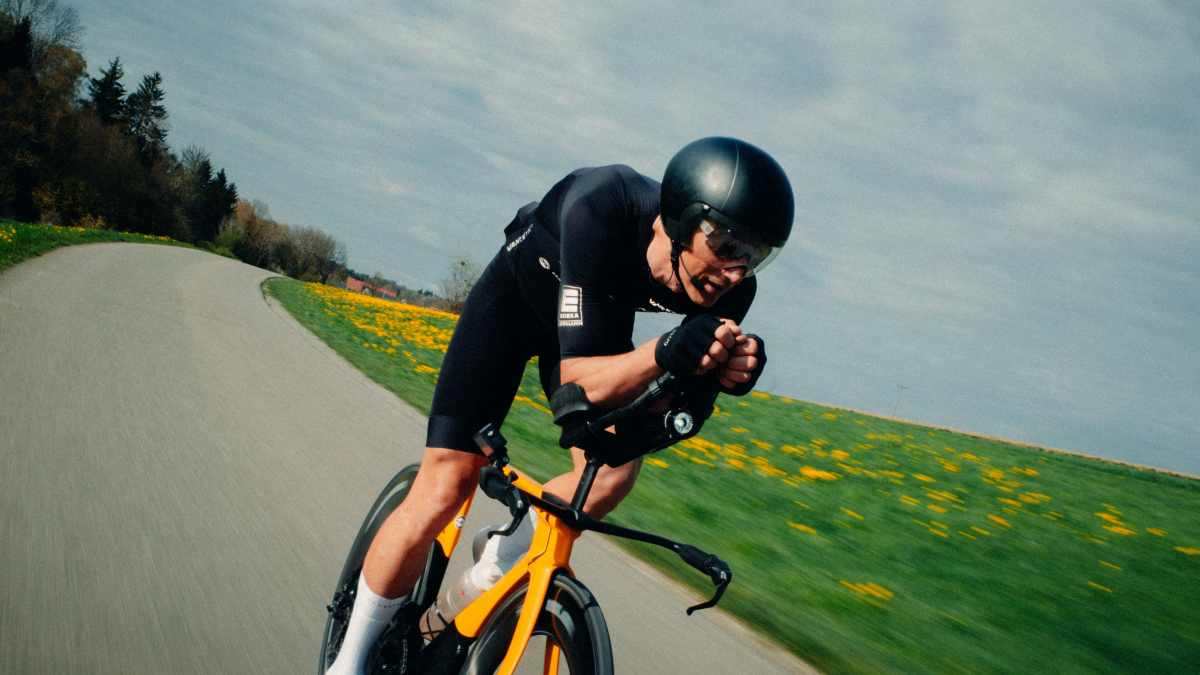
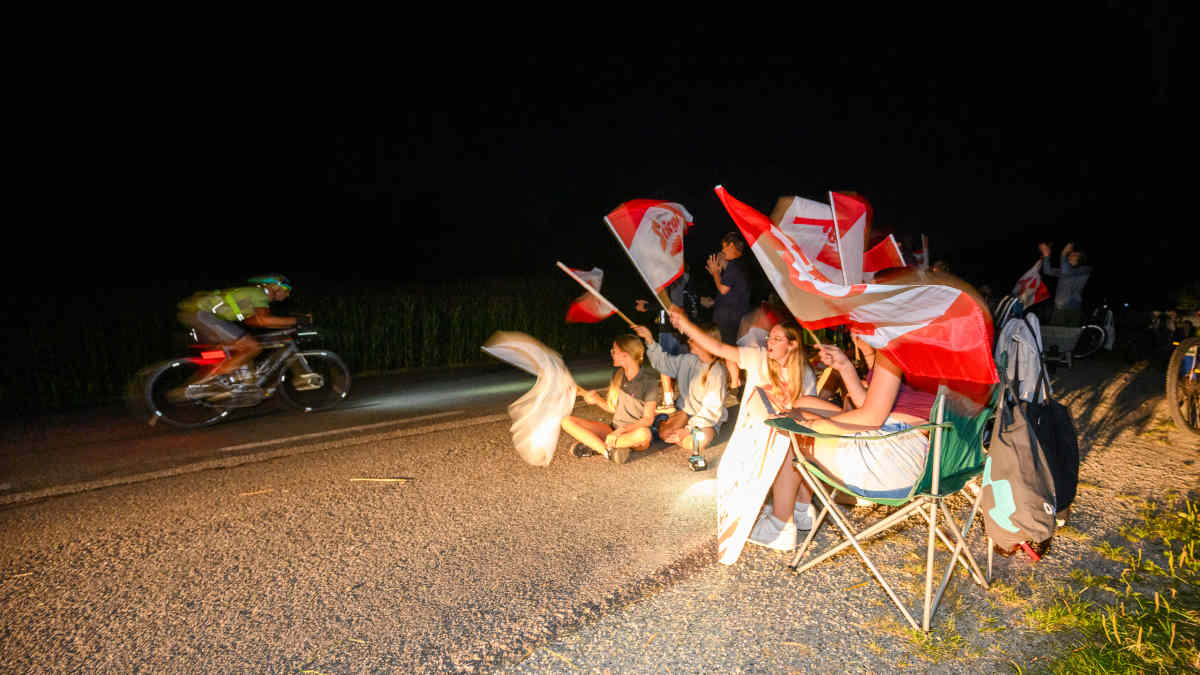
In supported ultracycling, the athlete does not ride alone. A support team - often several people in one or two vehicles - provides food, a change of clothes, medical care, navigation and moral support. There are very strict rules for the support vehicles and time penalties or disqualification for infringements. Adapting to this set of rules is one of the biggest challenges for athletes and support staff. The logistical complexity of such an endeavour is enormous, and the physical feats that supported riders perform are simply unimaginable.
The most famous race on the scene is the Race Across America (RAAM) - Around 5,000 kilometres from the west coast (Oceanside, California) to the east coast, with over 52,000 metres of elevation gain. The watch runs day and night, through deserts, over mountain passes, through small towns in the middle of the night. The pros need about eight days - that's around 600 kilometres a day, with less than an hour's sleep a day.
In Europe, the TORTOUR a must-attend event: The event runs over 1,000 kilometres and several Alpine passes, non-stop, solo or in a team - and returns to Schaffhausen, its birthplace, in 2026. Also on the radar: the Race Around Austria (RAA) with 2,200 kilometres and 30,000 metres of elevation gain, has also hosted the Ultracycling World Championships since 2025. In Germany, the Race Across Germany the most famous race on the scene - around 1,100 kilometres from Flensburg to Garmisch-Partenkirchen, and at the same time one of the most important RAAM qualifying races in the German-speaking world.
Athletes
The dominant figure in the supported scene is Christoph Strasser from Graz. The Austrian has won the RAAM six times - the only one to do so three times in a row (2017, 2018, 2019). During the RAAM, he consumes up to 13,000 calories a day, rides strictly according to a power meter and sleeps less than an hour a day. He himself prefers to call his sport "long-distance cycling" - he has since switched from Supported to Unsupported.
Elena "Leni" Roch from Lower Austria is currently the strongest woman in the supported sector: In 2025, she won both the European and World Championship titles at the Race Around Austria in extreme heat and despite a heavy fall shortly before the finish - with just 2 hours and 45 minutes of sleep over the entire race. In 2024, she was two hours faster than the first man.
The Swiss woman Nicole Reist is one of the most successful female ultracyclists in the world. She has won the RAAM three times, the Race Around Austria five times and several world championship titles in ultracycling.
Other names: Philipp Kaider, winner of the RAAM 2025Isa Pulver from Germany, winner in 2015 and 2023, in 2025 she had to give up after a crash, Nicole Reist won the RAAM three times and the Race Around Austria five times, as well as several world championship titles.
Unsupported Ultracycling: Alone with everything you wear
This is where it gets even more interesting for many. Unsupported means: you are travelling alone. No support vehicle, no crew to bring you warm soup at the side of the road at night. You have everything you need on your bike. You buy food and drink from shops and petrol stations along the way. Where to sleep? Wherever - on a park bench, in a shared room, in a bivy in the open air. The clock keeps ticking.
What at first sounds like masochism is for many the purest expression of cycling: a real adventure, unadulterated, unadorned. No support vehicle to light your way. No mechanic to adjust the rear derailleur. Just you, your bike - and the world spread out before you. And somewhere along the way, something usually happens that is difficult to describe: You realise that you're getting further than you thought. That the limits you had set for yourself were softer than expected - and that there is more waiting beyond.
Unsupported Ultracycling takes place on all surfaces: on tarmac, on gravel and on rougher terrain. The races are correspondingly diverse.
Street
The road is the traditional territory - fast, efficient, often empty for kilometres. Many of the big races, such as the TCR, are largely held on tarmac. The special thing here: You plan the route yourself, find your way between checkpoints and compulsory passages, optimise passes, ferries and sleeping facilities. If you plan cleverly, you gain time - route selection is a real competitive factor.
Offroad
Gravel and mountain bike events play by slightly different rules: The route is predetermined, everyone rides the same route - unlike on the road, where at many events everyone plans their own route between the checkpoints. Instead, the planning shifts elsewhere - where is there water? Where is the nearest shop? Where is a good place to sleep?
Particularly attractive in this area are the Mountain Races by Nelson Trees: the Silk Road Mountain Race in Kyrgyzstan, the Hellenic Mountain Race in Greece, the Atlas Mountain Race in Morocco and the Taurus Mountain Race in Turkey. High alpine passes, river crossings, complete remoteness - and at the start there are predominantly mountain bikes, which Trees expressly recommends: anyone who comes on a gravel bike almost always wants a mountain bike at the end. On the other hand, nobody has ever regretted it. Trees takes the difficulty of his races seriously - if too many people finish, it's a sign to him that the course was too easy.
Well-known events
- Transcontinental Race (TCR): Probably the most famous unsupported race in the world. Once across Europe - the start and finish change every year, as does the route, which is only roughly defined by checkpoints and compulsory passages, so-called courses. Everything in between is up to you. Around 4,000 to 5,000 kilometres. The TCR founded unsupported racing in Europe and still characterises the scene today.
- Atlas Mountain Race, Silk Road Mountain Race, Hellenic Mountain Race: See off-road section above.
- Bright Midnight: Norway's answer to the big gravel adventures - organised by Lithuanian ultracycling athlete Justinas Leveika, who knows the scene inside out. Fjords, solitude, midnight sun.
- Seven Serpents / Quick Bite! From Ljubljana through Croatia and the Dalmatian islands to Trieste - gravel, coast, sea. The main race is over 1,000 kilometres, the Quick Bite!-variant over 500 kilometres with 10,000 metres of elevation gain. The latter is considered a solid introduction to unsupported racing: manageable enough for newcomers, challenging enough to realise what you're getting yourself into. Travelling to and from Germany is easy by train.
- Orbit 360 / Sneak Peaks: Orbit360 and its Sneak Peaks format is the right choice for those who prefer to calculate altitude metres rather than kilometres. Travelling from Germany is also easy by train.
Athletes
And this brings us full circle to Christoph Strasser: the six-time RAAM winner has also been racing Unsupported since 2022 - and won the TCR on his very first participation. Since then, he has been a regular participant and consistently battles for the top spot. Strasser is perhaps the most colourful figure in the entire ultracycling scene: a person who plays in both worlds - and is at the forefront of both.
- Jana Kesenheimer from Germany is currently the strongest woman in the TCR field: eighth overall and fastest woman in 2024, fastest woman again in 2025. A consistency that is impressive - and shows that women are no longer the exception in unsupported ultracycling, but the benchmark.
- Fiona Kolbinger is the icon of the TCR. In 2019, the then 24-year-old doctor from Dresden became the first woman and first rookie to win the Transcontinental Race - in her very first ultra race, almost eleven hours ahead of the runner-up. She is still active today (2024 Trans Pyrenees Race, 7th place overall), now conducts research in the USA and is a doctor and musician in one. One of the most influential figures on the scene, even if she is currently less active.
- Marei Moldenhauer is one of the most exciting voices on the young scene: an ENT doctor, active in ultracycling for a few years, and already the second woman at the TCRNo9 and record winner of the Atlas Mountain Race 2025 - as the youngest starter on a mountain bike, which she had ridden for the first time two weeks before the race.
- Victor Bosoni from France is the phenomenon of the moment: the youngest TCR winner of all time at the age of 23 (2025). The year before, he made a 540-kilometre diversions across the Alps to retrieve his forgotten passport from a petrol station - and still finished. It will be interesting to see what comes next. In February 2026, he won the Atlas Mountain Race.
- Sofiane Sehili from France should not be missing from the list: 25 ultra races, 11 victories, three Silk Road Mountain Races, one Atlas Mountain Race, one Tour Divide. He is also known for his unusual strategy - never fast, but never standing still. In 2025, he attempted a Eurasia world record from Lisbon to Vladivostok and ended up in Russian custody shortly before the finish. Sport sometimes has surprises in store that nobody plans for.
- Max Rieseborn in Dresden and from Salzburg by choice, is one of the most prominent German speakers on the Unsupported scene: three-time Silk Road Mountain Race finisher, 3rd place in the Hellenic Mountain Race, Triple Everesting world record. He has helped shape the scene, communicates it through his project gravgrav.cc - and shows that ultracycling doesn't have to be a professional sport to take place at the highest level.
- Carlotta "Lottipower" Schumacher from Tübingen is 20 years old and is one of the most interesting figures on the scene - not just because of her placings, but because of her attitude. In 2024, she finished the TCR as the youngest female finisher of all time. In 2025, she travelled from the Atlas Mountain Race in Morocco to the Hellenic Mountain Race in Greece, then to the Silk Road Mountain Race in Kyrgyzstan - and finally to Hong Kong. The transfers between the races: by bike, of course. She sews some of her own bags, her nutritional strategy is "eat something first" - and she shows that big adventures don't have to be a big equipment battle. In a scene that is becoming increasingly expensive and professional, Carlotta is actively committed to making the sport more accessible - so that ultracycling does not become the privilege of a well-equipped elite.
And then there are the hundreds of "normal" people who take a holiday once a year, sign up for a race and are never the same person again afterwards. That's perhaps the best thing about Unsupported Ultracycling: there's no resource you can buy to get better. Only time in the saddle - and the willingness to meet yourself.

Sandra Schuberth
Editor