


Car-free pass roads 2026: Tour de France pass free for bikes - Col du Grand Colombier
Gitta Beimfohr
· 10.06.2026


Professional cyclists also call it the little brother of Mont Ventoux. The 1501 metre high Col du Grand Colombier is located in the French Jura and, at 1501 metres, is 400 metres smaller than its big role model in Provence. But what the two have in common: The Grand Colombier also has several ascent options, four in total.
Similar to the "Club des Cinglés" on Mont Ventoux, there is a rule here: whoever completes all four ascents on the same day can call themselves a Gran-Maître (Grand Master) and becomes a member of the exclusive club of the "Fêlés du Grand Colombier" (the madmen of the Grand Colombier, currently 2384 members).
The four ramps of the Col du Grand Colombier
- South ramp from Culoz: 18.3 kilometres / 1250 vertical metres
- East ramp from Anglefort: 15.5 kilometres / 1256 vertical metres
- West ramp from Virieu-le-Petit: 8.4 kilometres / 884 vertical metres
- Northwest ramp from Lochieu: 12.7 kilometres / 918 vertical metres
In other words, a total of 55 kilometres and 4300 metres in altitude in one day - which sounds like a full day, but at first glance sounds quite doable. However, there are of course good reasons why the Grand Colombier was classified in the "Hors Catégorie" (category of honour) of the Tour de France.
The 1250 metres in altitude from the vineyards of the Rhône valley over rollercoaster-like serpentines to just below the treeless summit are already of alpine proportions. The average gradient is 8.4 per cent, but is spiced up with 12 to 14 per cent ramps in between.
And that's just the data for the southern ramp from Culoz. If you want to become a gran maître, you have to knead the other ramps into your legs on the same day. Especially the west ramp monster from Virieu-le-Petit: This climb features four hairpin bends that top each other in terms of gradient percentage. The whole thing culminates in "Le Mur" (the wall) with gradients of up to 20 per cent in front of the handlebars.
It goes without saying that you don't want to be pushed to the side of the road by a fleet of motorhomes or hooting convertible drivers in such sections. It is therefore advisable to set your sights on one of the four car-free days in summer.
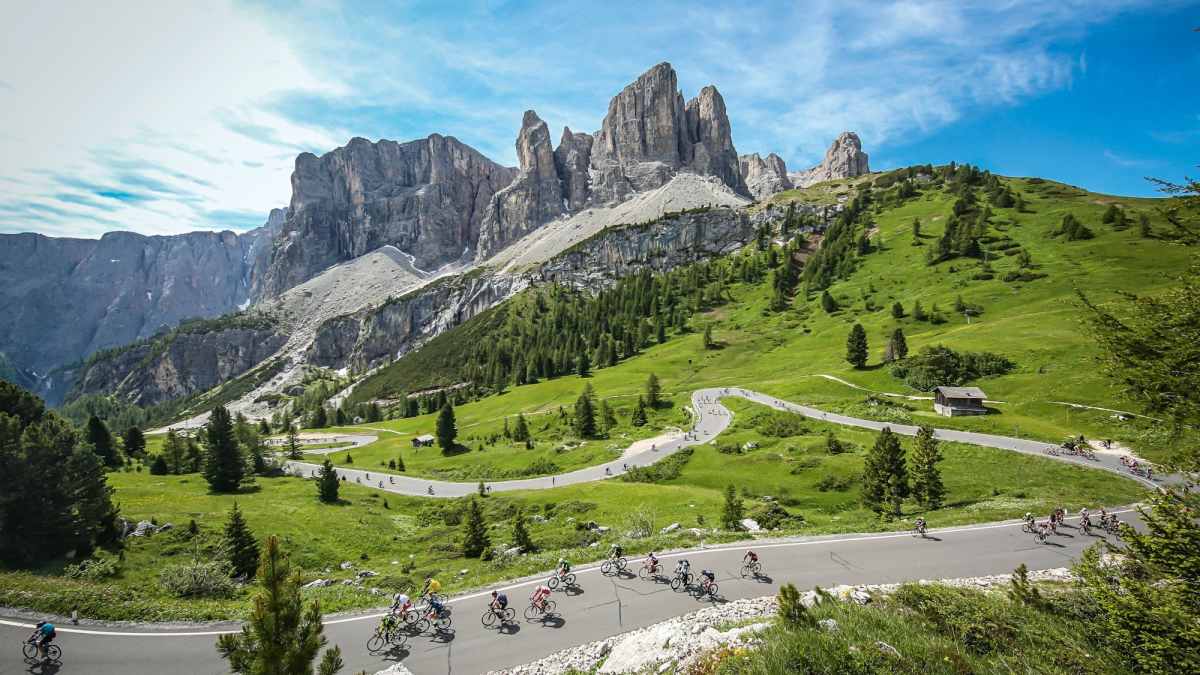
On one Saturday each month, at least the south ramp of Culoz and the west ramp of Anglefort are closed to motorised traffic for eight hours. Not only for the "fêlés", but also for anyone who just wants to climb the mountain with its rewarding panorama. From the iconic summit cross, you can see far across the Rhône valley and Lac de Bourget to the white Mont Blanc massif on a fine day.
Journées Cyclo - the 4 car-free days 2026
- Dates: Saturdays, 13 June / 11 July / 8 August / 12 September from 7 a.m. to 3 p.m.
- Starting points: Culoz and Anglefort
- Info: ain.fr/journees-cyclo-du-grand-colombier


Gitta Beimfohr
Editor
