


In this article, we use so-called affiliate links. With every purchase through these links, we receive a commission from the merchant. All relevant referral links are marked with . Learn more.
Data and facts about the Rose Shave Rival AXS
| Weight | 8.5 kg |
| Drivetrain | SRAM Rival AXS |
| Wheelset | Rose R30 |
| Front tire | Continental Grand Prix TR 700x32c |
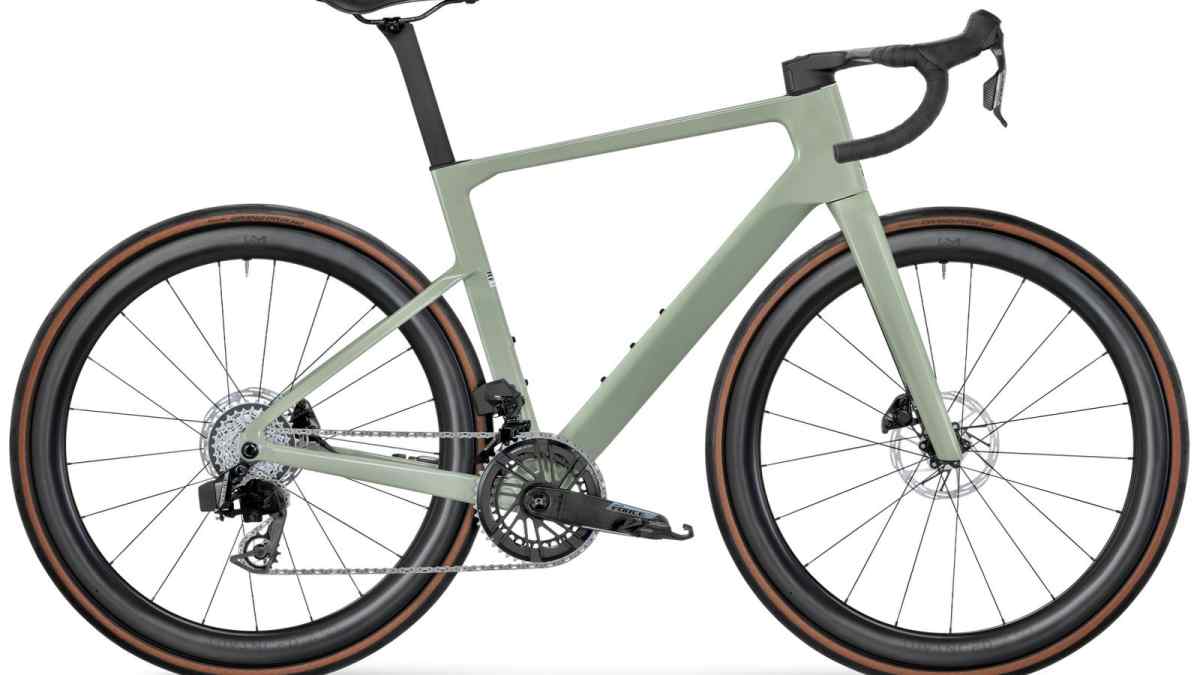
With the Shave, Rose has brought its long-distance racing bike closer to its high-performance competition models. The aerodynamically shaped carbon frame It looks almost identical to the Shave FF racing bike, but allows for a significantly less extreme riding position. The riding position on the Shave is slightly more relaxed than on the Stevens Izoard or the Cube Agree, but considerably more sporty than on the decidedly upright Scott Addict 30, which featured in the comparison in TOUR 9/26.
The Shave It is therefore ideal for cyclists who want comfort on long rides but do not wish to compromise on a sleek, aerodynamic look or a dynamic riding position. It lacks eyelets for mudguards or a top-tube bag, and there is no integrated storage compartment. The tyre clearance on the Shave is 36 millimetres. Rose thus remains closer to the classic road racer than some of its more versatile all-road competitors.
A surprise in the comfort test
One point of criticism raised by the Shave Force AXS from the first TOUR test This issue now appears to have been resolved. At the time, the rear suspension, with a spring rate of 155 newtons per millimetre (N/mm), was still unusually stiff for a comfort-oriented sports bike. On the current Rival model, we now measure 118 N/mm – the lower the figure, the more supple the suspension. This significantly improves comfort, bringing it up to a competitive standard.
Admittedly, the Rose doesn’t quite measure up to the specialists in this discipline, who are renowned for their comfort: The Giant Defy and that Scott Addict at the rear, they measure 78 and 79 N/mm respectively. Nevertheless, the new figure is considerably better suited to the demands of a modern endurance racing bike. Whether the significant deviation from the Force model is due to component tolerances or a pre-production seatpost on the first test bike cannot be conclusively determined on the basis of just two examples. One thing is certain: the Rival test model offers noticeably better suspension at the saddle.

Balanca: a blend of sportiness and comfort
In terms of handling, it retains its close resemblance to the more expensive Shave and, to a lesser extent, to the competition-oriented Shave FF. The bike steers with precision and responsiveness, without becoming skittish on long descents. Compared to the very smooth-riding Giant and the Scott, which is designed even more for safety and visibility, it feels sportier, however. The Cube follows a similar concept, but positions the rider in a slightly more stretched-out position, thereby striking an even finer balance between a marathon bike and a classic road bike.
At 8.5 kilograms, it falls short of the Shave Rival The manufacturer’s specification is 8.3 kilograms, and it weighs 800 grams more than the Force model. That might sound like a lot at first, but it’s not out of the ordinary in the current competitive landscape. If we leave Cube’s high-flyer out of the equation, this is roughly in line with the average weight of the bikes tested so far.
Potential for tuning wheels
A significant proportion of the extra weight is in the rotating components, particularly the very basic or low-cost wheelsets. The front wheel weighs 1,444 grams, the rear 1,937 grams. The Force model tested, which features simple carbon rims, weighed 260 grams less; compared with the Cube, a good 800 grams more weight has to be set in motion.
Some competitors in this price range have different priorities: Giant combines the Shimano 105 Di2 – which is clearly more cost-effective for manufacturers to source – with carbon wheelsets, as do Scott with the Addict 30 and Van Rysel with the EDR. As a result, the Rose feels less responsive than many of its rivals when accelerating and on steep climbs.
Reliable technology
That’s what a ‘Sparbrötchen’ is Shave Rival Not for that reason, though. The electronic SRAM Rival AXS shifts reliably, brakes superbly and, with 46/33 teeth on the crankset and a 10–36 cassette, offers a mountain-ready gear system with low gearing. The standard, single-sided power metre is a notable feature. The elegantly designed carbon cockpit also sets the Rose apart visually from bikes with simpler designs. There is scope for customisation in the wheels. Lightweight carbon wheels and high-quality tyres with TPU inner tubes or a tubeless setup should save several hundred grams in weight and noticeably improve responsiveness.

Jens Klötzer
Editor