


Specialized S-Works Crux review: Is this sophisticated gravel bike now even faster?
Jens Klötzer
· 14.08.2026


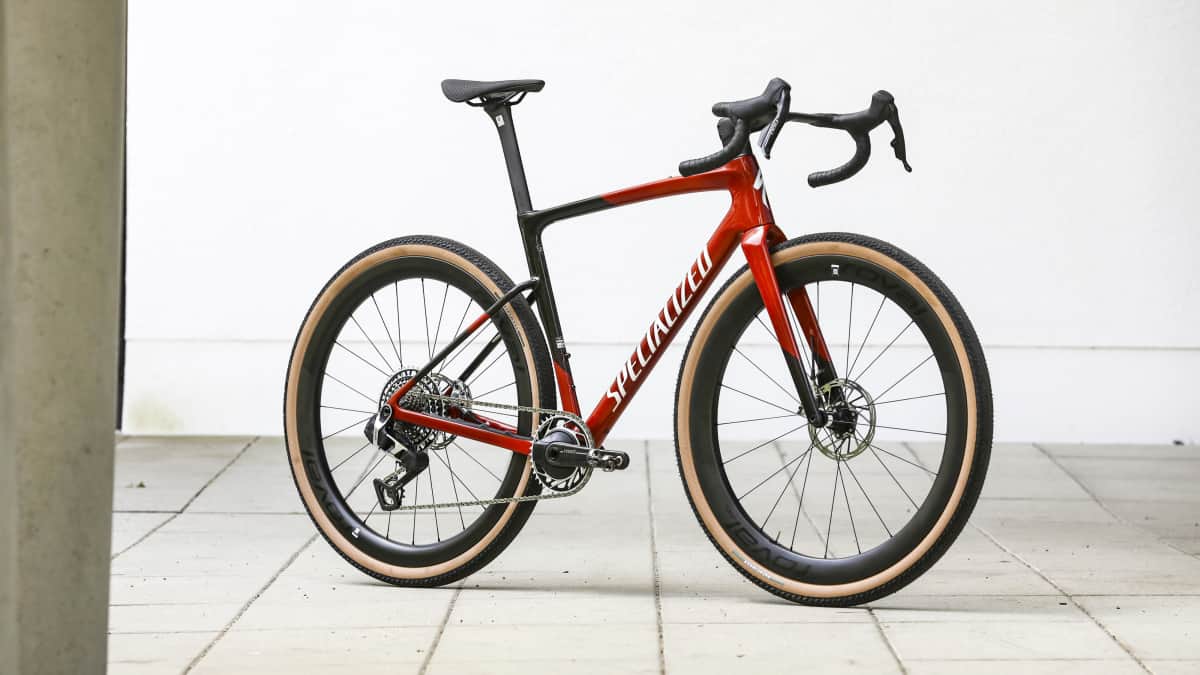
Data and facts about the Specialized S-Works Crux Red AXS
| Weight | 7.33 kg |
| Drivetrain | SRAM Red XPLR AXS |
| Front brake | SRAM Red |
| Wheelset | Roval Terra Aero CLX |
| Front tire | Specialized Pathfinder TLR 45-622 |
Over the course of its five generations, the Crux has undergone a number of fundamental changes: the first generation, launched in 2010, was a robust cyclocross bike with an aluminium frame and cantilever brakes; over time carbon fibre was introduced as a material, along with disc brakes. The fourth generation adopted a new look with wider tyres, becoming a sporty and A gravel bike that could well be a record-breaker. The fifth edition, which is now being launched, demonstrates that the visual style can change drastically even within a single category.
In the video: TOUR reviews the Specialized Crux
Like a Tarmac with balloon tyres
Instead of the classic round tube cross-sections, the Crux 5 is aerodynamically optimised, drawing heavily on road racing; at first glance, it looks like a Tarmac SL8 fitted with absurdly thick tyres. The silhouette is the result of an elaborate development process based on lap times on prominent gravel race courses: the new bike is designed to help athletes save not just seconds, but nearly ten minutes over long distances such as the Unbound, partly due to improved aerodynamic properties. To achieve this, the bike has actually become heavier than its predecessor – by more than 200 grams in total.

As light on its feet as a road racer
Nevertheless, the Crux remains one of the lightest gravel bikes on the market. As well as improving aerodynamics, the developers have addressed further requests from their professional athletes. With tyre clearance of up to 55 millimetres, the bike can be adapted to handle even the roughest, muddiest terrain. As standard, the bike comes fitted with the brand’s own Pathfinder tyres featuring a smooth centre section, which surprise with their remarkably low rolling resistance right from the very first metres: on tarmac, the Crux rides almost as nimbly as a road bike. Delicate lugs on the tyre shoulders help maintain traction, but on muddy terrain, these fast tyres are likely to reach the limits of their grip.
Virtually no foreign components
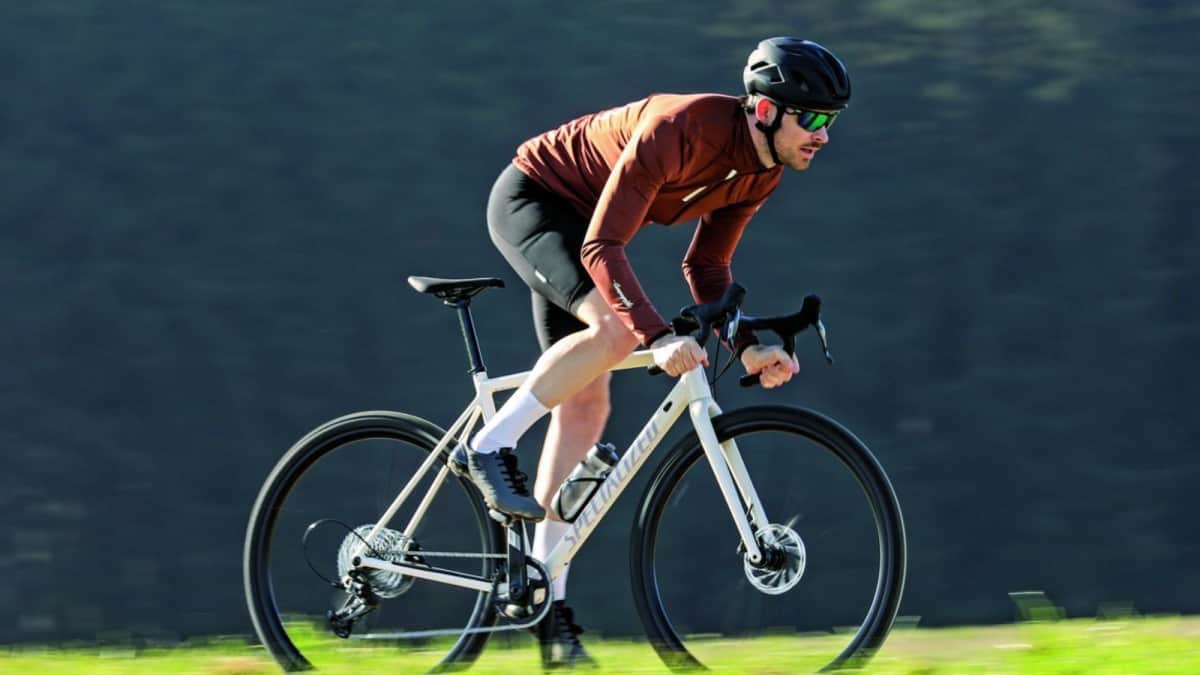
Much like on the Giant Revolt Even the Specialized developers rely very little on components from external suppliers, apart from the gears and brakes. In addition to the tyres already mentioned, the in-house saddle and the Terra cockpit, the Crux also features new Roval wheelsets, which are built with carbon spokes and lend the bike remarkable agility. The geometry and handling have also been optimised in collaboration with athletes. The riding position remains well-suited to long distances and is slightly more relaxed than on the Giant Revolt. The comfortable cockpit with a low drop and the comfortable saddle make even long days on the bike bearable.
Faster thanks to greater stability on the slopes
It seems that the greatest need for change was identified in the bike’s handling: a lower bottom bracket has lowered the overall centre of gravity, whilst a flatter steering angle makes the steering more stable on rough terrain. A steeper seat angle shifts the rider’s weight further forward, which helps keep the front wheel on the ground on steep climbs. Compared to its lively, almost nervous predecessor, the new Crux feels noticeably more balanced and stable on the road. Particularly in fast corners, you feel more confident that the bike will respond exactly as intended. The Specialized developers argue that this, too, makes for a faster ride overall.
An expensive bit of fun
Nevertheless, the Crux remains agile enough to be a joy to ride even on narrow trails or on a cyclo-cross course. The combination of a moderate riding position, very forgiving handling and gear ratios suitable for mountain riding is likely to be a lot of fun not only for professional racers but also for beginners. However, the price for the lightweight S-Works version is high: the Crux costs 14,000 euros – exactly the same as the professional road bike, the Tarmac – and is therefore likely to remain a pipe dream for many. A new version called the S-Level doesn’t burn quite such a big hole in your pocket. At first glance, it appears to be equipped identically to the top-of-the-range model; however, the wheels come with steel spokes and more affordable DT Swiss hubs, and the ceramic bearings in the wheels, headset and bottom bracket are not included in the package. The Expert model with SRAM Force is priced at 6,999 euros, whilst the Comp model with SRAM Rival costs 4,499 euros. The only version fitted with Shimano gears is the entry-level Sport model with 1x12 GRX, priced at 3,999 euros.

Jens Klötzer
Editor