


As early as the Presentation of the G85 Cezal gravel platform Look has announced further, more specialised models. The G85 Cezal RS now fills the announced racing niche. At Look, the RS designation traditionally stands for the sportiest models in a range. It does not replace the existing all-rounder, but sits above it: a lighter carbon construction, greater stiffness, an integrated race cockpit and exclusively high-quality 1×13 drivetrains set it apart from the G85 models already available. With the G85 Cezal RS, the difference is limited to in addition to the G85 Cezal, which is already available Not in terms of components or paintwork: Look has used a modified carbon construction and has designed the front end to better accommodate an aerodynamic riding position. The painted frame is said to weigh 1,000 grams in size M, which is around 150 grams lighter than the previously stated weight of the G85-Cezal frame. Look states that the top-of-the-range model with SRAM Red XPLR weighs under eight kilograms.
New carbon construction, familiar platform
The external shape and basic design are closely related to the G85 Cezal, which was unveiled back in April 2026. However, Look has altered the fibre layout on the RS. In the areas relevant to power transmission and steering precision, stiffness is said to increase by 20 per cent. The manufacturer does not specify which measurement points, loads and comparative values this figure is based on.
Look uses the following as a reference: 795 Blade RS 3 road bike and refers to a comparable level of drivetrain efficiency. This is, first and foremost, a design objective and does not prove that both bikes handle with the same directness under real-world conditions. After all, a gravel frame must meet significantly different requirements to a road racing bike, due to tyre clearance, a longer fork and other load conditions.

The 425-millimetre-long chainstays remain unchanged. Look combines them with a bottom bracket position optimised for gravel racing and a comparatively compact frame. This is intended to deliver responsive steering and good control on fast or more technical sections. Whether the RS handles noticeably more precisely than the standard G85 Cezal remains to be seen in a comparative test.
Aero Carbon RS3 Cockpit: lower, but still adjustable
The main difference lies at the front. On the standard G85 Cezal, a Look aluminium stem and a separate Deda handlebar are fitted as standard; until now, a carbon cockpit had only been available as an expensive option. The G85 Cezal RS, on the other hand, comes with the Aero Carbon RS3 as part of the package.
The handlebars and stem form a single visual unit, but can still be combined in different configurations. Look specifies seven stem lengths, three handlebar widths and a height adjustment range of 50 millimetres. This is intended to allow for a more precise adjustment of the riding position than is possible with many fully integrated handlebar sets. The cables are routed entirely internally.
According to Look, aerodynamic development therefore focuses primarily on the rider’s position. In practice, a lower and narrower position does indeed offer greater potential than minor adjustments to individual frame tubes. However, Look has not published any specific wind tunnel figures or details regarding power savings. The aerodynamic advantage cannot therefore be quantified at this stage.
Full integration also has the usual drawbacks: changing the stem length or handlebar width at a later date is more complicated than with externally routed cables, despite the wide range of options available. Work on the headset may also require the brake lines to be removed or bled.
3D-Wave rear triangle designed to reduce vibrations
On the rear triangle, multi-curved seat stays are designed to allow vertical flex without significantly compromising lateral stiffness and, consequently, power transfer. Look claims that the G85 Cezal RS reduces transmitted vibrations by 15 per cent. At the same time, the rear triangle is designed to keep the rear wheel in better contact with the ground on uneven terrain.
According to the manufacturer, the frame is designed to provide sufficient suspension to allow for efficient riding even with narrower tyres. Nevertheless, the standard wheels are fitted with 45-millimetre-wide Hutchinson Touareg tyres – a common compromise in modern gravel races, offering a balance of traction, puncture resistance and rolling performance.
Up to 50 millimetres at the rear, 57 millimetres at the front
The RS is also following the trend towards ever-wider tyres, and race gravel bikes are no exception. At the rear, the standard single-chainring drivetrains can accommodate tyres up to 50 millimetres wide, whilst Look specifies a maximum of 57 millimetres at the fork.
The frame and geometry are also designed to accommodate suspension forks with up to 60 millimetres of travel. This means the RS can also be configured for rough, technically demanding races. However, a suspension fork adds weight and requires more maintenance; on fast gravel courses, the rigid carbon fork is likely to remain the more efficient solution.
The combination of wide tyres, suspension fork compatibility and a race-oriented design shows that Look does not view the RS as simply an all-road bike with a little more tyre clearance. Rather, its range of use extends from fast, firm gravel tracks to more technical routes, where control and traction become more important.
Models, specifications and prices
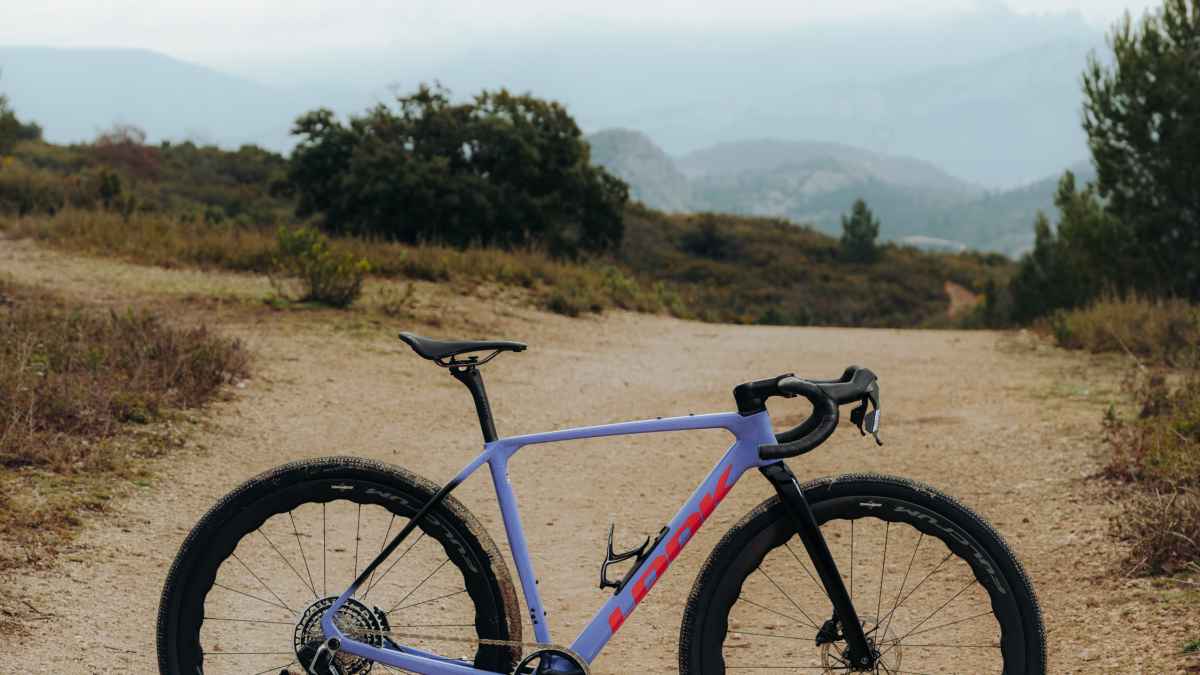
Look has announced that the G85 Cezal RS will initially be available in two complete configurations. Both feature SRAM’s electronic XPLR drivetrain with a single chainring, a 13-speed cassette ranging from 10 to 46 teeth, Fulcrum Sharq carbon wheels and 45-millimetre-wide Hutchinson Touareg tyres. The main differences lie in the groupset, brakes, weight and paint finish. For those who prefer to build their own bike, a frame set is also available, priced at 3,290 euros.
| G85 Cezal RS Force XPLR | SRAM Force XPLR 1×13, colour: Hypershift Blue | 8.3 kilograms | 8,990 euros |
| G85 Cezal RS Red XPLR | SRAM Red XPLR 1×13, colour: Chrome, Orange, Black | 7.9 kilograms | 6,990 euros |

Jens Klötzer
Editor