


A new layered system in the helmet is designed to protect cyclists from serious brain injuries in the event of a fall. Laboratory tests are said to have confirmed the technology’s effectiveness.
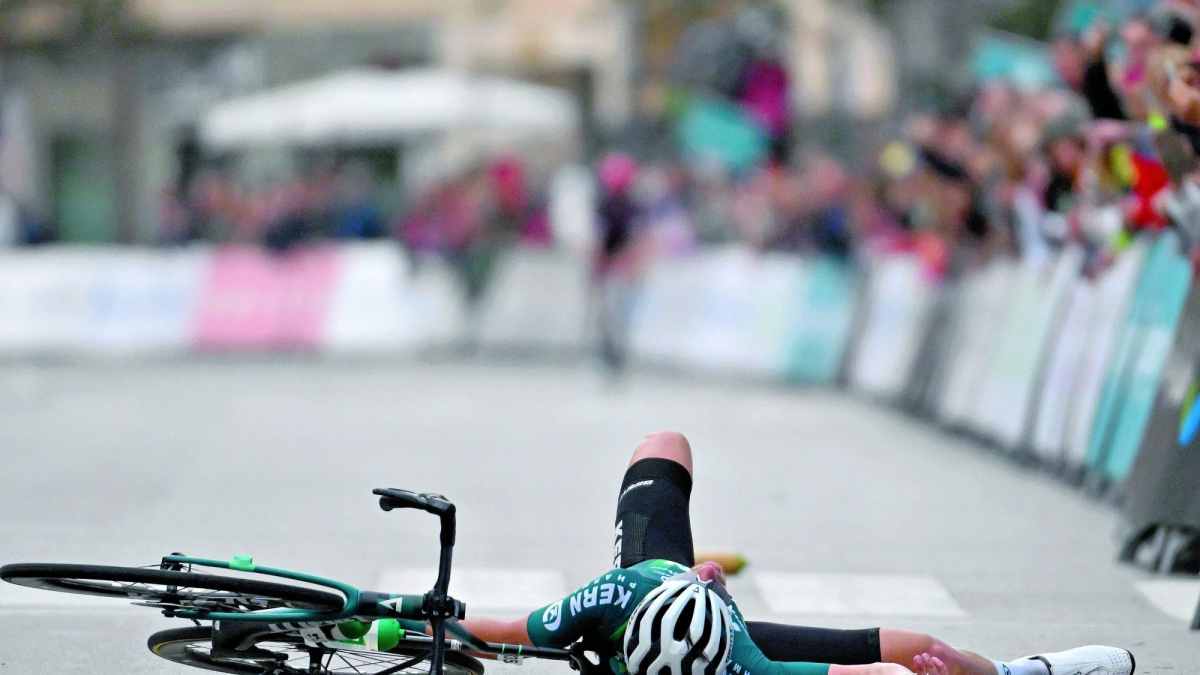
In everyday cycling accidents, purely head-on collisions are rare. Instead, when cyclists hit the ground at an angle, dangerous rotational forces are generated. These cause the brain to rotate within the skull. This often results in serious injuries such as concussions, haematomas and other traumatic injuries. However, conventional helmet tests, which are certified in accordance with current legal standards, have so far primarily tested for linear impact forces and have largely neglected this risk of rotation.
Ball bearings against rotational forces
An article in the trade journal ASME Journal of Biomechanical Engineering A recently published study now presents the so-called ‘Release Layer System’ (RLS), which is designed to address this safety shortcoming. The principle is similar to a controlled roll-away mechanism: in the event of an oblique impact, an outer polycarbonate panel detaches. This releases tiny ball bearings lying beneath it. These begin to roll, converting the dangerous rotational energy before the forces can reach the rider’s head.
The difference compared to the MIPS system
Whilst the concept of rotational protection is not entirely new in the helmet market, RLS’s approach differs fundamentally from that of existing market leaders such as the Swedish MIPS system. The MIPS system is a Internal the helmet’s built-in, movable plastic shell. It is designed to shift on impact in order to absorb the forces between the head and the helmet.
The RLS system, on the other hand, is located directly at the Outside of the helmet. According to the developers, this positioning offers a decisive advantage: as the technology is located on the very outer layer, it is the very first layer to absorb the impact. Furthermore, the roll-off mechanism can be activated across the entire surface of the helmet, rather than acting only at specific points on the inside.
Clear results in the laboratory
To scientifically assess the protective effect, a total of 96 simulated oblique impact tests were carried out under the supervision of Dr Domna-Maria Kaimaki. The tests took place simultaneously at the iCUBE laboratory at the University of Strasbourg and at the manufacturer’s own laboratory in London. Three common types of helmet – city, road and mountain bike helmets – were tested using two different standard head models.
The results of the biomechanical tests were clear: across all helmet types and impact conditions, the RLS system reduced the maximum angular velocity of the head by between 57 and 66 per cent. This damping effect reduced the calculated risk of severe brain injuries (classified as AIS2+) by 68 to 86 per cent compared with conventional helmets. The system proved particularly effective in the event of an impact to the front of the head: here, the risk of injury was reduced by up to 98 per cent with city helmets. Even at the impact point deemed least effective in the study, the risk reduction was still between 47 and 78 per cent.
Are laboratory tests really independent?
When interpreting the data, it should be borne in mind that the study was funded by the manufacturer, RLS, and that the authors work for the company or its partners. However, according to the press release, the test series at the University of Strasbourg were carried out independently.
The importance of such systems is likely to increase in the near future: the European Committee for Standardisation is currently working on amending the official test standards so that rotational forces are also taken into account as a mandatory requirement in regulatory approvals in future.

Josh Welz
Editor-in-Chief
