


In this article, we use so-called affiliate links. With every purchase through these links, we receive a commission from the merchant. All relevant referral links are marked with . Learn more.

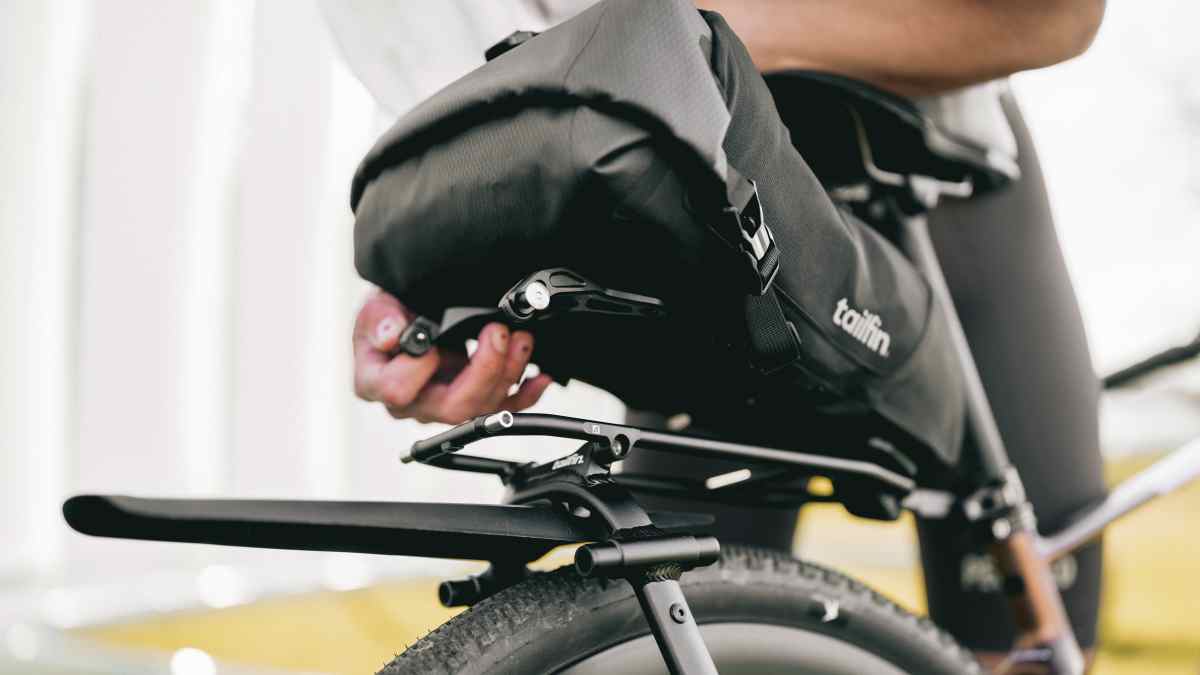
An ‘arse rocket’ is a large-volume Saddle bag, which is attached to the seatpost and saddle rail. It requires no fixed eyelets or straps. This makes it particularly attractive for road bikes and minimalist gravel bikes. It is perfectly adequate for an overnight stay with a light change of clothes, a rain jacket, a sleeping bag and a few small items. Combined with a frame bag and handlebar bag, this creates a sleek bikepacking setup,
The ‘Arschrakete’: light, slim, but not always a breeze
Its biggest advantage is the system’s low weight. A recent comparison between a saddle bag and a rack setup puts the weight saving of the ‘Arschrakete’ at around 400 to 500 grams. That may not sound like much, but it’s certainly noticeable on a sporty gravel bike.
Even on winding forest tracks and during fast descents on gravel, the bike remains sleek. There are no bags protruding from the sides, so it causes little hindrance when carrying it over obstacles. For those travelling light and wanting to ride their bike as it is during the week, this is the simplest solution.

The downside: packing requires discipline. The long, narrow bag will only hold items that can be compressed. Sleeping bags and clothing work well, but stoves, food or camera kit are less suitable. What’s more, a large saddle bag can swing about when pedalling uphill or on rough stretches if it isn’t packed neatly and secured tightly. Heavy items should therefore not be placed right at the back, but as low as possible and close to the seat post.
The luggage rack: heavier, but more reliable
A classic Luggage rack On a gravel bike, side panniers might initially seem like the less elegant solution. On long tours, however, it can be the far better option. Panniers are quicker to load, easier to access and can accommodate bulky kit more easily. Anyone travelling with a tent, warm clothes, a camping stove or a laptop can avoid the typical ‘bike-packing Tetris’ this way.
The rack also impresses in terms of handling, particularly when carrying heavier loads. The luggage sits lower down and can be distributed evenly on both sides. Modern, detachable systems are narrowing the gap between these and permanently fitted touring bike racks. The Ortlieb Quick Rack, for example, is designed by the manufacturer to carry up to 20 kilograms and can be used with various bag sizes.
However, the rack adds extra weight to the bike. On very technical terrain, wide panniers can get in the way, and not every gravel bike has suitable mounting points. Before buying, you should therefore check what mounting points are available on the frame and axle, and what load the manufacturer specifies.
Three tours, three clear recommendations
For a minimalist overnight trip with accommodation or a lightweight sleeping arrangement, the Arschrakete is the top choice. It keeps the bike light and is all you need when luggage space is limited.
For a two- to five-day trip with a tent and self-catering, a luggage rack is usually less of a hassle. In this case, storage space, ease of access and a stable rear end are more important than saving that last gram of weight.
For commuters who want to get out and about at the weekend, a detachable rear rack is the best compromise. It reliably carries everyday bags and can be quickly removed for a spot of cycling.
That is our conclusion
The ‘Arschrakete’ isn’t any better than the luggage rack; it simply works on a different principle: minimalist, lightweight and sporty. The luggage rack is the better choice for anyone who wants to carry more, pack more quickly and have to improvise less whilst on the move. If you honestly assess how much luggage you actually need to take with you before buying, you’ll almost automatically make the right decision.

Matthias Borchers
Editor