


In this article, we use so-called affiliate links. With every purchase through these links, we receive a commission from the merchant. All relevant referral links are marked with . Learn more.
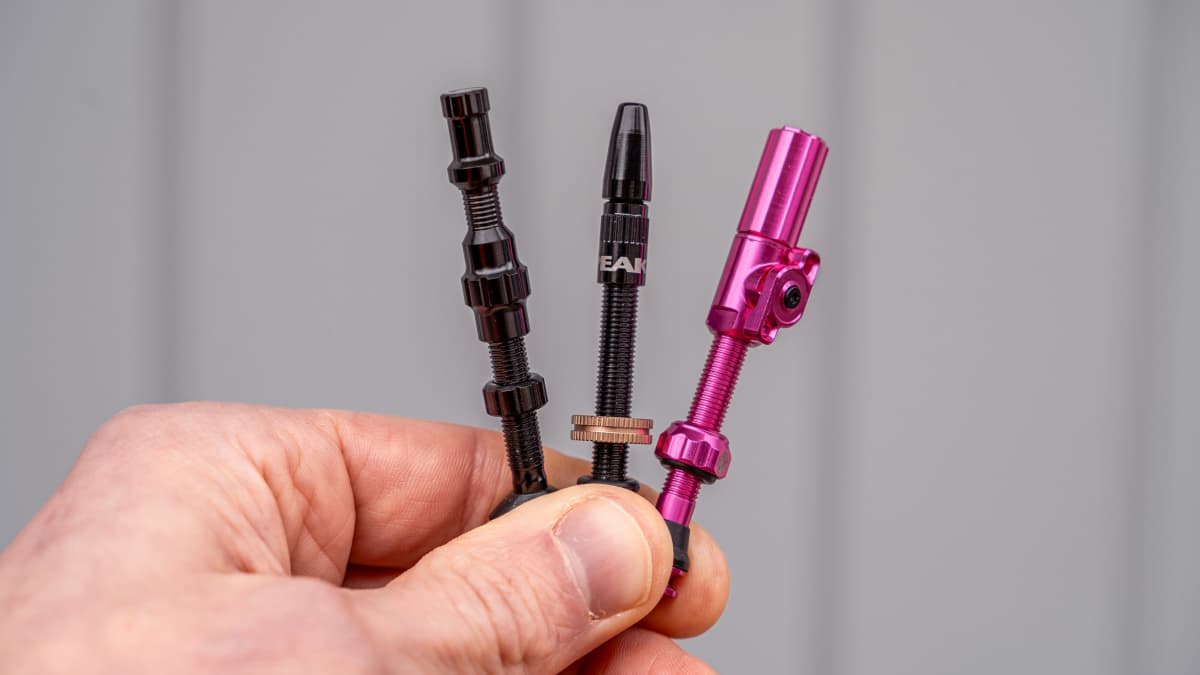
The same fault occurring twice in a year – one that nobody would have spotted a pattern in for a long time: the tubeless valve breaks – not the tyre, not the rim. A fault that rarely gets much attention, but which apparently occurs more often than one might think.
I’ve been cycling for years, so Tubeless valve I haven’t heard of it breaking down even once in the past 10 years. This year, I’ve already seen the fault twice. - Sandra Schuberth, TOUR editor
Where’s the hole?
It was during a gravel ride in March that a group of daring gravel cyclists braved the darkness and met up for an after-work ride. On one stretch, there were loads of sticks lying on the path. There was a crash, closely followed by a hiss and a cry of “Stop, flat tyre!”. Then the search for the puncture began. It took a while before we spotted the bent and almost completely torn-off tubeless valve. A stick had got caught in the spokes and damaged the valve. It broke just below the knurled nut, exactly where the valve exits the rim.
The second incident occurred in early July, also during a group ride. Another puncture, another search for the fault, and once again nothing visible on the tyre. Sealing liquid must have been leaking out somewhere – after all, it had only just been topped up. On looking around, however, one thing stood out as odd. The valve was missing. Presumably, a stick had been involved here too. This time, the valve had been completely torn off; even after a search, it remained missing.
Incidentally, both valves were made by different manufacturers.
How to repair the fault
In both cases, there was only one way to get back on the bike:
- Remove one side of the tyre from the rim
- Wipe away the tubeless sealant with a cloth
- Insert the hose
- Put the tyre back on the rim, pump it up, and carry on driving
Should the repair kit now include a spare valve?
In both cases, there was no spare valve in the repair kit. Given that this fault has occurred twice in the space of four months, it would make sense to add a spare tubeless valve to the repair kit. But that raises the question: will the tyre pop back into the correct position in the rim using the mini-pump or the electric air pump? If not, I’ll have to resort to the emergency inner tube again. For everyday rides, I’ll continue to rely on the emergency inner tube; when travelling, I’ll give the valve another thought. Because when I’m out and about for longer periods, I prefer going tubeless. When travelling, I’d be prepared to put up with the extra hassle – and the possibility that it might not work out.
To replace the valve, you don’t need to remove the tyre completely from the rim – one side is enough. Then you need to remove the rest of the faulty valve and fit the new one. To increase the flow of air from the pump into the tyre, it is advisable to unscrew the valve core, unless you are using a high-flow valve. Then inflate the tyre until it is correctly seated. If the valve core is removed, the air will escape when you disconnect the pump, but the tyre should remain in place. You can now reinsert the valve core and, finally, inflate the tyre again to the desired pressure.
Have you been affected as well?
Was this just bad luck in two isolated cases, or does this fault occur more often than people realise? Please feel free to leave a comment if you know of similar cases or have been affected by this yourself.

Sandra Schuberth
Editor
