2026 Tour de France: Preview of Stage 17: Only for the toughest sprinters
Sebastian Lindner
· 21.07.2026

Key information on Stage 17 of the 2026 Tour de France
- Wednesday, 22 July: Chambéry – Voiron
- 174.7 kilometres, 2,200 metres of elevation gain (hilly)
- Mountain classifications: km 19.2 (4th category), km 34.6 (4th category), km 49.6 (3rd category), km 59.5 (4th category)
- Intermediate sprint: 147.5 km
- Start: 1.20 pm, Finish: approx. 5.18 pm
- Live updates and results
The route of the 17th stage of the Tour de France

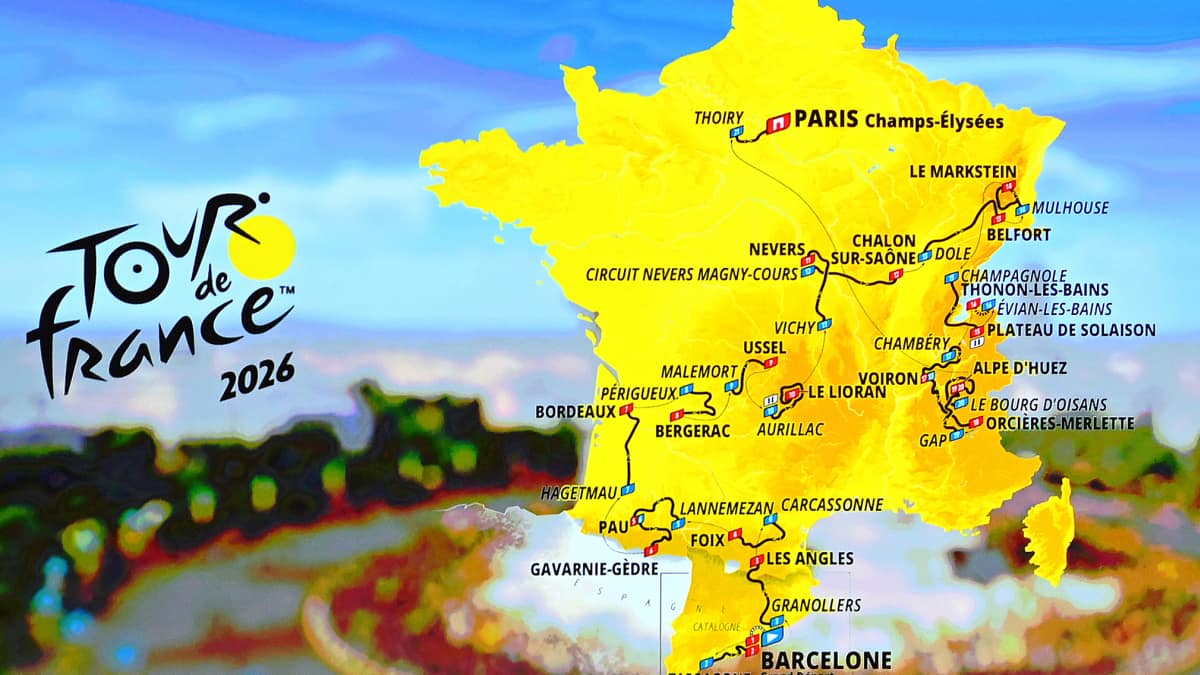
Although the 17th stage of the Tour continues through the Alps, it gives the very high mountains a wide berth. Nevertheless, after setting off from Chambéry on Lac du Bourget, the route climbs from 270 to 1,140 metres above sea level over the next 50 kilometres. Part of this total ascent comprises three mountain classifications: two of the 4th category and one of the 3rd category. However, a considerable amount of the elevation gain remains unclassified.
This remains the case as the race continues. After this northern mountain loop, the route heads back to Chambéry and from there continues south-west to the finish in Voiron. First, the riders must climb the Col de Couz – another 350 metres of elevation gain, for which no mountain points are awarded. Only after that does the route level off somewhat, though it doesn’t remain truly flat either. The intermediate sprint takes place around 25 kilometres from the finish.
The route then descends for six kilometres before the final climb awaits the riders: it is 2,600 metres long and has an average gradient of four per cent. The rest of the route is relatively flat, but technically very demanding. On the final kilometre alone, there are three 90-degree bends, as well as several speed bumps.

A sporting analysis of Stage 17 of the 2026 Tour de France
For some, it’s the final sprint stage of the 2026 Tour; for others, it’s just another day for the breakaway riders. A.S.O. itself classifies the day as a flat stage, but nearly 40 kilometres of continuous climbing, interrupted only by a short descent, will push quite a few sprinters beyond their limits. And that’s not all. The almost ten-kilometre climb to the Col de Couz in the middle of the stage is uncategorised, but is essentially at least as difficult as the four mountain classifications in the first part of the race. The final climb before Voiron could also break the peloton up once again.

What’s more, Tim Merlier (Soudal Quick-Step) – who has been the best sprinter in this Tour so far – is no longer in the race. It was he who let his team do the work on the flat stages so far. They’ll certainly not be doing that now and will no longer be involved in the chase. So anyone wanting to sprint for the stage win will have to be in the breakaway group.
This stage seems tailor-made for Mads Pedersen (Lidl - Trek). He’s used to tackling mountains like these – even as part of a group. He could use today to dispel any remaining doubts that the Green Jersey is his.
The fact that even the A.S.O. does not necessarily expect a bunch sprint is evident from the route of the final stage, which, with its many bends, is hardly suited to a large group of riders still battling it out for victory.