


The new generation: Why professional cycling is getting younger and younger
Leon Weidner
· 09.09.2026

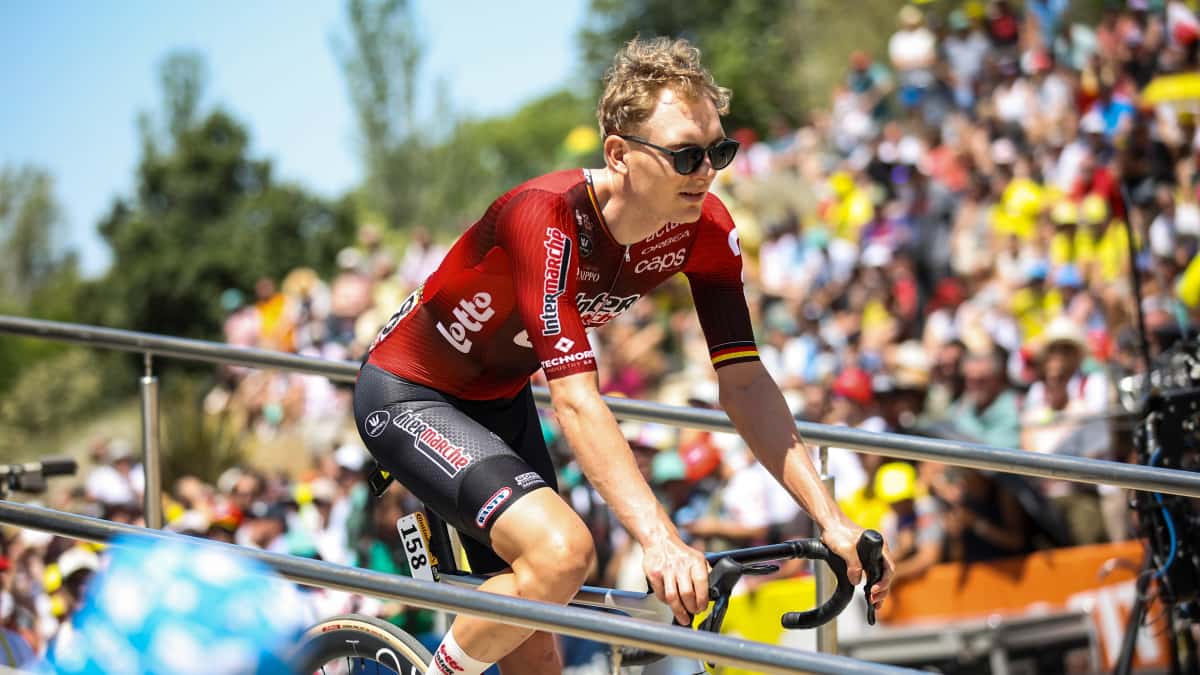
Paul Seixas is only 19 years old and is already in contention for the top places in his first Tour de France. Just a few years ago, such a scenario would have been almost unimaginable. However, the Frenchman epitomises a trend that is increasingly shaping professional cycling: the stars are getting younger and younger.
Whilst riders used to often only reach their full potential in their late twenties, today’s talented riders are already making their mark amongst the world’s best shortly after moving up from the junior ranks. Tadej Pogačar won his first Tour de France at the age of 21, Remco Evenepoel was already regarded as a prodigy whilst still a teenager, and riders such as Juan Ayuso and Cian Uijtdebroeks also made the leap to the top at remarkably young ages. But what is actually behind this trend?
The path into professional cycling is starting earlier and earlier
One of the main reasons is the increasing professionalisation of youth football. Today, ambitious young players often train in a similar structured way to how professionals did ten or fifteen years ago.
Performance testing, power meters, training platforms and personalised training plans are now part of everyday life for many up-and-coming cyclists. This enables talented riders to identify their strengths much earlier and to recognise the training stimuli they need to continue developing.

What’s more, scouts and teams are spotting young riders much earlier. Anyone who shows exceptional form as a junior these days often ends up in a WorldTour team’s development programme as early as 18 or 19, or even skips the U23 category altogether.
Science has transformed sport
Training science has also made enormous strides. Coaches now have access to a wealth of data that was scarcely available just a few years ago.
Training loads can be managed more precisely, overtraining is detected earlier, and a rider’s development can be tracked almost seamlessly. At the same time, nutritional science has revolutionised professional cycling. Modern carbohydrate strategies enable riders to cope with significantly higher training volumes and recover more quickly from exertion. The result: talented riders reach their peak physical performance more quickly than previous generations.
Teams have become more daring
In the past, young drivers often had to learn the hard way for years. Many teams relied on experienced veterans and initially had young drivers work as assistants.
Today, the mindset has changed. Teams are entrusting young riders with responsibility at an earlier stage and are prepared to develop them directly into team captains. Not least because success has shown that age is no longer a reliable indicator of performance. Anyone who can demonstrate they can produce the necessary wattage gets their chance, regardless of their date of birth.
It is not just professional cycling that is getting younger
This trend is by no means limited to cycling. Other sports, too, have seen their top athletes getting younger over the past few years. In football, teenagers are increasingly making the headlines. Players such as Lamine Yamal and Jude Bellingham have already taken on responsibility at top clubs at a young age. Young talents are now supported more intensively, coached more professionally and introduced to competitive sport much earlier than previous generations.
The trend is even more pronounced in swimming. In this sport, many athletes achieve their personal bests whilst still in their teens. It is not uncommon for international medallists to be just 16 or 17 years old. The combination of early specialisation, modern training management and scientific support accelerates their development enormously.
Even in sports such as tennis or athletics, the picture is similar. Young talents are often making their breakthrough earlier than they did just a few decades ago. For me, as someone who is an enthusiastic runner as well as a cyclist, the marathon is another example. Whilst the world’s elite was dominated for many years by athletes aged between 30 and 40, there are now numerous young runners who rank amongst the world’s best. Professional cycling is therefore by no means alone in this trend.
Are there any downsides to this development?
However, the trend towards younger athletes in professional sport is not viewed entirely positively. Those who are already under enormous pressure to perform in their early twenties also begin to experience physical and mental strain much earlier.
Some experts fear that this could lead to shorter careers. Furthermore, the pressure is mounting on young riders to deliver results as early as possible. Anyone who has not yet made their breakthrough by the age of 23 is, in some quarters, already regarded as a late bloomer, even though many professionals used to only really begin their careers at this age. The debate therefore raises a fundamental question: is specialising at an ever-earlier age really the best route to long-term success? Sports science actually gives a very clear ‘no’ to this question. However, where an ever-increasing pool of talent is available, this leads to a high level of wear and tear at a young age.
The new reality in the peloton
One thing is certain: professional cycling has changed. Talented riders are being spotted earlier, trained more professionally and fielded at the very highest level. Riders such as Paul Seixas are therefore not the exception, but rather a reflection of a fundamental shift.
Experience, racing instinct and tactical understanding will remain key factors for success in the future too. However, the days when young riders had to wait years for their chance seem to be over. Anyone with exceptional talent can now reach the very top of the sport whilst still in their teens. And that is precisely what makes modern professional cycling more exciting than ever before.

Leon Weidner
Editor