


Paterberg, Koppenberg, Oude Kwaremont: In the final kilometres of the Tour of Flanders, the race can tip over in seconds. Which passage decides everything and why the favourites have to risk everything there.
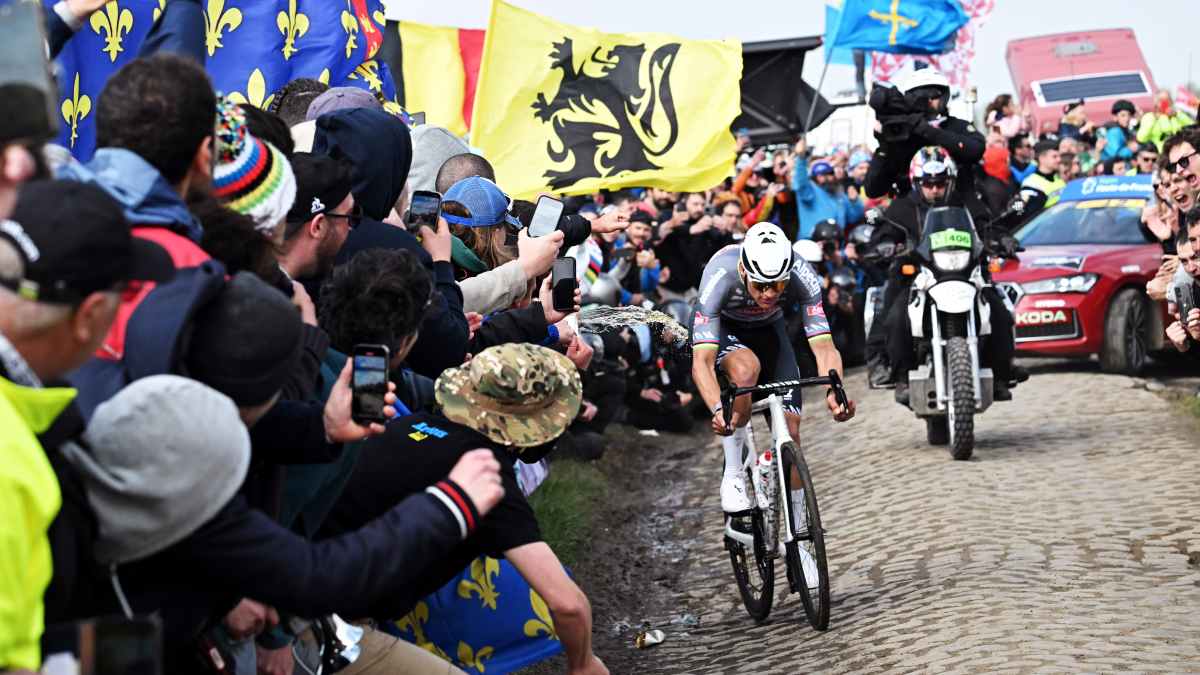
The Tour of Flanders is almost never decided at a single point, but through a succession of toughness, battles for position and repeated short maximum efforts. This is precisely why the last 50 kilometres are so exciting this year: the decisive climbs are so close together that they not only hurt, but also have the tactical effect of triggering a chain reaction. If you lose the connection once or even ride just a few positions too far back into the climb, you can miss the decisive group without having a real chance to correct the situation afterwards.
The heavy two
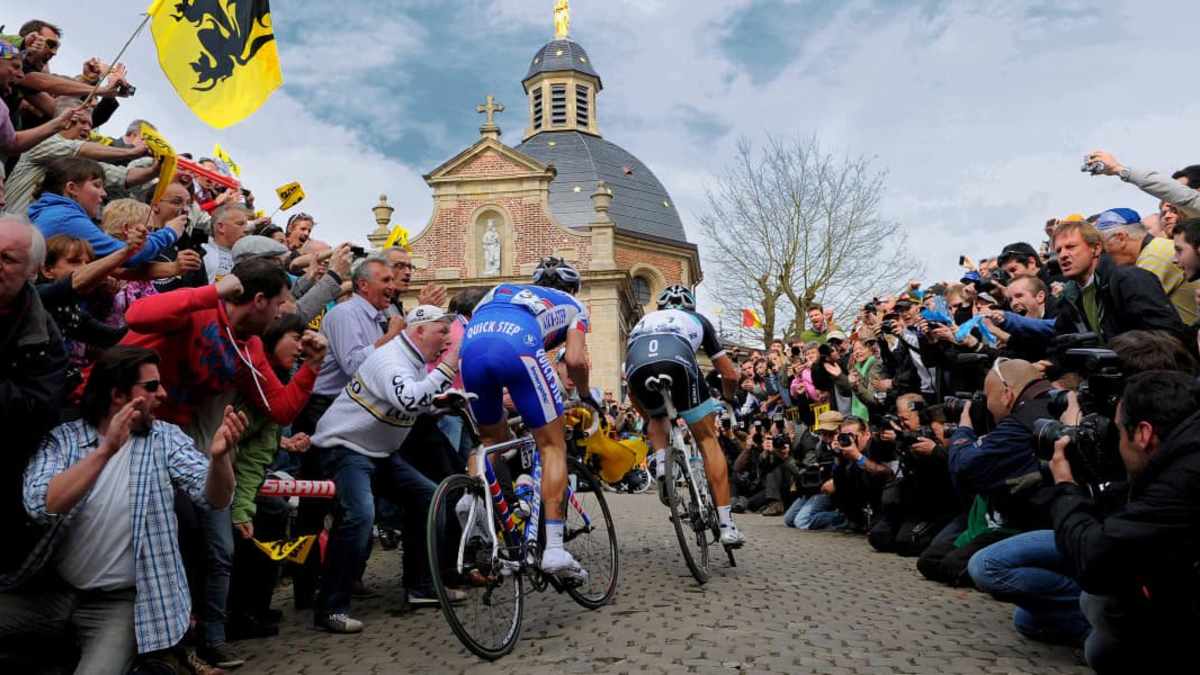
The combination of the Paterberg and Koppenberg takes centre stage. The Paterberg lies 51.6 kilometres before the finish and, with an average gradient of 12.9 per cent and a maximum of 20.3 per cent, is short but ideal for opening up the race. It is often ridden so hard here that the last helpers break away and individual favourites get into trouble if they are not perfectly positioned. This is the moment when a large field turns into an elite race, because every small gap is immediately costly and the pace often remains high after the climb.

Just a few kilometres later, the Koppenberg follows at 45.3 kilometres before the finish. With an average gradient of 11.6 per cent and a maximum of up to 22 per cent, it is the most brutal of the three climbs and often the place where an easy selection turns into a real breakaway. If there is an attack here or even if the pace is at its maximum, a few seconds of uncertainty or a brief drop in performance are enough to put you permanently behind.
The finale on the Kwaremont and Paterberg

This combination can therefore already bring the decision, or at least a preliminary decision. Either a small group breaks away because there is a lack of organisation at the back and too many teams only have their captain left, or a situation arises in which no final separation is achieved, but the number of riders who can realistically compete for victory drops drastically. This is precisely where a key tactical lever lies: for a rider like Tadej Pogačar, getting rid of strong sprinting classics rivals is crucial. If he can't shake them off, the advantage in the final tends to shift in favour of his opponents because he tends to have the worse cards in the final sprint.
However, there is still one last chance for the Slovenian. The classic Flanders final with Oude Kwaremont and Paterberg. The decisive difference then is that it is no longer just about selection, but about converting the selection into a gap. It is particularly important that there are still 13.2 kilometres from the Paterberg to the finish. That's long enough to get through with a lead if there's a gap at the top and the riders immediately follow through. At the same time, it is short enough for the chasers to quickly panic if there is no unity. And this is exactly what often happens in Flanders: if there are several strong sprinters in a small chasing group, not everyone is equally motivated to close the gap without compromise. This tactical friction is often the soloist's ally.

Conclusion - This is the most likely scenario
The bottom line is that the race will most likely be decided in two stages this year. Firstly in the Paterberg, Koppenberg and Taaienberg sequence, which reduces the race to such an extent that only a small group remains or an attack gets through. And if no final decision is made there, then at the latest in the final duel on the Oude Kwaremont and the last Paterberg, from which the 13.2 kilometres to the finish offer exactly the distance to avoid a sprint. For riders who don't want to rely on the fastest sprint to the finish, the message is clear: in Flanders, the race is usually not won in the final metres, but where the competition really can't keep up for the first time.

Leon Weidner
Editor