


Eddy Planckaert and Steve Bauer threw their bikes over the finish line of the Roubaix velodrome in a sprint, both with their eyes closed. Neither of them knew who had won. It took the jury ten minutes to decide the winner. On 8 April 1990, less than a centimetre decided victory or defeat at Paris-Roubaix. The Belgian Planckaert won the closest decision in the history of the race. Gilbert Duclos-Lassalle also beat Franco Ballerini by just a few centimetres in 1993, but 1990 is still regarded as the closest edition of the Hell of the North. The organiser A.S.O. recalls the dramatic finale and spoke to Bauer.
Bauer rode Paris-Roubaix eleven times between 1985 and 1995. The Canadian finished second in 1990, fourth in 1991 and eighth in 1988. Three decades after his career ended, he works as sports director at the NSN Cycling Team. "I believed that I could win Roubaix, and that was the goal every time I rode the race," Bauer told A.S.O. about his eleven participations. The history of Paris-Roubaix is not only written by the 95 winners, but also by riders like Bauer who came close to success.
Steve Bauer and the 1990 race
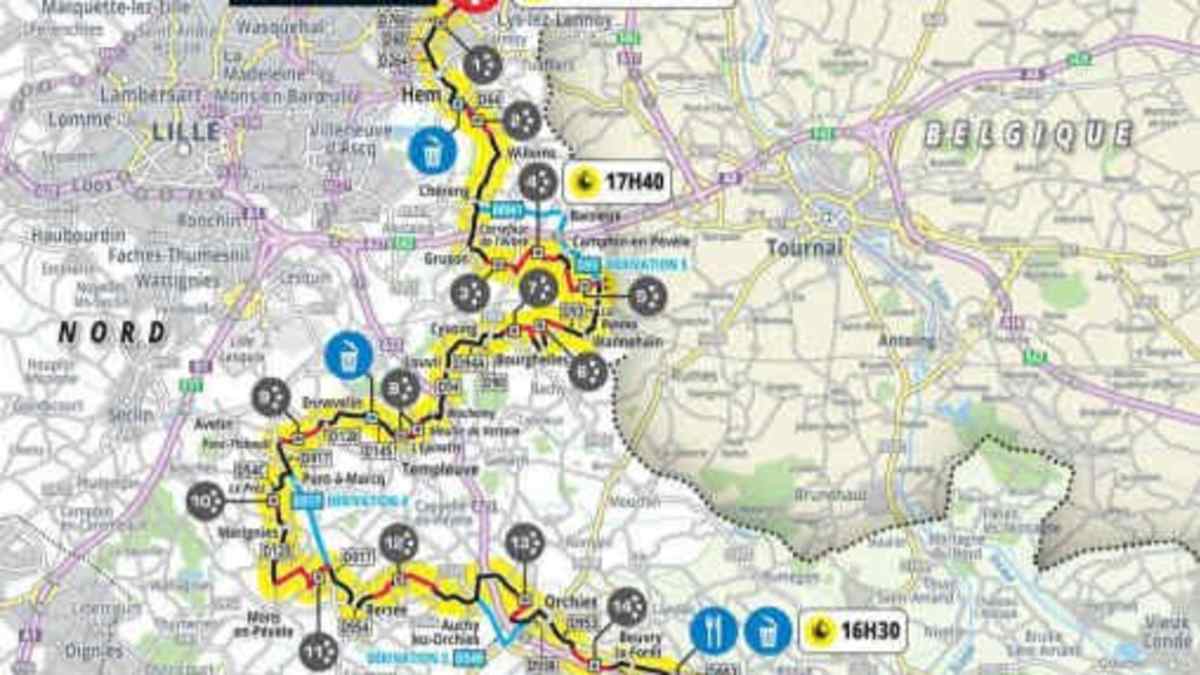
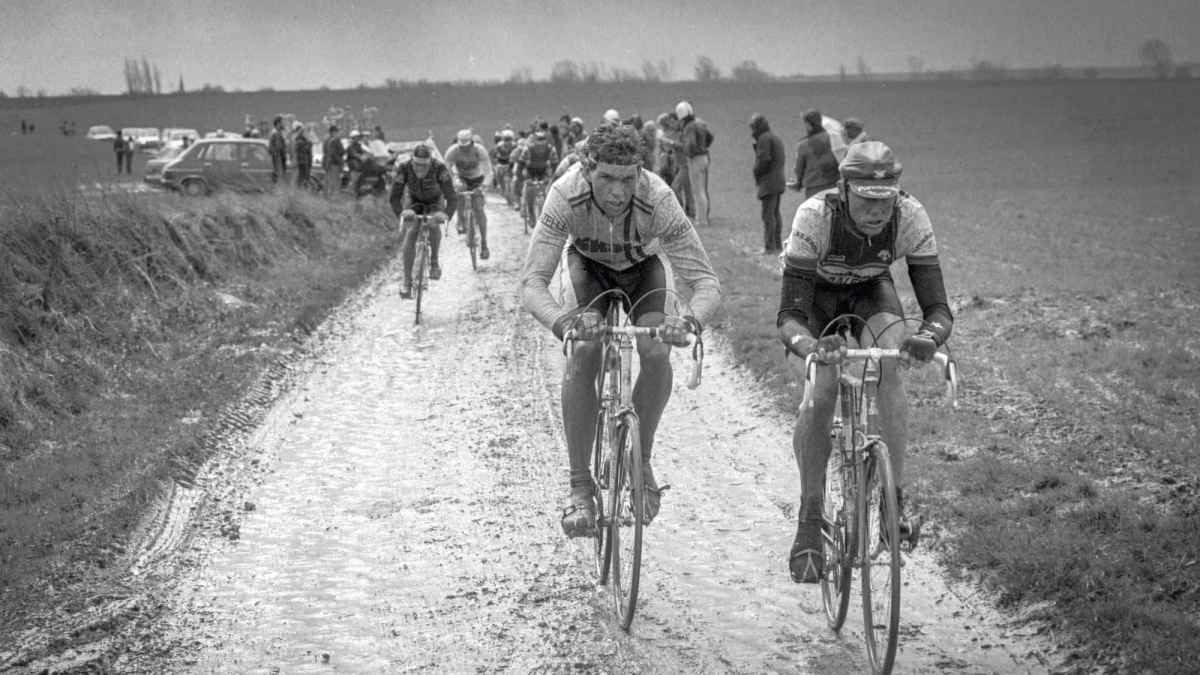
Steve Bauer, Eddy Planckaert and Edwig Van Hooydonck battled for seven and a half hours before reaching the velodrome. The route measured 265.5 kilometres and led over 55 kilometres of cobblestones. "Planckaert was in front for a long time and I was lucky that Laurent Fignon livened up the race that day," recalls the Canadian. "I played much more patiently than perhaps in other years. I followed, I watched... And in Cysoing I attacked to catch up, which was well timed at the time."

The group rode to the Carrefour de l'Arbre. "I think I was the strongest at that point, but I couldn't shake them all off," says Bauer. The sprint was inevitable. Jean-Marie Wampers, winner in 1989, and Gilbert Duclos-Lassalle, who would go on to win in 1992 and 1993, closed the gap on the velodrome. The race had been close all day, with minimal gaps on the road.
The riders threw the last of their strength and their bikes over the line. Nobody raised their arms. Everyone waited. "It was a strange moment because you just don't know what to believe is going to happen," said Bauer, describing the situation. The jury announced Planckaert's victory after ten minutes. The Belgian won Paris-Roubaix two years after his triumph at the Ronde van Vlaanderen.
"I was good, fit and ready, but it also comes down to how the race unfolded and I think I hit all the right targets," reflected the Canadian. "I made the right decisions until the last metre, where I suspect I only lost the race because I didn't time the bike throw right. And neither did Planckaert. But, you know, that centimetre he was ahead makes all the difference in the world."
Track riders on the velodrome
"I always thought that Roubaix would be something exciting and that it would suit me." Bauer rode Paris-Roubaix as a neo-pro. He had little experience in the Flanders Classics, but relied on his skills as a criterium rider from America and his track background. "It's just a fantastic way to finish the race," he says of the velodrome finale. "It's so iconic to finish on a velodrome, especially in a race like Roubaix, the Hell of the North."
"With the track experience, I immediately went up the steep bend to make sure I could accelerate or follow any attack," he says of the sprint. "I saw Edwig Van Hooydonck's attack, which was important to not get caught out. I came through at the bottom, which gave me an advantage over Planckaert on the finishing straight. We were neck and neck and he managed to beat me by a centimetre."
Bauer could have timed the wheel throw better. "You push so hard, you can only see black," he explains. "I almost expected the finish line to be a bit further down the straight. It's a 400-metre track and with the experience I had, I knew that the line would be off-centre, just before the banked turn. But I timed it wrong. But I still put in a pretty fantastic sprint."
Stories without victory
"I've just learnt that it's one of the most amazing bike races in the world," Bauer says of Paris-Roubaix. "If the athlete is inspired, it really brings a fantastic piece of your career because it creates stories... And one of the biggest stories is my second place by a centimetre. I guess if it wasn't an iconic race, I still wouldn't be telling that story."
The history of Paris-Roubaix does not only belong to the winners. The stories of survivors and unfortunate fates characterise the race just as much. "Of course I would like to have my own shower cubicle and the cobblestones in my living room," says Bauer. He also lost the 1989 World Championships due to a flat tyre in the final, when he was battling Greg LeMond for the rainbow jersey.
"Winning is sport, it's the top of the game and that's what everyone strives for," reflects the sports director. "But I can take away from Roubaix that I rode amazing races, not just second place, but I finished fourth, eighth as well. So I was in the game. I wasn't a helper. I really wanted to win the race, which is something nice to remember."
Steve Bauer Career and teams
Steve Bauer was born on 12 June 1959 in St. Catharines, Canada. He rode for La Vie Claire from 1985 to 1987, for Helvetia-La Suisse in 1988 and 1989, for 7 Eleven and Motorola from 1990 to 1995 and for Saturn in 1996. His greatest successes include Züri Metzgete 1988, the first stage of the Tour de France 1988, two stages of the Critérium du Dauphiné and the GP des Amériques 1988. He wore the yellow jersey for five days in the 1988 Tour and nine days in 1990.
His Paris-Roubaix results: 1985 DNF, 1986 29th place, 1987 DNF, 1988 8th place, 1989 DNF, 1990 2nd place, 1991 4th place, 1992 17th place, 1993 23rd place, 1994 DNF, 1995 17th place. The Canadian settled in Gullegem to learn the classics. "The French called me 'Le Canadien Bauer'," he recalls. He chose the heart of Flanders rather than the Mediterranean coast to get used to the cobbles and tough weather.
Steve Bauer as Sports Director at NSN
1996 was Bauer's last year in the peloton. It was the only season in which he did not start at Paris-Roubaix. Mapei dominated the race with Johan Museeuw, Gianluca Bortolami and Andrea Tafi. "Their collective strength was hard to beat," explains the Canadian. "Roubaix is one of those races where there are quite a few favourites who have a chance because of its nature. But a team like this really dominated with the number of riders who were able to control the front of the race in the finale."
Today, he observes the dominance of Mathieu van der Poel and Tadej Pogačar as sports director at NSN. He previously worked at CCC, where he accompanied Greg Van Avermaet to 12th place at Paris-Roubaix in 2019, and at Astana. NSN's Roubaix ambitions this year lie with riders such as Hugo Hofstetter and Lewis Askey.
"It's important to see the development as the race progresses," he says of his work. "It's a race where you have to be alert all the time and there's never a dull moment, from the start to the first cobbles, to the Arenberg forest and into the final. You can never let your guard down. You have to be sharp all day long."

Kristian Bauer
Editor