


Pain patches: What you need to know about the history and legend of the Paris-Roubaix pavé
Matthias Borchers
· 10.04.2026


The Hell of the North: Why Paris-Roubaix is so unique
"Paris-Roubaix is a terrible race to ride, but the best you can win."
Sean Kelly's famous sentence captures the essence of this cycling monument. Paris-Roubaix - often referred to as the Hell of the North - is a paradox: brutal, destructive, archaic and at the same time one of the most beautiful races in the world.
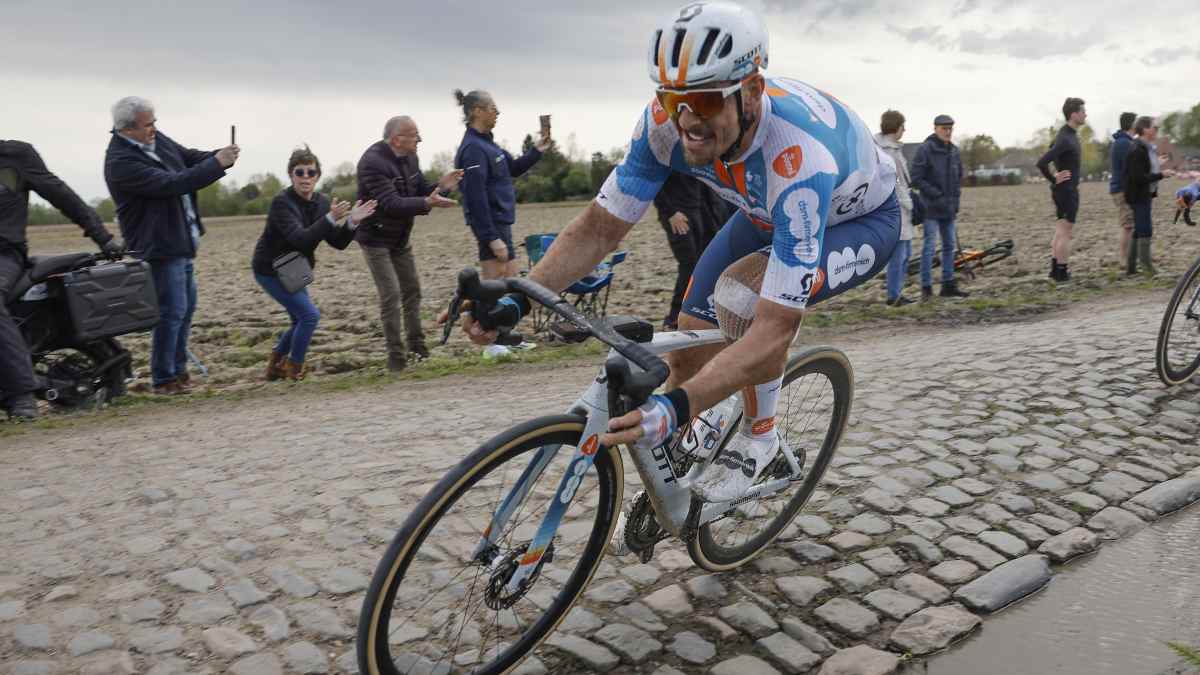
At the same time, Paris-Roubaix is a battle against a course that is unique in its current form: 30 pavé sectors with a total of 54.8 kilometres of cobblestones, spread over a total distance of 258.3 kilometres. At a typical winning speed of around 45 km/h, this means that the pros will complete the race in around 5 hours and 40 minutes - and spend more than an hour of that time on the cobblestones without interruption. The 2026 route once again follows the classic course with all the key passages, including Mons-en-Pévèle, Carrefour de l'Arbre and the long Hornaing-Wandignies-Hamage sector.
The origin of the pavés: how the Paris-Roubaix cobblestones were created
Originally, the pavés were not a sporting challenge, but pure infrastructure. In the 18th and 19th centuries, field paths and connecting roads in northern France were paved with regional granite - an extremely hard, resistant stone that could support heavy carts and did not sink into the mud.
Back then, farmers, traders, soldiers and factory workers used these paths every day. The stones were hewn by hand, often rough, angular and irregular. In addition, to this day they lie on earth or sand, not on concrete. This creates a surface that pushes even modern racing bike technology to its limits.

When asphalt later conquered road construction, the pavés disappeared almost everywhere. But some sections remained, are maintained today and are the hallmark of Paris-Roubaix.
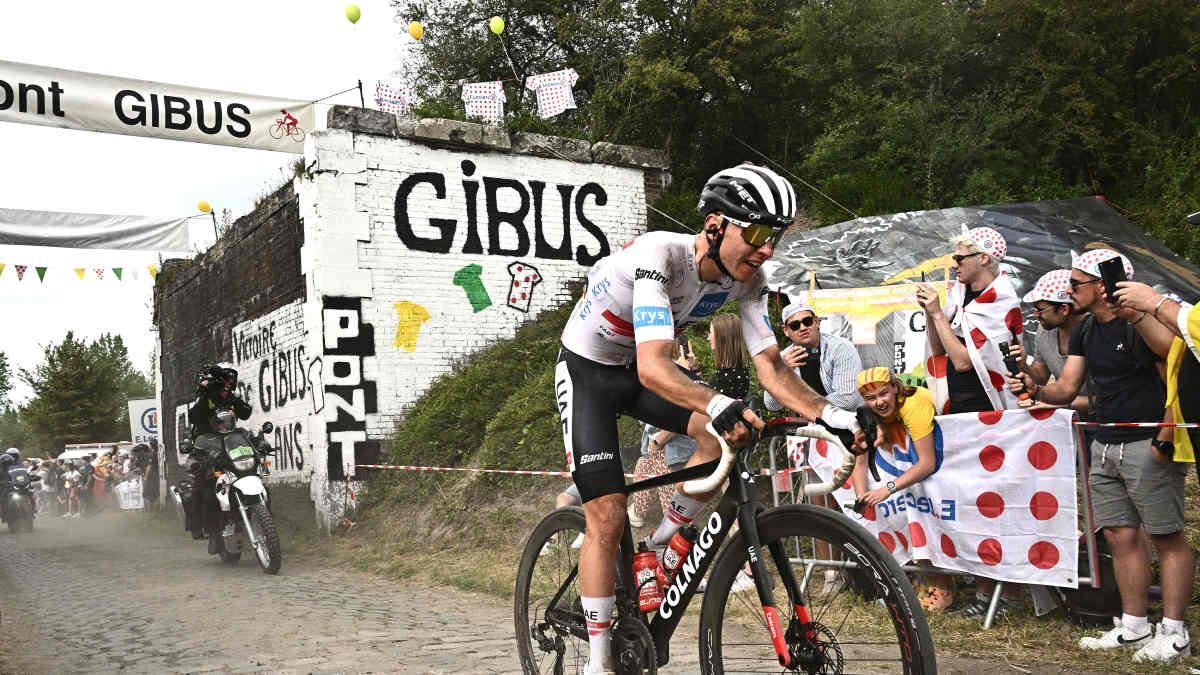
The toughest pavé sectors: Carrefour, Mons-en-Pévèle & Arenberg
If you want to win Paris-Roubaix, you have to survive the queen sectors: Mons-en-Pévèle, Carrefour de l'Arbre, Arenberg. Each of these sections is a chapter in cycling history, each with its own victims and heroes.
Henri Pélissier, winner in 1919, once put it in a nutshell:
"It's not a bike race, it's a pilgrimage."
That is precisely why it would have been fatal if these paths had disappeared. And in fact, many sectors were on the brink - until a group of volunteers intervened.
Les Amis de Paris-Roubaix: The guardians of the cobblestones

The association Les Amis de Paris-Roubaix was founded in 1977 to save the pavés. At that time, many sectors were already overgrown, destroyed or damaged by the use of heavy agricultural machinery.
Since then, the guardians of the cobblestones have been digging up every stone, resetting them, clearing paths of soil and vegetation and restoring entire sections. All of this is done on a voluntary basis and in close cooperation with the Amaury Sport Organisation (A.S.O.), the organiser of the race. Without them, only a fraction of the legendary pavé sectors would still exist today.
This makes them the invisible heroes of the race - the guardians of a cultural heritage that would otherwise have been lost long ago.
John Degenkolb: The German ambassador of the Pavés
For German fans, John Degenkolb is the emotional anchor of this race. His victory in 2015 made him the first German winner since Josef Fischer in 1896, but his connection to Roubaix goes far beyond his sporting success.
Degenkolb has been an official ambassador for Les Amis de Paris-Roubaix since 2018 - the first professional ever to take on this role. He has also supported the organisation financially and publicly, for example in 2019 as part of a major crowdfunding campaign to save the junior race. Surpluses went to the Amis.
The longest pavé sector of the race connects the two northern French municipalities of Hornaing and Wandignies-Hamage - and has been officially named "Pavé John Degenkolb" in honour of Degenkolb since 2020. The region thus honours the German Roubaix winner, who has campaigned for the preservation of the historic cobblestones like almost no other professional.
This is how difficult the pavés are: figures for 55 kilometres of cobblestones
55 kilometres of cobblestones - that sounds abstract. But the numbers behind it show why Paris-Roubaix is so gigantic:
- around 13.5 million bricks
- A total weight of 29,000 tonnes
- around 1,200 lorry loads of paving stones, strung together 19 kilometres long
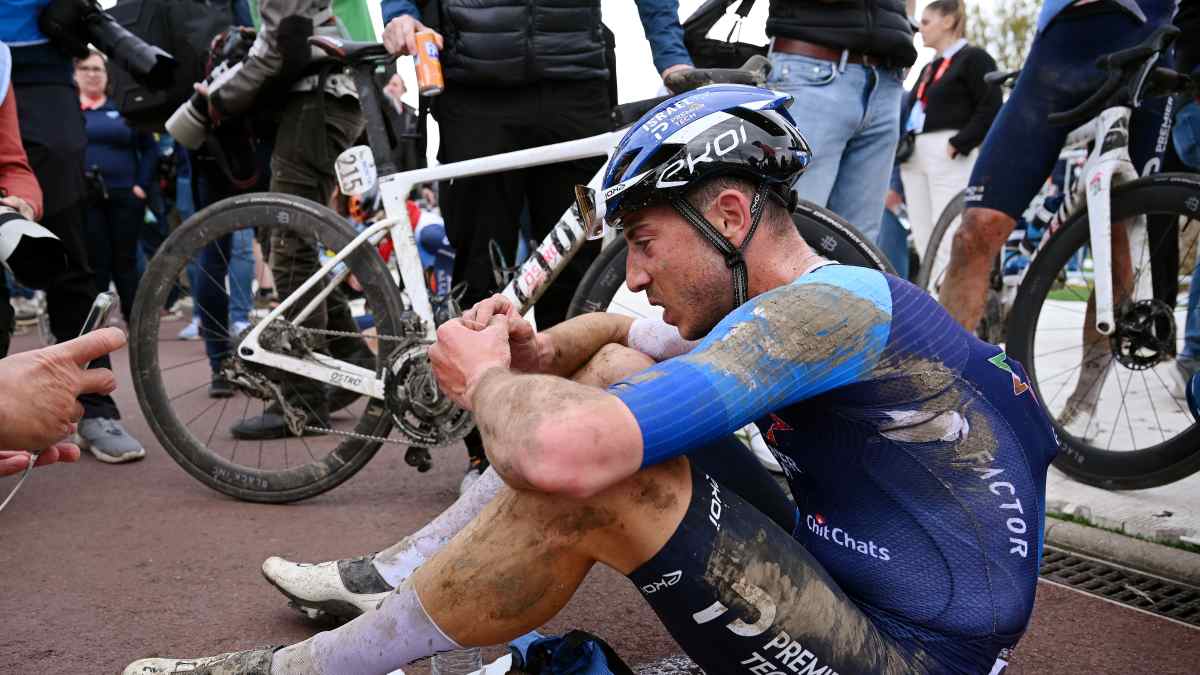
Then there are the physical effects: The stones generate vibrations that numb hands, burn shoulders and push materials to their limits. Joints swallow up wheels, edges destroy carbon. No tyre, no system, no frame can completely defuse the hardness of the pavés.
That's why Paris-Roubaix remains a battle - against the stones, against the body, against suffering.
Interesting facts and curiosities about the Paris-Roubaix pavés
- An estimated 13.5 million bricks pave the pavés - enough for a 1,900-km-long stone line, that would almost stretch from Paris to Athens
- The entire plaster weighs 29,000 tonnes - almost three Eiffel Towers
- To transport them, you would need 1,200 LORRIES, strung together 19 kilometres long
- The pavés are between 120 and 200 years old - Some were already worn by Napoleon's soldiers
- A paving stone weighs between 2 and 20 kilogrammes
- The stones lie directly on earthnot on concrete
- The finish sector in front of the velodrome in Roubaix was for the 100th anniversary of Paris-Roubaix only in 1996 newly created
- In 2026, the professionals must 30 pavé sectors cope - together 54.8 kilometres of cobblestones over a total distance of 258.3 kilometres
- The sector from Hornaing to Wandignies-Hamage bears the name of John Degenkolb and, at 3.7 kilometres, is the longest
- Without the Les Amis de Paris-Roubaix there would hardly be any pavés today
JOHN DEGENKOLB - THE GUARDIAN OF THE PAVÉS

Born: 1989 in Gera
Roubaix winner: 2015
Role: Official ambassador of Les Amis de Paris-Roubaix since 2018
John Degenkolb is more than a winner - he is a keeper. His love for Paris-Roubaix goes far beyond sporting success. In 2019, he saved the junior race with a fundraising campaign, supported the Americans financially and became the face of Germany's commitment to the Pavés.
For him, Roubaix is not a place of pain, but of passion. Not an obstacle, but a legacy. Not a race, but a myth.

Matthias Borchers
Editor