


Making a difference: FSJ & BFD voluntary service schemes in cycling – apply now!
Jan Timmermann
· 12.06.2026


Cycling thrives on passion, community and the tireless efforts of many people behind the scenes. Alongside the athletes, it is above all volunteers who make training sessions, events and club life possible. Volunteering schemes such as the Voluntary Social Year (FSJ) or the Federal Voluntary Service (BFD) offer a unique opportunity: they combine personal commitment with valuable experience – particularly in the world of cycling.
After finishing school, I completed a voluntary social year at a cycling club. There, I was not only able to gain my first teaching experience as a mountain bike coach, but also to get involved in the construction of a bike park in my home town. My voluntary service in cycling laid an important foundation for my subsequent studies and my career in the cycling scene. - Jan Timmermann, BIKE editorr
An introduction to the world of sport
For many young people, volunteering in sport opens doors. Whether straight after school or as part of career exploration – a voluntary social year (FSJ) or federal voluntary service (BFD) in cycling offers insights into training planning, club organisation and event management. It’s not just about administrative tasks: volunteers often stand at the side of the route themselves, accompany rides or support youth groups with technical training. In cycling in particular, where technique, endurance and tactics are closely intertwined, volunteers quickly learn to take on responsibility. They organise training camps, help out at races or look after youth teams. This not only strengthens their own skills but also their understanding of the demands of the sport.
More than just a gap year
Volunteering in cycling is far more than just a ‘stopgap’. Many participants discover their career path through it: whether in sports management, sports science or event management. Social skills such as teamwork, communication and initiative are also developed – skills that are in demand far beyond the world of sport. Then there is the personal aspect: anyone who works closely with a team for a year experiences a strong sense of community. Shared successes, but also setbacks, bring people closer together and create lasting memories.

Clubs benefit twice over
Volunteer schemes are also a real asset to cycling clubs. Many clubs struggle with a shortage of staff. Volunteers bring fresh ideas, time and motivation to the table – whether it’s managing social media channels, recruiting new members or organising events. FSJ and BFD volunteers are often indispensable, particularly in youth development. They act as a link between the coaching team and young athletes, serve as peers and help to promote the enjoyment of cycling. At the same time, they take the pressure off volunteer coaches.
Challenges and prospects
Despite all the benefits, volunteering in cycling also presents challenges. Remuneration needs to be funded, and working hours can be irregular – particularly during the cycling season. Furthermore, the availability of such roles depends heavily on the structure of the clubs – not every club can offer a placement. Nevertheless, the importance of such programmes is growing. As cycling becomes increasingly professional, so too does the need for qualified and committed supporters. Volunteering schemes can bridge the gap here – between voluntary work and career prospects.
Apply now: Federal Voluntary Service at erFAHRBAR
The erFAHRBAR project is part of the Protestant Youth Organisation in the Bad Urach–Münsingen district. As a denominational youth organisation, the Youth Organisation also acts as the body responsible for the voluntary service programme. The aim of the project is to support young people in an innovative, contemporary way – deliberately moving beyond traditional structures. Volunteers participating in a FSJ or BFD are involved both in the erFAHRBAR project and in the traditional areas of youth association work. This includes helping to organise, run and develop summer and winter camps for children and young people, as well as providing support at various events. Their duties also include office and administrative tasks, as well as supporting regular group activities – such as youth groups or youth circles.
Learning social skills at the Bike Academy
A key focus of erFAHRBAR is the so-called Bike Academy. This involves social skills training in schools, delivered with the help of mountain bikes. The aim is to strengthen class cohesion and social interaction. The bicycle serves as a medium for experiential learning: alongside cycling technique training, the programme includes games, exercises and group rides. The volunteers, together with the project management team, are responsible for the implementation and further development of this programme.
Bike Place Indoor Bike Park
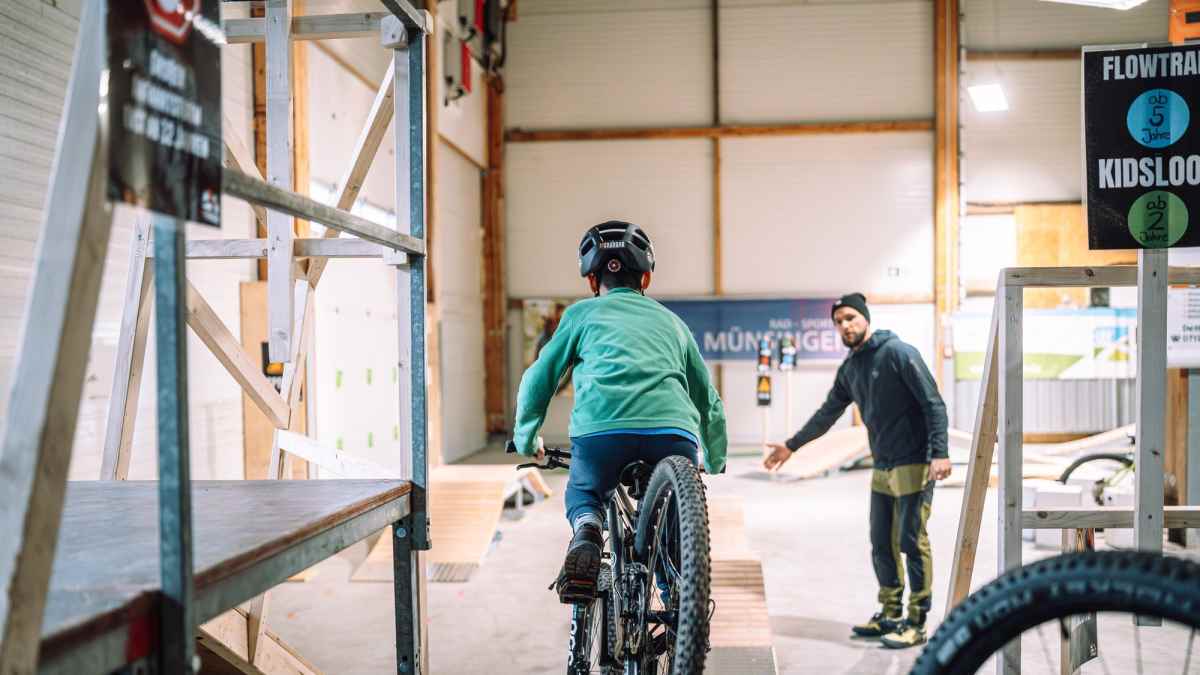
Another key feature is the “Bike Place” – a pop-up indoor bike park. During the winter months, a temporary bike facility is set up in a large event venue for around a month. School group sessions, children’s birthday parties and events take place there, and there are also regular opening hours. The volunteers take on a wide range of tasks here: from planning and organisation to managing shifts, right through to independently running programme activities and working behind the bar. The role is complemented by the care and maintenance of the bikes, as well as activities in public relations and social media.
Conclusion
Spending a year working within the cycling community whilst doing something meaningful: I’m a big believer in voluntary service in cycling and have benefited from it myself. The experiential education role at Bike Academy and Bike Place as part of the erFAHRBAR project is perfect for an exciting Federal Voluntary Service placement. If I were young again, I’d apply straight away! - Jan Timmermann, BIKE editor


Jan Timmermann
Editor