


In this article, we use so-called affiliate links. With every purchase through these links, we receive a commission from the merchant. All relevant referral links are marked with . Learn more.
Verdict on the Bulls Machete RX 1 test
Im Gesamteindruck wirkt das Machete RX 1 weniger wie ein preiswert ausgestattetes Race-Gravelbike, sondern vielmehr wie ein tourentauglicher Allrounder, wie sie in dieser Preisklasse relativ häufig anzutreffen sind. Mit 10,6 Kilogramm ist das Bulls auch für seine Preisklasse ziemlich schwer. Hinzu kommen eine vergleichsweise komfortable Sitzposition und die tourentaugliche, aber grob abgestufte Übersetzung.
Data and facts about the Bulls Machete RX 1
| Weight | 10.59 kg |
| Drivetrain | SHIMANO GRX RD-RX822 |
| Front brake | Shimano GRX ST-RX610/BR-RX410 |
| Front tire | Schwalbe G-One RX TLR 45-622 |
The race gravel bike genre has an irresistible appeal for fans of road cycling: The riding position, liveliness and handling are very similar to the usual road racer, but the thick tyred vehicle can also be ridden through fields and forests without hesitation. However, many people who love precisely this riding experience despair of finding an affordable second or training bike that is suitable for fast off-road excursions: The gravel bikes available for less than €2,000 are generally of a completely different calibre. Almost without exception, they are tailored to the needs of beginners and occasional cyclists, more for leisurely tours and travelling with luggage. Heavy aluminium frames with wide handlebars dictate an upright riding position, simple components and coarsely graduated gears are the rule, the handling is somewhere between good-natured and sluggish and far from lively. Sporty off-road racers for less than 4,000 euros are in short supply.
Prominent sponsor
The Bulls range is a real eye-opener, as the sports bike brand of the Zweirad-Einkaufsgenossenschaft (ZEG) recently presented the Machete RX, a proven sporty model. It replaces the previous Machete, which was more focused on comfort and adventureand adds the Grinder aluminium model, which is still available. The racer is based on a new carbon frame, which is said to have been developed specifically for Gravel World Cup races together with former MTB world champion Alban Lakata. And because ZEG is celebrating its 60th anniversary this year, the entry-level version with mechanical Shimano GRX gears is being offered at a special price of 1,999 euros >> available here. The key data alone for a carbon gravel bike smells like a small sensation.

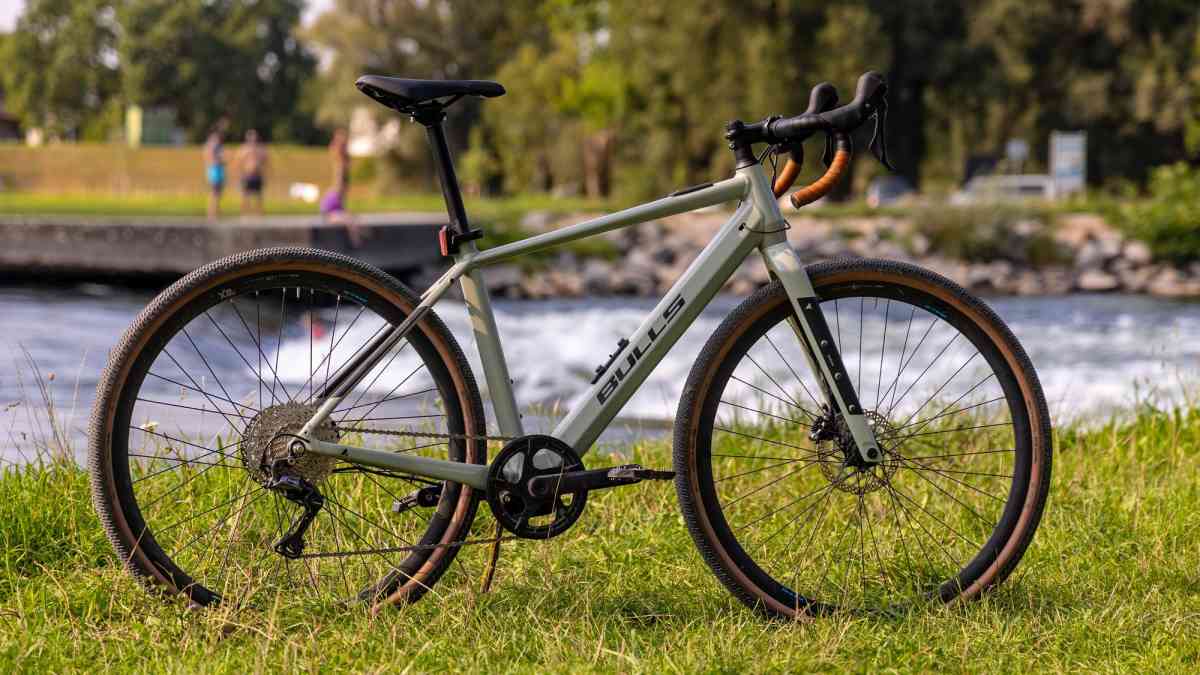
The test bike rolls into the editorial office in a fresh lilac colour, but you can also opt for a more sedate champagne shade. At first glance, the bike looks rather restrained; the predecessor was designed much more progressively with hints of aero shapes and clear lines. But what counts are the riding characteristics. The first disappointment soon sets in and it literally weighs heavily: you notice the high weight as soon as you lift it, and the scales prove the trained estimation to be correct. At 10.6 kilograms, the Bulls is also quite heavy for its price range. By comparison, a Cube Nuroad with an aluminium frame and slightly higher quality components weighs half a kilogram less - and is still a few hundred euros cheaper.
Unfavourable combination
The lighter and therefore more expensive carbon frame proves to be counterproductive, at least for the entry-level model, because the inevitably cheaper but heavier components increase the overall weight. The inexpensive GRX cranks, the aluminium seat post and the simple handlebars are literally a factor here. However, the wheels of the RX 1 are particularly heavy, weighing 4,900 grams (including tyres, cassette and brake discs) and accounting for almost half of the total weight. With lighter tyres and a tubeless set-up instead of the butyl tubes, you could perhaps save 150 to 200 grams. But for a weight reduction that you can feel in the saddle, it would take more than a few simple steps.
Investing in a more modern, lighter wheelset also makes sense because the rims with an internal width of 21 millimetres are no longer up to date. Wider rims would be an advantage, especially if you want to make use of the 50 millimetres of tyre clearance actually available. In view of the high weight, the Bulls doesn't exactly react light-footedly to pedalling. In off-road terrain, avoiding or jumping over obstacles is much more difficult than with lighter bikes; the Machete prefers a somewhat calmer pace. This is also reflected in the riding position, which is surprisingly comfortable for a race-orientated bike, at least on the size L frame we tested. It is true that the RX has a sportier cut than the previous Machete, on which you sat upright compared to similarly designed gravel bikes.
More of an all-rounder than a racer
In the smaller frame size M, the bike also seems to favour a much more stretched riding position according to the geometry data: With only slightly less reach (horizontal length), the head tube is three centimetres shorter. Judging by the geometry data of the frame, the RX could also look more racey in size L. However, due to the spacers required for the cables under the stem, the downward adjustment options of the handlebars are limited; their actual position on our test bike is therefore similar to that on many endurance gravel bikes. Because the fairly wide handlebars have hardly any drop, even the lower handlebars do not provide a really sporty riding position that allows you to build up a lot of pressure on the pedals.
The overall impression of the Machete RX 1 therefore looks less like an inexpensively equipped race gravel bike and more like an all-rounder suitable for touring, which is relatively common in this price range. In this context, the equipment also appears harmonious. The 1x12 drivetrain with a cassette typical of mountain bikes covers a huge range between fast tarmac sections and steep off-road climbs. However, the jumps between the gears are quite large, which can be annoying for some experienced road cyclists who are accustomed to closely spaced gears for smooth pedalling. However, a double crankset (including a more closely spaced cassette) could be fitted and the frame is prepared for a front derailleur.
Lighter alternatives not a bargain
We can hardly accuse the Machete of being unsuitable for travelling either, as there are plenty of eyelets for a large frame bag under the down tube and a small one on top. However, the RX 1 lacks mudguard eyelets or a tool box. After our test experience with the bike, it might be worth taking a look at other Machete models that are better equipped and therefore somewhat lighter. However, the strong argument of the special anniversary price is then discarded: the Machete RX 2 with SRAM Rival AXS and the same heavy aluminium wheels should only be marginally lighter, but costs twice as much. It would be cheaper and more expedient to buy the RX 1 and use some of the money saved to upgrade. Only the top version with SRAM Force AXS, carbon handlebar unit and carbon wheels from Mavic is likely to undercut the ten-kilo mark, but at € 4,999 it is no longer a special offer.
In addition to the RX versions, the Machete is also available as an all-road racing bike with different equipment: With dual drivetrains and 38 millimetre wide road tyres, the same frame set can also be found in Bulls' road bike segment. With a mechanical Shimano 105 2x12, the R1 costs 2,999 euros (9.9 kilograms according to the manufacturer), while the R2 with Ultegra Di2 costs 4,999 euros (8.6 kilograms).


Jens Klötzer
Editor