


Race, everyday, bikepacking, day tours: Different uses with the gravel bike
Maik Schröder
· 13.05.2026

Choosing the right gravel bike depends on the intended use. Different requirements demand adapted frame geometries, tyre widths and equipment features. A gravel bike is not a compromise, but a specialised tool that plays to different strengths depending on the design. The versatility of the genre makes it possible to cover different areas of use with a single bike - or to opt for a specialised model that delivers top performance in its field. In other words, if I want to use my gravel bike for touring or everyday riding, this is just as possible as choosing a bike that is particularly good in one of these areas. It always depends on personal preferences and requirements.
Race gravel bikes for competitions

Gravel bikes for racing are based on road bike geometries with an aggressive riding position. The steering angle is steeper and the chainstays remain short for direct handling. Tyre widths between 35 and 40 mm offer a compromise between rolling resistance and traction. The gearing is sportier than on touring models. There are usually no attachment points for mudguards or pannier racks in order to save weight. These bikes are suitable for gravel races and fast training rides on mixed surfaces.

The great advantage of Race gravel bikes lies in its efficiency. The aerodynamic seating position reduces air resistance, while the stiff frame construction converts every pedalling movement directly into propulsion. On fast gravel tracks, these bikes reach speeds that would not be possible with pure mountain bikes. At the same time, they offer more control and comfort than road bikes when the ground gets rough. For ambitious riders who want to take part in gravel events or maximise their training laps, this category is the first choice. The reduced add-on parts keep the weight low and improve acceleration out of corners.
Everyday use and commuting

Gravel bikes offer advantages over pure road bikes for the daily commute to work. We tested three commuter gravel bikes. Wider tyres from 40 mm absorb unevenness on cycle paths and cobblestones. Mudguards keep splash water out and pannier racks hold panniers. The more relaxed geometry with higher handlebars ensures comfort in city traffic. Light mounts and reflectors increase safety. The tyre treads are less aggressive than on pure off-road models.
The decisive advantage in everyday use is its robustness. While racing bikes react sensitively to kerbs and potholes, gravel bikes can easily cope with such obstacles. The wider tyres significantly reduce the risk of punctures and can be ridden at a lower pressure, which increases riding comfort. Commuters benefit from the ability to take shortcuts on unpaved roads that would be tedious on a city bike. The upright riding position improves visibility in traffic and is easy on the neck and back on daily journeys. Equipped with mudguards, clothes stay clean even in wet conditions, while a laptop and shopping can be transported on the pannier rack. This suitability for everyday use makes the gravel bike the ideal year-round commuter.
Bikepacking tours with luggage

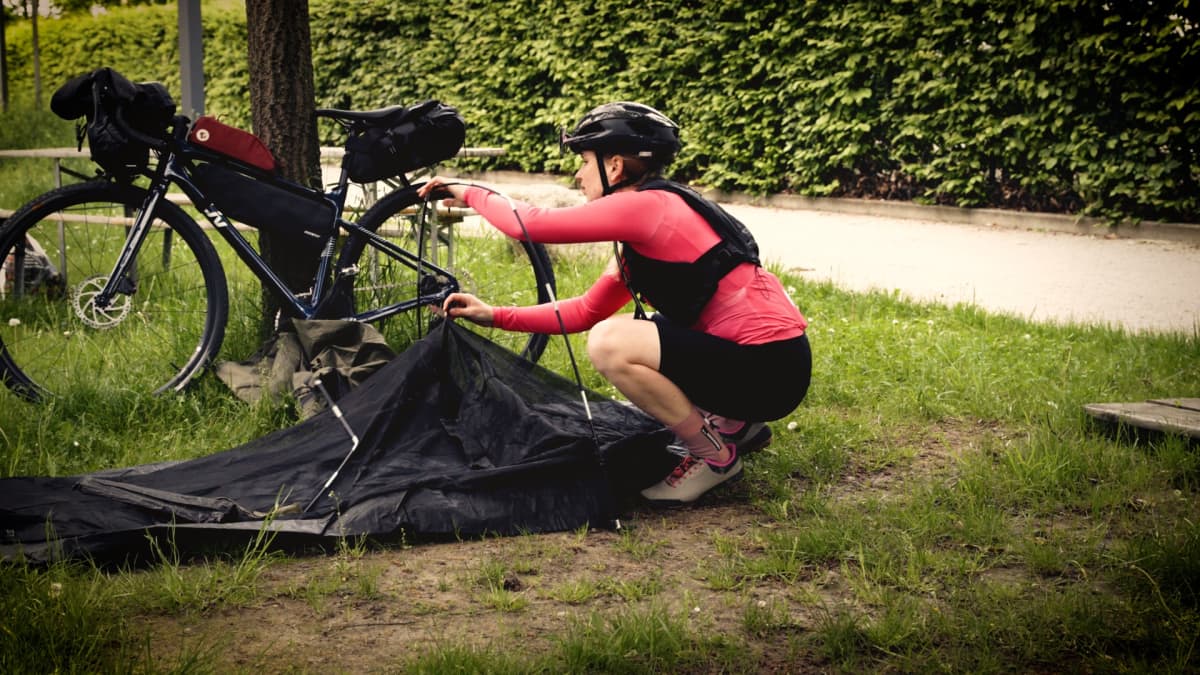
Multi-day bikepacking trips place different demands on the material. Longer chainstays and a slacker steering angle improve smoothness with luggage. Numerous attachment points on the frame, fork and under the top tube allow bags to be fitted. The tyre width is between 45 and 50 mm for more traction on loose surfaces. Robust wheels with reinforced spokes carry heavier loads. The gearing is wider to cope with steep climbs with luggage.
Bikepacking gravel bikes open up freedoms that are almost impossible to achieve with other types of bike. They combine the range of touring bikes with the off-road capability of mountain bikes. The great advantage lies in the flexibility of route choice: Tarmac roads, forest tracks, single trails and gravel tracks can be combined as desired. The stable geometry ensures safe handling on descents, even with 15 kilograms of luggage. The numerous attachment points distribute the weight optimally on the frame, which keeps the centre of gravity low. Modern bikepacking bags utilise every centimetre of frame surface without negatively affecting the riding characteristics. For adventurers planning multi-day tours off the beaten track, these bikes offer the perfect basis. The wide tyres allow low pressures for maximum comfort over long distances, while the robust construction guarantees reliability even on rough tracks.
Day tours without time pressure

Touring gravel bikes combine features from different categories. The geometry is balanced - sporty enough for fast riding, comfortable enough for long distances. Tyre widths of around 42 mm work well on asphalt and gravel. Attachment points for bottle cages and lightweight panniers extend the range of applications. The riding position lies between race and bikepacking models. These bikes are suitable for weekend rides of between 80 and 150 kilometres on varied terrain.
The advantage of touring gravel bikes lies in their versatility. They are the ideal all-rounder for riders who don't want to limit themselves to one area of use. One weekend, the same bike can be used for a quick training lap, the next for a leisurely leisurely tour with a picnic break. The balanced geometry prevents fatigue even after several hours in the saddle, without restricting the sportiness too much. This category is particularly suitable for beginners who want to find out which type of gravel riding they enjoy the most. The moderate tyre width rolls efficiently on paved roads, but offers enough reserves for off-road excursions. With a frame bag and two bottle cages, you can easily manage day trips without having to rely on heavy luggage. This category is the perfect choice for leisure cyclists who want to explore the countryside and experience different surfaces.
Gravel bike categories and their strengths at a glance
| Race gravel bike | Commuter gravel bike | Bikepacking gravel bike | (Day) touring gravel bike |
| light | comfortable | Large tyre clearance | balanced |
| agile | Versatile | suitable for off-road use | comfortable |
| fast | robust | robust | reliable |
| aerodynamic | roadworthy | Versatile | All-round qualities |
Making the right choice
When deciding on a gravel bike, the main purpose of use should take centre stage. Those who primarily want to race will benefit from the efficiency of a race model. Commuters appreciate the suitability for everyday use with mudguards and pannier racks. Bikepackers need the stability and mounting options of specialised models. Touring riders will find the best solution in balanced all-rounders. The good news is that gravel bikes can often be adapted to changing needs by changing components, which guarantees long-term flexibility.


Maik Schröder
Editor