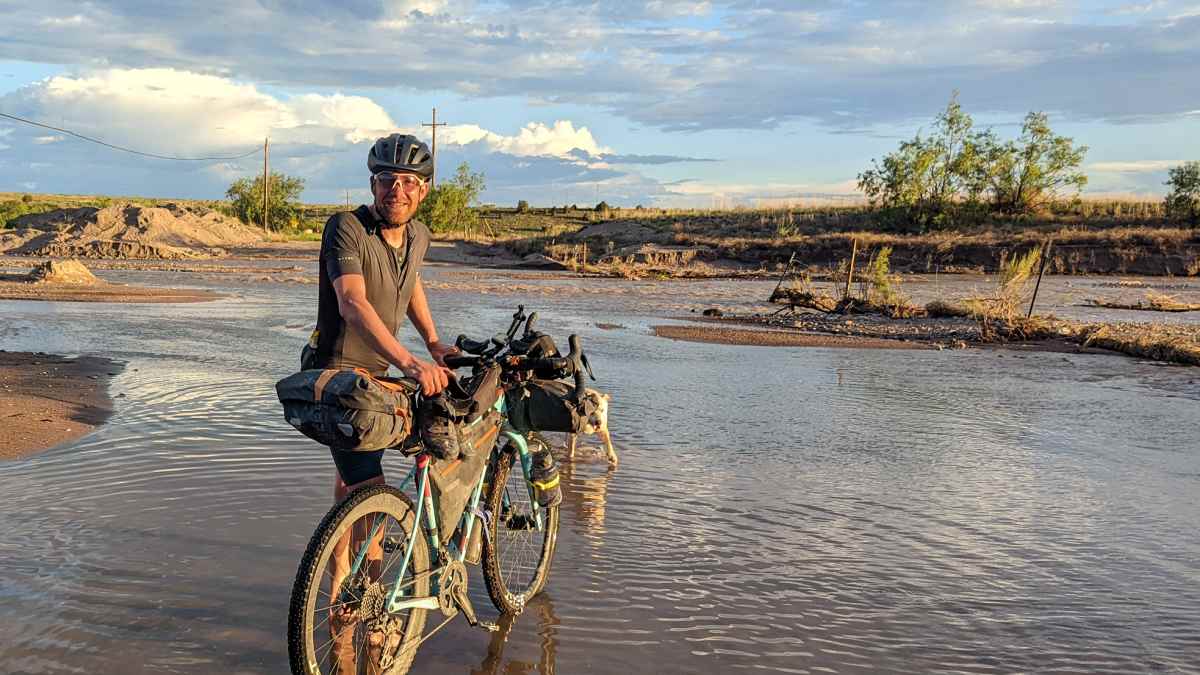
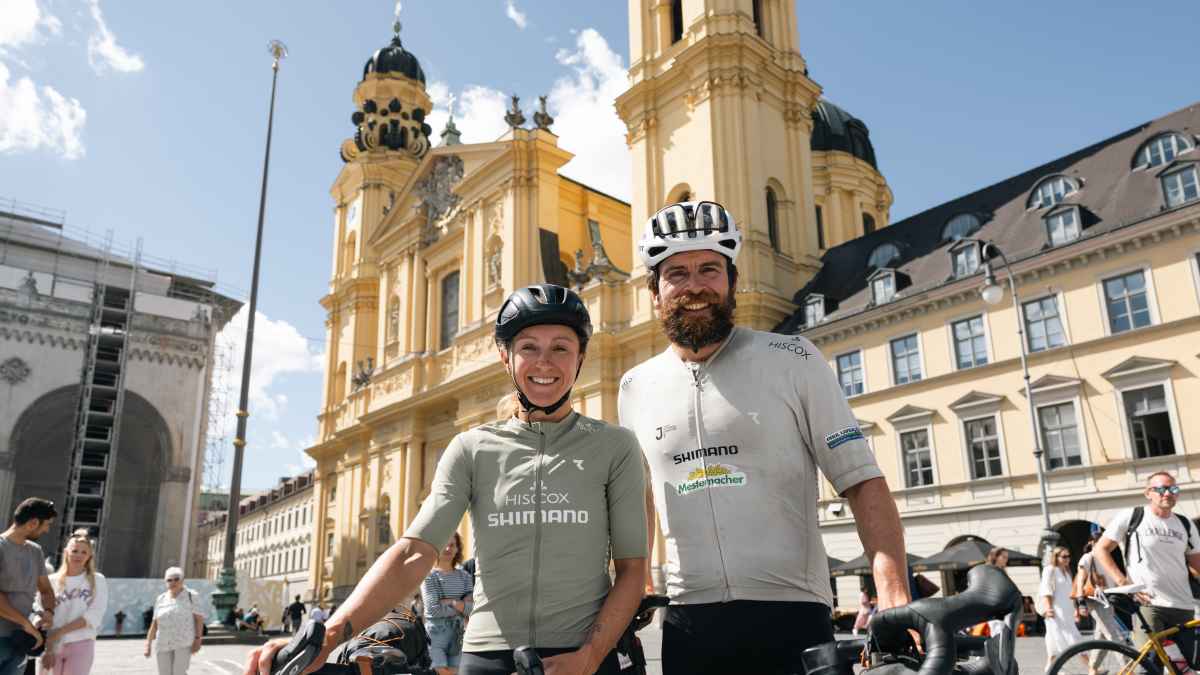
“I really didn’t know anything about road cycling,” says Jürgen Zäck. But the young runner had once been plagued by severe problems with his Achilles tendon. So what could he do? The then 18-year-old was so desperate that he grabbed his trainers and sports kit and hopped onto a road bike. With great success. Today, sports scientists would describe someone like him – a former track and field athlete – as a “natural talent”. The man, who still looks like a lifeguard in Malibu, gave the riders from his local cycling club a run for their money in his home town of Koblenz.
A few kilometres further on, this did not go unnoticed by another young man who was also mad about cycling: Roman Arnold from the village of Löf in Rhineland-Palatinate, which had a population of 1,400. Roman taught his new friend Jürgen how to ride a road bike properly. Then the man who was to go on to build up Canyon, one of the largest bicycle manufacturers and mail-order companies, signed Jürgen Zäck to a contract. What did that look like? Jürgen, who was known simply as ‘the lad’ in the Koblenz cycling scene, was sitting in Mrs Arnold’s living room. With a sharp pen, she noted down that Jürgen was now to receive several pairs of cycling shoes, socks, a crash ring and a Somec road bike with Campagnolo Super Record groupset. As the first testimonial for the company Radsport Arnold. She recorded all of this in writing, in ink. Black on white. More than four decades later, Arnold is still supporting the former top triathlete. Albeit from a distance.

Not much has actually changed since then. After taking a break, Arnold has returned to Canyon as Executive Chairman. And Jürgen Zäck, who won seven Ironman races and came second at the 1997 Triathlon World Championships in Hawaii, is still something of a professional athlete. To date, the “super-cyclist”, as *Triathlon Magazine* once called him, has clocked up 800,000 kilometres in the saddle. On top of that, he has run 160,000 kilometres and swum 30,000. There’s no end in sight just yet. “Actually, I never really stopped competing at a high level after my professional career,” says Zäck, now 61 years old.
No more walking in the cold rain
As Zäck was never a big fan of the cold weather in his native Germany, he often trained in San Diego, USA, even whilst he was still an active player. However, the Koblenz native lost his heart to Phuket, Thailand’s largest island at 540 square kilometres. Zäck has lived there for almost 20 years and does what Jürgen Klinsmann once promised his players at FC Bayern Munich when he was their manager: he makes them better every day. This means that in his group training sessions, he shows triathletes and road cyclists how to improve at improving; in terms of nutrition, sleep and training methodology. He also offers personalised training advice online. His company is called “Z-Coaching”. Registration is via Facebook only. “I’m just a proper old-school coach,” says Zäck.
However, the former top triathlete only offers his services to an ambitious clientele. “There’s no point in anyone coming here who can only manage an average speed of 27,” he says. He doesn’t mean to sound disrespectful, but a ride with him, Jürgen Zäck, wouldn’t be suitable for someone who just wants to “do a bit of cycling on holiday”. “They’d be completely knackered after a few kilometres.” Those who join him on their road bikes are divided into three groups. The ‘Speed Gang’ rides at an average of 36 km/h, the middle group at 33, and the slower riders at 30 km/h. That doesn’t sound too bad to me. “Fellow sportsman!” Zäck says to me, “when the going gets tough, it really gets tough.” For him, that means a comfortable climate. “I’m not cycling in the cold rain again in this lifetime.”
It’s 6.00 am. Jürgen Zäck and I are having breakfast. Or rather, I am. He sees no need to eat anything and is sipping an Americano, whilst I, just to be on the safe side, wolf down five peanut toasts.
So off we go, three kilometres to Boat Avenue. We’ve barely set off and I’ve already got sweat running down my back. At the Siam Bike Shop, nearly three dozen road cyclists are already waiting for their training guru. He explains to us in English what we’re doing today. “A quick hundred,” he announces. To round off, he says: “See you at half past nine at Sek’s!” It’s only 6.45 am. Right, you’ve got the picture. Then off we go. Bam. Bam. Bam. And before I know it, we’re already sitting at Sek’s. I wouldn’t even have noticed the coffee stall otherwise. If you duck beneath the leaves shading the café, there are just a few chairs there. But the protein shake is brilliant, the coffee is great, and the sweet biscuits are heavenly.
Heat rather than altitude
I’m still sweating ten minutes after arriving. Is that really healthy, Jürgen? The man looks at me sceptically. The coach has been working in the field of training science and methodology for more than four decades now. He has found that, in the heat, you only need to train at around 70 per cent of the intensity you would at home. And: “Training in the heat is significantly more efficient than any altitude training,” says Zäck. On top of that, in his view, there’s a significant bonus in terms of quality of life here in Thailand. At temperatures of around 30 degrees.
You can find happiness even on the chilly Stelvio Pass, he says. Or you could simply go road cycling here in Phuket. For crisp, short intervals, he cycles off to Pang Nga; alongside that, there are countless beautiful longer and long rides. Around 60 kilometres to the Sarasin Bridge, the 120-kilometre west coast route, or the 170-kilometre ride to the Banana Loop. Zäck doesn’t want to give away all the routes – after all, these carefully researched routes are part of what his training camp has to offer. However, he promises everyone who comes to him some absolutely stunning rides. And absolutely gruelling ones at that. The slogan emblazoned on Z-Coaching’s T-shirts reads: “This is not a honeymoon”. This is no honeymoon!
As sweat pours from every pore, I remain sceptical: why on earth would anyone train in this heat? Zäck seems to have been just waiting to be asked this question. The answer lies in sports science, he explains, adjusting his glasses on his nose. The aim is heat adaptation – in other words, the body’s physiological adjustment to high temperatures. Studies in thermoregulation research show that the body can not only get used to the heat astonishingly quickly. Furthermore – and this is important to Zäck – amateur athletes benefit just as much as professionals from training in the heat. Before I can ask any further questions, Zäck explains that road cycling in the heat increases blood volume, particularly the liquid component – known as plasma. This results in improved circulation and better blood supply to the muscles. But that’s not all. Sweat production would also improve steadily. “Your body will start sweating earlier in future and cool itself more effectively,” says Zäck. The bottom line is that even your heart rate is slower after training in the heat, which means the cardiovascular system is working more efficiently. Just a few training sessions in Phuket would be enough, Zäck promises, to achieve significant improvements: both in maximum oxygen uptake and in performance at the anaerobic threshold.
The Ironman winner taught himself all he knows about training. As he recounts his experiences, he recalls a scene from the past – it must have been in 1986. Dieter Bremer, then the competitive sports representative for the German Triathlon Union, visited Jürgen Zäck, who was still living with his parents. His mother, Karin, made the official a few sandwiches. Bremer leafed through Jürgen’s training diary. It had been meticulously kept, down to the very last detail. After looking through it, Bremer closed the little notebook, paused for dramatic effect and said: “Jürgen, you’re years ahead of the others when it comes to training management.”
However, meticulous training management is only part of the story, says Zäck. He regularly urges participants at his camps not to focus solely on their wattage figures. It’s also about not losing touch with how your own body feels. Many people simply “cycle by the numbers”, he says. But if, after a climb, he asks a participant what their heart rate is – without them having to check it anywhere – very few can estimate it correctly.
That’s why the ‘old-school trainer’ puts his participants to the test. They are asked to estimate their own heart rate. In the next step, each participant is asked to estimate the heart rate of a training partner. For the coach, it’s not just about the training itself, but also about team spirit and looking out for one another. “I think it’s a shame when people say their best friend is called Garmin,” says amateur philosopher Zäck. “We road cyclists tend to be far too preoccupied with ourselves. But we should also look up every now and then and see how the others are getting on.”
In the contrast between a ruthlessly performance-driven approach and attentive camaraderie, Jürgen Zäck is almost a little reminiscent of his namesake, Jürgen Klopp. The manager of the German national football team once said, during his time as manager of Liverpool FC, that he was only 30 per cent a football manager. Apart from that, he was a friend, a family member, a guardian and a nursery teacher. Jürgen Zäck comes across in much the same way. Almost every evening, he is out and about with his athletes. It seems as though the man is there for his team 24 hours a day.
Full speed ahead to the jungle
Two days later, we’ve got a 150-kilometre ride on the cards. Compared to German road cyclists, the Phuket cyclists are all about colour. Colourful, floral jerseys are all the rage here! Jürgen divides us ‘colourful birds’ into three groups: Fast, Middle, Smart. As always. Then we set off at five-minute intervals. From my group rides in Munich, I’m used to everyone easing into the ride after setting off. That’s not an issue here. We shoot straight out of the Laguna Resort at 33. The scenery seems exotic to rationally minded Central Europeans. Even at seven in the morning, the Thais are sizzling away in their outdoor kitchens; children sit in large tubs, having their hair washed by the roadside. We turn onto a busy road. Zäck explains to me that I needn’t be afraid. Everyone looks out for one another here. And it really is true. There’s no constant honking like in Germany; the traffic flows smoothly and in a relatively orderly fashion. Apart from the fact that every now and then a dog is sleeping on the carriageway. Or a moped comes towards us in the wrong lane. I don’t have time to worry about it. Travelling at 35 km/h, we head towards the Sarasin Bridge, which connects Phuket and Phang Nga on the mainland. It’s absolutely stunning here. Phang Nga National Park is a UNESCO World Heritage Site. After 35 kilometres, we turn off. The roads are in top condition, with palm trees towering up on either side of the tarmac, just like in a rainforest. Either Tyler Smuda, an 18-year-old triathlete, sets the pace, or Jaray Jearanai, the Thai triathlon legend. And then there’s Margit from Rotterdam.
Margit is 36, has earned quite a bit of money and lives in Thailand, just like quite a few other athletes. In Germany, they would probably be criticised by the Chancellor for their ‘part-time lifestyle’. In Phuket, they couldn’t care less. They train every day. “I’ve organised my life so that I can devote it to sport,” says Margit. That means 13 training sessions a week. Always by her side: coach Jürgen Zäck. He’s been doing this for 16 years. Unlike other coaches, he doesn’t organise just one or two training camps a year. “My training camp runs 365 days a year,” says Zäck.
An elephant on a lorry
The last hill of the day lies ahead. It’s not that long, just under five kilometres. It’s only half past eleven in the morning. On the other hand, we’ve already clocked up nearly 140 kilometres. And the sun is beating down mercilessly. The sweat is pouring off me; I’m really pushing myself to the limit. It’s absolutely brutal. I wonder if I’ve got a fever. Suddenly, a lorry drives past us. On the flatbed: an elephant. Everyone pulls out their mobile and starts filming. So the others can see the elephant too – I’m not hallucinating yet.
On the other side, at the foot of the mountain, the reward for such extreme exertion could hardly be more wonderful. At the Thanyamundra Resort, where we’ll be staying, the owner, Klaus Hebben, is already waiting for us. The German, who made his fortune from Canadian oil and American shopping centres, spotted a boat in a yachting magazine back in the 1990s. He had to have it. So he bought it and then sailed halfway round the world. When he spotted a beach off the Thai coast, he was smitten. “I’m staying here for the rest of my life,” he told himself, and set sail again. He then first built a sports hotel and subsequently took up road cycling.
One day, whilst out on his bike, he happened to spot a huge plot of land near Khao Sok National Park. He did what he always did: he sold his house on Nai Thon Beach and founded the Thanyamundra Resort. Since his battle with cancer, this man has had just one thing on his mind: providing healthy food in a healthy environment for healthy people. The vegetables come from his organic farm. In the heart of the jungle, a 50-metre swimming pool awaits to refresh guests after today’s gruelling hike. Hebben, aged 81, talks about his next plans: a holistic health and wellness complex is to be built on the site – a longevity stronghold for sports enthusiasts, featuring ten new villas and a wide range of new sports facilities. ‘Thanyamundra’ means ‘magic in abundance’. The magic is palpable in this place – and manifests itself in all sorts of different ways, sometimes with a touch of humour. Hebben, a native of Amberg, has opened a ‘Tropical Grill Garden’. The inspiration: a Bavarian beer garden. First and foremost, this beer garden serves delicious Thai dishes. But if you fancy it, you can also get a pork knuckle, sausages and an Andechser beer.
A gruelling ordeal in the waves
After a night in the tent, we enjoy breakfast with fresh fruit, coffee, and tomatoes and cucumbers from the organic vegetable patch. Then we set off back to Phuket. Coach Zäck has come up with something special – we don’t set off until half past eleven. The first climb is still a relaxed affair, but then the constant waves, combined with temperatures of 40 degrees, nearly finish us off. At some point along the way, Lauren – an American who lives in Phuket – explains to me that this training is absolutely ideal. She says she can really feel the benefits of the training during her competitions. I ask her what exactly she feels. “I’m going to smash them all!” she replies. Right, I suppose you could call that a convincing argument.
What’s killing me is the constant pressure. I’ve never been on a ride where they’ve kept up the pace like this. From the 100-kilometre mark onwards, I feel like a steam boiler – except that a boiling steam boiler hisses, whereas I can’t make a sound. At the stop, I drink a litre of Coke and pour litres of water over my steaming head. ‘Let’s get going,’ says Jürgen. ‘Only 33 kilometres to go,’ he says and shoots off. So off we all go after him again. Everyone trusts the German – and you can tell. Before the ride, Zäck spoke to each of us individually, advising us on how to approach this ride, where our strengths lie, and what our weaknesses are. For me, things are going exactly as ‘fortune-teller’ Jürgen predicted. How can that be? “There’s one thing you mustn’t forget,” he says, putting his arm round my shoulder: over the past few years, he’s trained thousands of people; no one can really pull the wool over his eyes anymore.
The only thing he wants is for people to enjoy his training sessions and not just get closer and closer to their goals, but actually achieve them. “That’s worked out perfectly over the past few years,” says he, who always rides his road bike without socks. Why is that, actually? He says it’s a holdover from his triathlon days in Hawaii. And besides, that way he doesn’t have to wash any socks. But at least he now owns his own road cycling shoes.
Information
Getting here
You can fly to Phuket via Phuket International Airport (HKT). Airlines such as Condor, Etihad, Emirates and Thai Airways offer some non-stop flights from Germany. However, many flights include a stopover in Bangkok, Abu Dhabi or Dubai. The flight from Bangkok (BKK) to Phuket takes around 1.5 hours.
Airport transfer (HKT) On arrival, taxis, private transfers, limousines or the Phuket Smart Bus are available.
Entry requirements
German nationals do not require a visa for a tourist visit. However, it is advisable to complete the Digital Arrival Card (DAC) before entering the country.
Destination
Laguna Phuket is a resort complex on the west coast of Phuket, on Bang Tao Beach, 20 minutes from the airport. It covers just over 400 hectares along the three-kilometre-long beach and includes hotels such as the Dusit Thani, the Angsana and the Sala. It also features lagoons, golf courses, restaurants and countless spa facilities. Improved long-haul flight connections and the resort’s ongoing development have contributed to more and more people choosing to live permanently in this distinctly sports-oriented area – and to practise sport there all year round. The conditions are ideal, with swimming pools, designated running routes and cycle paths through the Thai tropical landscape.
Info https://www.lagunaphuket.com/
Accommodation
Homa Cherngtalay is a modern four-star apartment hotel for sports enthusiasts, co-workers and families. It offers air-conditioned studios with kitchenettes, a rooftop infinity pool and a fitness centre. All rooms are equipped with a balcony, a kitchenette (including a kettle), a workspace and Wi-Fi. The complex also features a gym, the Viva restaurant (serving Italian, vegetarian and vegan cuisine), a café, a bar, a yoga area and several co-working spaces. Prices vary depending on the season (cheaper in June, more expensive in December), ranging from 33 to 125 euros per night. Of course, Homa Cherngtalay also offers a laundry service for sportswear. There is a partnership between Homa and Jürgen Zäck’s ‘Z-Coaching’.
Info https://www.homa.co/
The Thanyamundra Organic Resort is a very special five-star retreat on the edge of Thailand’s oldest rainforest. The resort is an oasis overlooking the rolling terraces of an organic farm, nestled amongst the mist-shrouded mountains and imposing karst formations of Khao Sok National Park in Surat Thani Province. It was founded by the German Klaus Hebben. The businessman developed the resort into a comprehensive and holistic wellness and health destination. In the coming years, it will be significantly expanded with new villas and new spa and sports facilities. The “Tropical Grill Garden” offers an appealing mix of cultures, serving Thai food, burgers and non-alcoholic sports beer, inspired by the beer gardens of Hebben’s Bavarian hometown, Amberg.
At Hebben, it is important to offer eco-friendly accommodation and tents where people and nature coexist in harmony. Unlike many other hotels around the world, all the suites here are completely plastic-free. RO-UV-treated drinking water is provided in glass bottles. The chefs make jams, ice cream and sorbets from fresh fruit, whilst vegetable scraps from the kitchen are used as natural, fermented fertiliser for growing fruit and vegetables. Stationery and menus are generally made from recycled paper or dried leaves. The pools are fitted with an ozone filtration system, which significantly reduces chlorine consumption compared to conventional systems. To unwind after a 150-kilometre cycle ride, we recommend a trip to the neighbouring Khao Sok National Park, home to elephants, hornbills, gibbons and the rare Rafflesia, the world’s largest flower.
Info https://thanyamundra.com/
Training & Tours
Former world-class triathlete Jürgen Zäck has been living on the Thai island of Phuket since 2010, where he runs his agency, ‘Z-Coaching Phuket’, offering performance-focused training support all year round. Originally from Koblenz, he coaches top athletes such as Ironman champions Kristian Blummenfelt and Gustav Iden, amongst others.
On request, Zäck creates a personalised training programme for each guest and accompanies and leads cycling rides. For keen cyclists, he also organises and leads supplementary swimming or running training sessions. The seven-time Ironman winner also offers personalised online coaching.
Info https://www.facebook.com/p/Z-Coaching, Phuket
At this point, you will find external content that complements the article. You can display and hide it with a click.
At this point, you will find external content that complements the article. You can display and hide it with a click.
At this point, you will find external content that complements the article. You can display and hide it with a click.
At this point, you will find external content that complements the article. You can display and hide it with a click.
Bicycle shop
Carefully maintained hire bikes in perfect condition are available from Siam Bike Tours in Phuket. As well as road bikes, you can also hire e-bikes there.
Info www.siambiketours.com
The bike shop is also worth a visit Bike Works with a Thai feel and excellent mechanical services at reasonable prices.
Info https://www.instagram.com/bikeworks_phuket/
Restaurants
Mrs B is a cosy restaurant with a bar that serves delicious food and drinks in a convivial atmosphere. Tip: book a seat at the bar. Start by enjoying a cocktail, then tuck into the delicious food. “Here,” says owner Sumi Soorian, “there’s something for everyone. Even those who like it a bit spicier.”
Info https://www.mrs-b.com/
Project Artisan "It is a declaration of love for Thailand, which we would like to share with everyone who deeply appreciates the Land of Smiles and a healthy, balanced lifestyle," says Martin Michalik, the owner. He has travelled all over the world and has now been living in Thailand for more than two decades.
Info https://www.theprojectartisan.com/
If you fancy a livelier atmosphere and live music, head to the Beach Pig Right on the beach. After a brilliant road bike ride, you can sit by the sea, have a beer and enjoy some Thai food.
Info https://www.instagram.com/beach_pig/
The best coffee in Phuket can be found at Sec. The coolest espresso bar in town looks completely unremarkable from the outside. Jürgen Zäck regularly stops off there with the participants on his cycling trips because it serves not only coffee but also, for example, sports-oriented recovery drinks such as whey protein shakes with fresh berries.
Address Choeng Thale, Thalang District, Phuket 83110, Thailand. Open from 6 am to 3 pm.