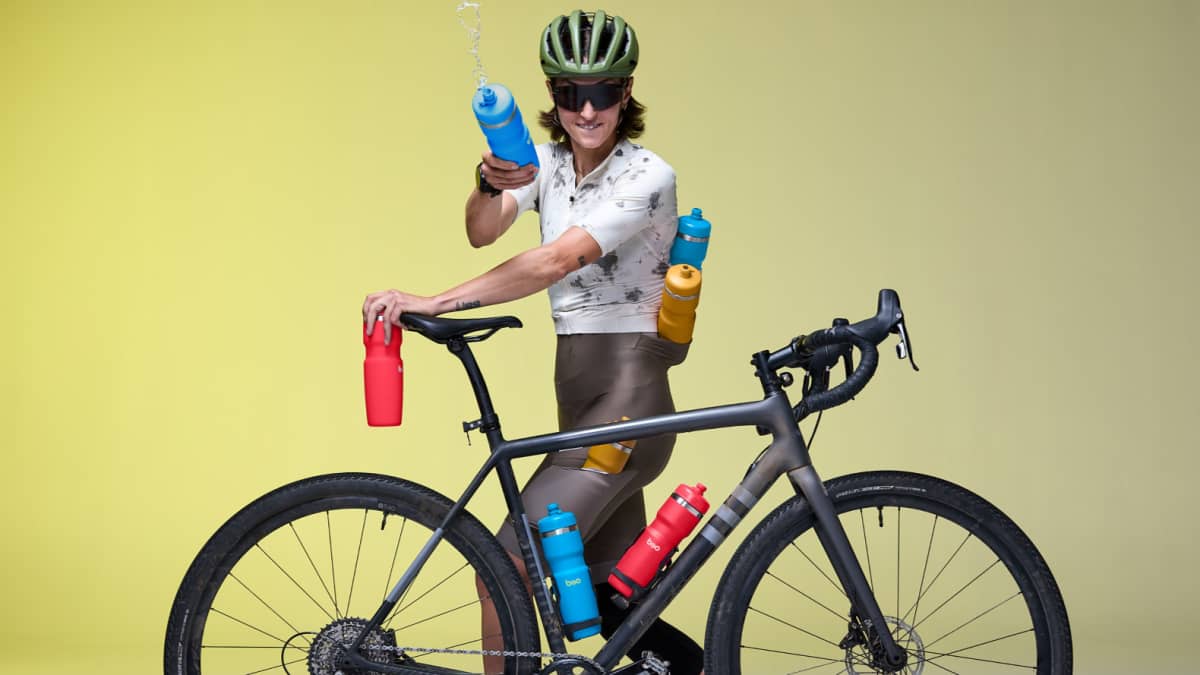
The bottle in the sun
A hot summer's day, the Bottle It’s stuck in the holder, and the sun is beating down. What sounds practical at first – warm water for when you’re out and about – is actually rather problematic from a chemical point of view.
This is because heat accelerates a process that occurs anyway: plastics release substances. How many, which ones and in what quantities depends on the material and often remains unclear, as manufacturers are not required to specify either the exact type of plastic or the additives.
Hundreds of substances, little knowledge
Researchers at the University of Copenhagen have shown that hundreds of different chemical compounds can leach into the water from new plastic cycle bottles. Scientists do not yet know whether most of these are toxic, or to what extent.
What she knows is that older or cheap bottles may contain plasticisers such as bisphenol A (BPA), which can disrupt the endocrine system. Added to this are microplastics – tiny particles that are released through wear and tear and ageing, and end up being ingested. They can even be detected in the blood. Incidentally, the same issue applies to plastic chopping boards in the kitchen!

The germ problem in cycling
When you’re out cycling, you often reach for your water bottle with dirty hands. Mud splashes onto the mouthpiece – perhaps even bits of cow dung from a pile you’ve just cycled through. Dust also settles on it.
The bite valve or pull-tab on a typical cycle bottle is therefore an ideal breeding ground for bacteria and fungi. Isotonic drinks and juices make it even easier for germs to thrive. In short: a bottle is subjected to much greater wear and tear in cycling than in other contexts, and it shows.
What really helps
The good news is that there are simple measures that can significantly reduce the risk.
- Select material: Stainless steel and glass do not release any chemicals or microplastics, are tasteless and easy to clean. The first choice whenever possible.
- Look for BPA-free products: Anyone using plastic should avoid polycarbonate (PC) and polystyrene (PS) and insist on products labelled ‘BPA-free’.
- No heat, no fat, no alcohol: These three significantly speed up the transfer of chemicals – so don’t pour hot liquid into your cycling bottle.
- Clean regularly: After every ride, rinse it out, unscrew the mouthpiece, clean it thoroughly – and store it with the protective cap on if possible.
- Replace in good time: Cracks, brittleness or a strange smell mean: throw the bottle away. Germs settle in the cracks, where they can no longer be reached by washing.
The conclusion
Plastic bottles aren’t acutely toxic. But if you drink from one every day, for years on end, in the summer, with chilled drinks – you’ll end up consuming more than you might like. Stainless steel is simpler, more hygienic and more durable. For those who still prefer plastic: keep drinks cool, keep the bottle clean, and replace it regularly. It’s as simple as that.
The bottle isn’t the biggest problem
If you’re now looking nervously at your water bottle, you should take a quick peek into the kitchen – it’s often worse there. Take the plastic chopping board, for example: every stroke of the knife scrapes off tiny particles that stick straight to the vegetables. According to studies, this adds up to several dozen grams of microplastics per year – which we end up eating, straight from the board.
Yoghurt pots, ketchup bottles, frozen food packaging: fat and acid are particularly effective at leaching out plasticisers and additives, whilst heat in the microwave drastically speeds up the process. There is one main reason why the drinking bottle, of all things, is the focus of so much attention: we drink large quantities of water every day, often warm – and it is the dose that makes the poison.
So if you want to improve the overall picture, it’s best to start with the chopping board: wood or stainless steel instead of plastic; a glass dish rather than a plastic container when reheating food; and tomato sauce from a jar rather than a squeeze bottle. The water bottle is then just the final step – not the first.
Microplastics: nobody knows anything about them!
It sounds alarming: microplastics have already been detected in our blood, lungs and brains! However, scientists do not yet know whether this actually poses a risk to our health. The German Federal Institute for Risk Assessment considers the risk to be fairly low, even though we are estimated to ingest around 5 grams of microplastics per week through food, water and the air.
The World Health Organisation (WHO) also believes that the current concentration in drinking water does not pose an immediate risk. This is because the plastic particles are considered inactive; however, they can carry environmental toxins, which in turn can trigger inflammatory reactions in the body. And these are the root of all evil: cancer, autoimmune diseases, metabolic disorders, etc.