


Drinking and driving: DVR calls for 1.1 per mille limit for cyclists in Germany
Matthias Borchers
· 22.04.2026

A report by the European Road Safety Council shows the trend in cycling fatalities. The number of cyclists killed in the EU fell from 2,096 to 1,926 between 2014 and 2024, a decrease of eight per cent. For car drivers, the decline over the same period was 19 per cent. In Germany, the situation developed in the opposite direction: according to the Federal Statistical Office, the number of cyclists killed rose from 396 in 2014 to 441 in 2024.
Current legal situation and demand
In Germany, the blood alcohol limit for cyclists is 1.6 per mille. Only above this level is it a criminal offence. Below this limit, alcohol consumption remains legally inconsequential as long as there is no recognisable driving safety or no accident occurs. The DVR is calling for the introduction of an administrative offence from 1.1 per mille. This would bring Germany into line with countries such as Austria, France, Italy, Portugal, Spain and Switzerland.
Manfred Wirsch, President of the DVR, explains that the ability to react, balance and perception are already severely impaired well below 1.6 per mille. Steering and braking are hardly possible safely. Anyone who drives like this is flying blind on two wheels.
Political development
The DVR has been campaigning for a reduction in the drink-drive limit since 2014. The German Traffic Court Conference has repeatedly supported this demand, most recently in January 2026. At the end of March 2026, the Transport Committee of the German Bundestag called on the Federal Government to examine the reduction of the drink-drive limit and the introduction of a fine offence with an appropriate level of sanction. A representative forsa survey commissioned by the DVR shows that a significant proportion of the population is in favour of either a complete ban on alcohol or significantly lower drink-drive limits for cyclists.
Further measures for more safety
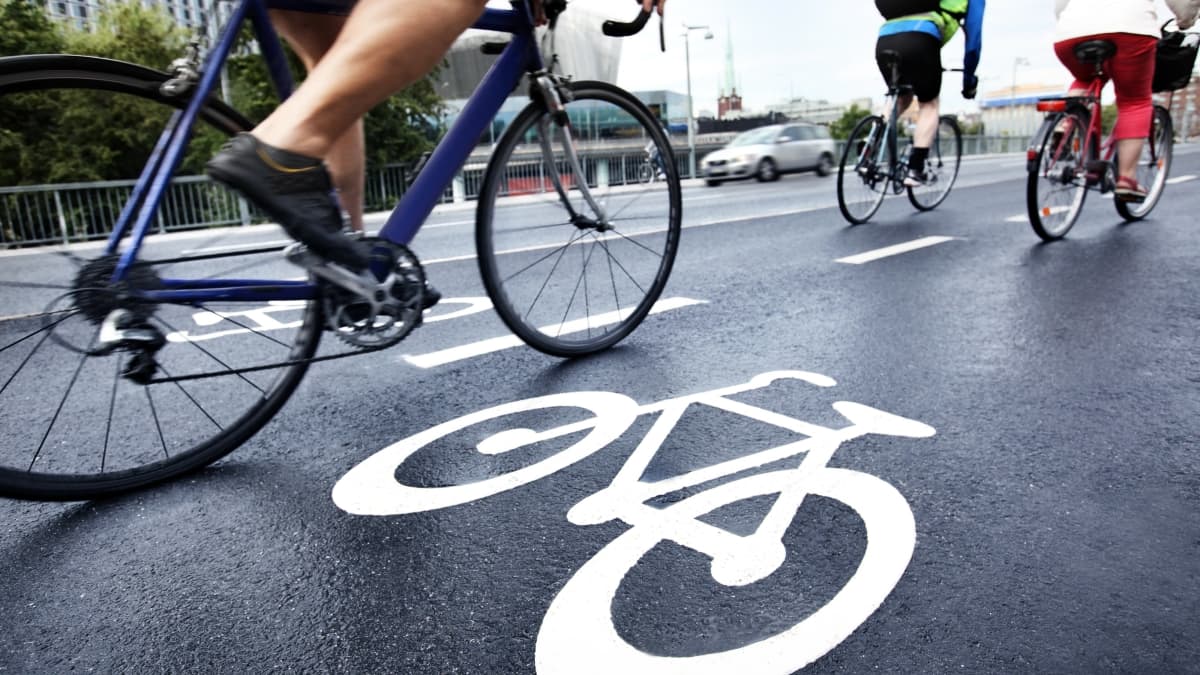
According to the DVR, a lower drink-drive limit can only be one building block for greater cycling safety. Consistent monitoring of existing bans by the federal states and local authorities is necessary for sustainable improvements. The cycling infrastructure must be upgraded. This includes structurally separate paths for cycle and car traffic, safe guidance of cycle traffic at junctions and a structural redesign or adjustment of the speed limit at accident-prone locations.
Cycle paths must be sufficiently wide and have a well-maintained surface without potholes or root damage. They should be free of obstacles. Traffic surveys should be carried out more frequently and the recommendations of the accident commissions should be consistently implemented in order to systematically eliminate danger spots. Digital networking using Vehicle-to-X technology can help to increase the visibility of cyclists.
Wirsch emphasises that road safety is a joint task. It requires a coordinated approach by the federal, state and local authorities. While politicians must secure the legal framework and infrastructure, cyclists can actively increase their own safety: by wearing a helmet, riding carefully and not drinking alcohol while cycling.

Matthias Borchers
Editor
