


The ultimate bikepacking test for a gravel bike: The Canyon Grizl in a 3,000 km endurance test
Jan Timmermann
· 04.08.2026


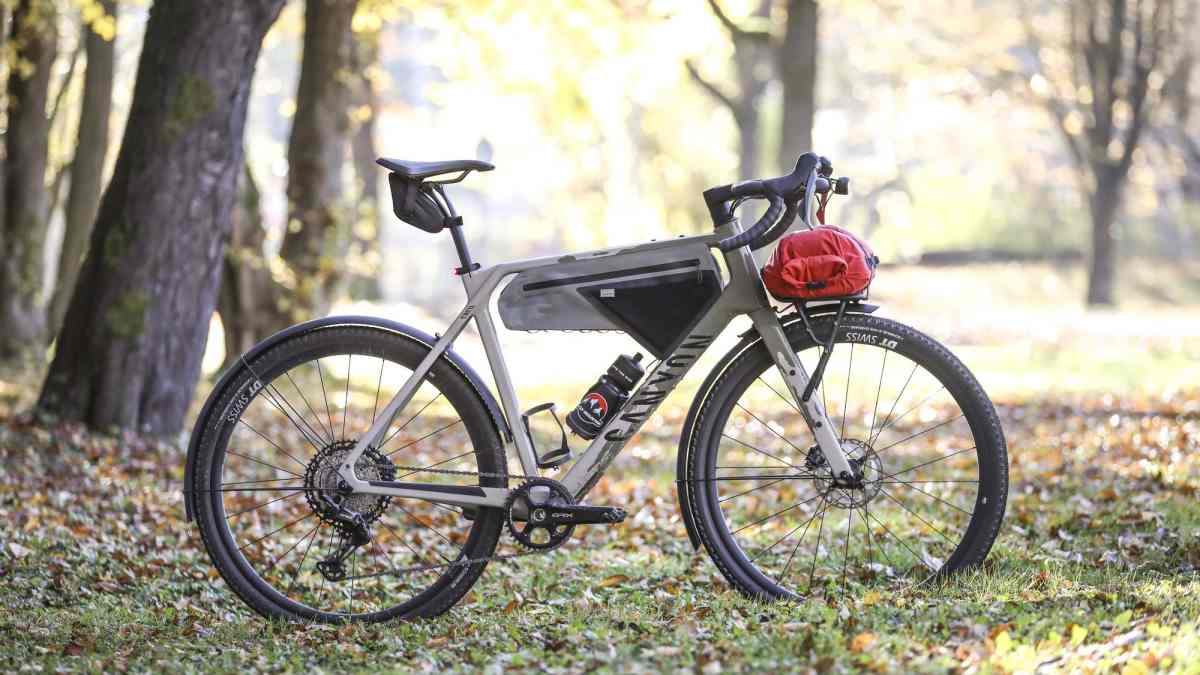
During the endurance test, the Canyon Grizl CF 8 Esc w/Eclips had to overcome a number of nightmarish conditions: slush, salt crusts and potholes in winter, dust, rough terrain and heavy loads in summer. Over 3,000 kilometres, we didn’t go easy on this carbon gravel bike, complete with lights and a full range of kit. Did the Grizl come away from it traumatised? We’re drawing up the final conclusions of the endurance test!
Conclusion
I’ve grown to love the Grizl as a versatile, all-round gravel bike. Whether it’s a winter commute or carrying gear under the summer sun, this Canyon bike is up for anything. Its versatility and durability really stand out, even over the long term. The only drawback: this adventure gravel bike is a bit too sluggish for a quick ride on tarmac or gentle gravel tracks. - Jan Timmermann, TOUR editor
Info: Canyon Grizl CF 8 Esc with Eclips
- Intended use: gravel bike
- Price: 3,999 euros
- Accessories tested: Canyon Defend Grizl Fast Fender mudguards (€119.95), Canyon Load Front luggage rack (€39.95), Canyon Load FidLock QuickLoader (€139.95)
- Frame and fork material: carbon
- Impeller weight: 4109 g (including tyres, tubeless kit, cassette and brake discs)
- Wheel inertia: 2706 kg x cm² (the lower the value, the better the acceleration)
- Translation: 40 / 10–51 (510%)
- Special features: Eclips lighting and battery system including hub dynamo, Full Mounty cockpit, Canyon VCLS leaf-spring seatpost
The commute greets me every day
The first half of the long-term test for the Canyon gravel bike was characterised by darkness, cold and wet conditions. The robust but heavy aluminium mudguards and the excellent safety performance in adverse weather conditions were particularly impressive. The integrated lighting system caused some problems. The charging power of the hub dynamo alone is not sufficient to re-charge a flat buffer battery. To do this, the Grizl CF 8 Esc w/Eclips needs to be plugged into the mains. Discharging whilst stationary was the bigger problem overnight. Canyon attributes this to an oversensitive USB-C charging socket and is replacing affected parts following consultation with customers.
The front rack on the Canyon Grizl proved to be very practical. It allows you to carry a laptop safely in a waterproof pack sack without having to use a rucksack. The special frame bag is also handy for carrying a minimal set of spare clothes, though the Fid-Lock system doesn’t hold securely on rough ground. Overall, the generous range of accessories and pedals adds a good two kilos to the bike’s weight of just under ten kilos. Loaded with the essentials for a cycle commuter, the bike weighs in at around 16 kilos. As such, the Canyon gravel bike proved to be practical and versatile during the colder months, but not particularly agile or sporty.

From the snow to Tuscany
Alongside many other commutes, May 2026 saw the big highlight of my time with the Canyon Grizl CF 8 Esc w/Eclips: a two-week bikepacking trip through Tuscany, following in the footsteps of the Maremma Challenge. The Italian countryside is known for its particularly rough gravel tracks and rugged terrain. So I treated the Grizl to an upgrade to really thick tyres. Maxxis supplied tyres in the mountain bike size 29 x 2.1 inches. The Shimano GRX BL-RX820 disc brakes aren’t bad in themselves, but when combined with the mechanical gear-shifting mechanism, they have a long lever travel and a grip that isn’t always consistent. To prepare the bike for technically demanding descents whilst carrying luggage, I therefore wanted to boost the braking power and upgraded to extra-strong Trickstuff Power pads.
The tyre and brake set-up really plays to the strengths of the Canyon Grizl. With wide tubeless tyres and responsive brakes, this gravel bike can tackle any terrain. Of course, the Grizl isn’t a mountain bike. For trips into the wilderness, I still recommend that adventurers opt for a reliable MTB hardtail. On the off-road tracks of the Maremma nature parks, the Canyon – with its rigid fork and stiff carbon handlebars – really puts a strain on your wrists. However, thanks to its long, smooth-riding geometry, the Grizl tackles terrain where other gravel bikes would have given up long ago. Thanks to its mountain bike cassette, this also applies to steep climbs – at least as long as your legs are fit enough to pedal a 40-tooth chainring.
Canyon specifies a weight limit of 120 kilos. For taller riders, this could prove a bit of a stretch when bikepacking in remote areas. I pushed the limit quite a bit with a tent, sleeping bag, sleeping mat, stove, food supplies, etc., and still had no problems during the practical test. The numerous attachment points on the gravel bike are an absolute must on the Crizl and can be used creatively. The frame triangle in particular is huge and can be easily filled with various bags. Another practical feature: there’s a mini-tool in the down tube, with a third bottle cage mount underneath. In bikepacking mode, it gets a thumbs-up.
Signs of wear and tear
At the end of the endurance test, there’s good news from the TOUR test lab for the Canyon Grizl CF 8 Esc w/Eclips. The wheelset shows no wobble and the bearings are still running smoothly. The bottom bracket and headset bearings are also still in good shape for many more kilometres, despite being exposed to salt water over the winter. Everything turns smoothly and without play. The brake discs have been worn down to a thickness of 1.6 millimetres and are therefore just above the wear limit of 1.5 millimetres. The wear gauge is also indicating that the chain will soon need replacing. After 3,000 kilometres of continuous use, this is to be expected.
Strengths and weaknesses
Pro
- generous tyre clearance
- handy bikepacking features
- Excellent driving stability on rough terrain
Cons
- too heavy and too sluggish for fast rides on easy routes
- System integration not error-free
Geometry in size XL
- Seat tube length: 580 mm
- Chainstay length: 433 mm
- Wheelbase: 1116 mm
- BB drop: -75 mm
- Steering angle: 71.3 mm
- Seat angle: 73.8 mm
- Head tube length: 200 mm
- Handlebar width: 430 mm at the top / 510 mm at the bottom
- Reach / Reach+: 425 / 578 mm
- Stack / Stack+: 639 / 713 mm
What do you think: would you prefer a versatile, smooth-riding gravel bike or an agile, purpose-built one? Share your thoughts in the comments!

Jan Timmermann
Editor