


Verdict on the Merida Reacto One Passion test
Die fünfte Auflage des Merida Reacto glänzt mit Verfeinerung und verbindet Top-Aero-Performance mit guter Allroundtauglichkeit
Data and facts about the Merida Reacto One Passion
| Weight | 7.66 kg |
| Drivetrain | Shimano Dura Ace Di2/Classified |
| Front brake | Shimano Dura Ace |
| Wheelset | DT-Swiss ARC 1100/ARC650 |
| Front tire | Continental Aero 111 29-622 |
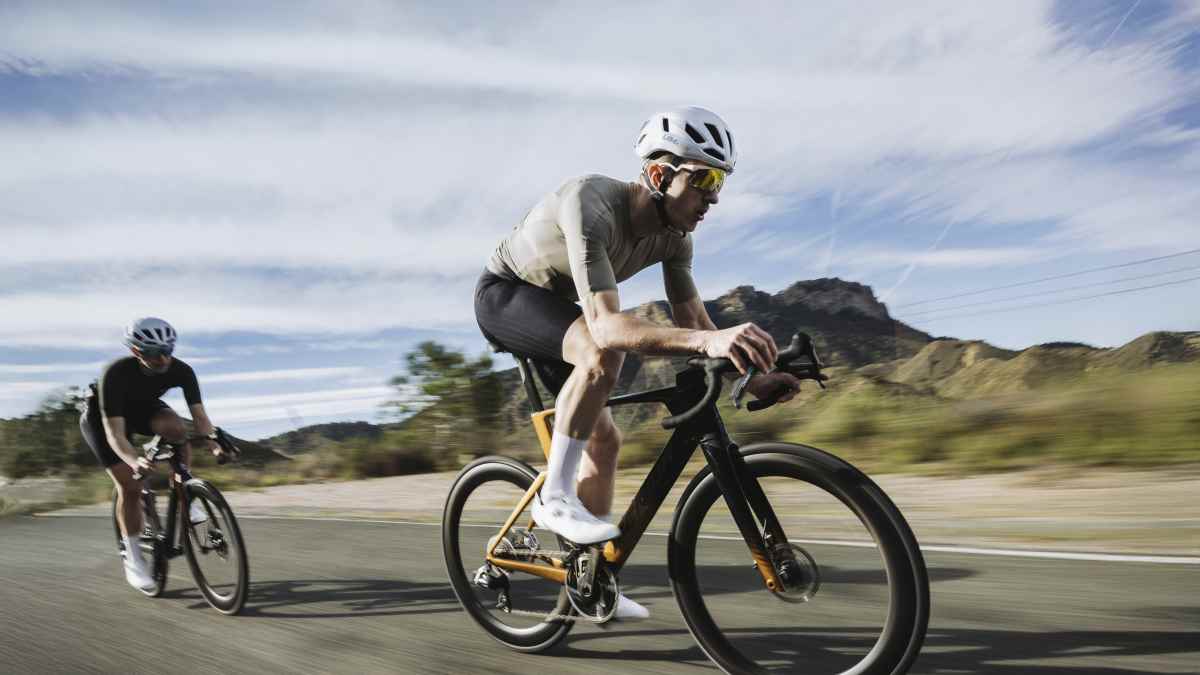
The Reacto’s basic shape is reminiscent of its predecessors, but every tube profile and joint has been optimised. If you look closely, you’ll see far more complex transitions than before, such as the striking edges on the head tube. These modifications give the bike a sleeker look, to which the strikingly designed cockpit also contributes; it is narrower than permitted by the UCI: 24 centimetres from grip to grip. The legal minimum is 28 centimetres. But the developers were so taken with the narrowest handlebars that they wouldn’t be without them on their own bikes and wanted to share that fast riding experience with us.
Second-best aerodynamic rating in TOUR history
Aerodynamicists from the wheelset manufacturer Reynolds assisted with the development. Following preliminary computer simulations, various designs were tested in wind tunnel sessions, and the version offering the best performance was ultimately selected. And it’s a real force to be reckoned with. The Reacto takes a giant leap forward, improving from 208 to 197 watts – the second-best figure we’ve measured so far for a production bike. Usually, development progresses in much smaller increments.
This massive improvement is the result of a holistic approach. Not only have the frame, fork and cockpit been improved, but the components have also been carefully selected – at least for the ‘One’ spec, which is tuned for maximum speed and which we tested. The wheels and aero tyres are perfectly matched. This means there is no loss of airflow at the front wheel during our 20-degree turn. From the front, the slim head tube and the deeper fork legs are noticeable. The Classified in-hub gear system, which eliminates the need for a derailleur, combined with the aero chainring, delivers those final two to three watts.
Amazingly comfortable
The riding feel is the familiar one, but faster. The geometry is almost comfortable compared to the other extreme models; overall, it’s a bit smoother, but not boring. The narrow handlebars take some getting used to when riding out of the saddle, but after a break-in period they’re unlikely to be a problem. The road-legal handlebar version simply moves the levers apart; the lower section of the handlebars remains the same. This presumably shortens the settling-in period, but reduces the top speed; the braking grip position with arms folded down consistently proves to be the fastest in tests with a rider. The bike handles confidently, offers good suspension for an aero racer and accommodates tyres up to 35 millimetres wide. The ride feel can therefore be fine-tuned to suit your preferences. The fitted 29/30-millimetre tyre combination already provides a comfortable ride on normal roads, but even poor road surfaces are no problem with wider tyres. At 7.7 kilos, the weight is slightly higher – this is the price paid for the innovative in-hub gear system. All in all, the Reacto One is the best all-rounder among the superbikes because it is free from any limitations. This also results in the best overall score in this test. The bike handles cobblestones well, but is also a joy on a fast lap around the neighbourhood. It rides without compromise, whether uphill or downhill. Anyone looking for a fast road bike that can do it all will find the Reacto One to be an excellent choice. The price is high, but not exorbitant. At €10,999 for the top-spec model, you get more value for money than with many other brands, especially as a Rotor power metre is included.

Robert Kühnen
Editor
