


Ridley Falcn RS 2.0: A lightweight all-round racer with aerodynamic ambitions
Jens Klötzer
· 08.10.2026


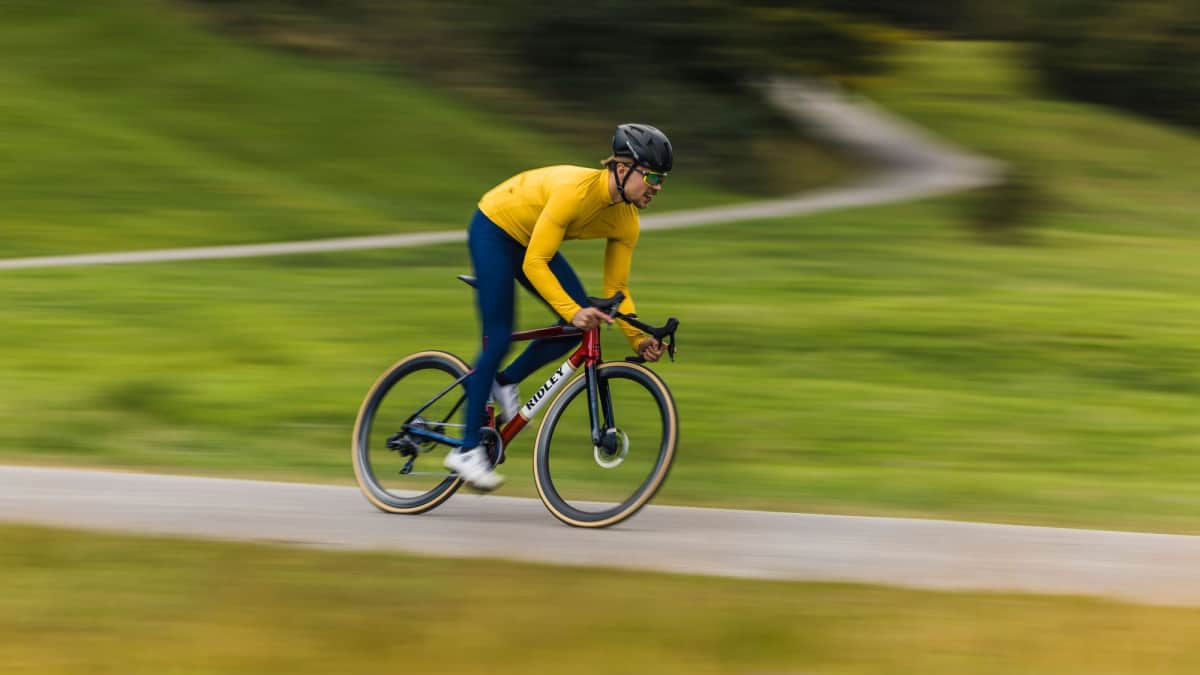
Ridley has unveiled the second generation of the Falcn RS. Although the name and basic concept remain the same, according to the Belgian manufacturer, this is not a minor update but a complete redesign. It was developed in collaboration with the professionals at Uno-X Mobility.
Ridley’s so-called ‘Aero-to-Weight’ concept remains at the heart of the design: the bike is intended to be light and responsive on climbs, without compromising on aerodynamic efficiency or high stiffness. As a result, it is not intended purely as a climbing bike, but as a versatile race bike for climbs, fast descents, hilly classics and brisk sections on the flat.
Its direct predecessor is the first-generation Falcn RS. This model alone combined low weight with aerodynamic frame shapes, thereby aiming to blur the traditional distinction between lightweight and aero road bikes.
This basic concept has been retained for the second generation, although it has been re-engineered. Compared with its predecessor, the frame set – comprising the frame, fork and seatpost – is twelve per cent lighter. The frame of the Falcn RS 2.0 alone is said to weigh just 705 grams in size M.

New carbon construction saves on material
A significant proportion of the weight reduction is attributable to the revised carbon lay-up. Ridley has analysed the areas where the individual carbon layers previously overlapped extensively and has redesigned these sections. This means that less material is required, whilst the forces acting on the frame are still distributed across its structure.
One example of this is the hollowed-out mounts for the rear brake caliper. Carbon is now only used in those areas where it is structurally necessary. The external shape of the frame has also been modified: fewer sharp angles and more rounded transitions are designed to save material without compromising strength or stability.
Despite its lightweight construction, the stiffness is said to be on a par with that of an aero race bike. Ridley therefore promises direct power transfer and quick responses during attacks, changes of pace and steep climbs. This was precisely where its predecessor had its weaknesses. The low weight is said to make a difference not only on climbs, but also to characterise the bike’s overall lively and playful handling.
Aerodynamics remains part of the concept
Although the development focused on weight reduction, the Falcn RS 2.0 did not become a traditional climbing bike designed solely for lightweight construction. The aerodynamic tube shapes of its predecessor served as a starting point, but have now been combined with smoother transitions between the individual frame sections. According to Ridley, this made it possible to remove material without compromising aerodynamic performance.
The design also features the new, slimmer aero seatpost and the fully integrated Nimbus Pro cockpit. Its shape is designed to make it easier to adopt an efficient and aerodynamic riding position. On the Shimano Di2 models, the battery is no longer housed in the seatpost but in the down tube. It was only by doing this that Ridley was able to design the seatpost to be slimmer and lighter.
The wheels have also been selected to suit the intended use. Depending on the specification, either 45-millimetre or 50-millimetre carbon wheels are fitted. They are designed to offer sufficient aerodynamic benefits for fast routes without compromising the low overall weight or the agile handling.
Progressive geometry with a 76-degree seat angle
The new model differs particularly markedly from the previous Falcn RS in terms of its geometry. This is based, amongst other things, on feedback and bike fittings from the Uno-X professionals. According to Ridley’s analysis, modern racing cyclists are increasingly adopting a position that is shifted further forwards.
The Falcn RS 2.0 therefore features a steep 76-degree seat angle across all frame sizes. This positions the rider more centrally over the bike and is designed to enable them to apply force to the pedals more efficiently. Unlike many other bikes, the seat angle does not become shallower on larger frames.
Added to this are a longer reach and, at the same time, a higher stack. This combination, which may seem unusual at first glance, is designed to enable a modern racing position with an open hip angle. Ridley believes this will not only result in an efficient pedalling action, but also greater comfort during prolonged exertion.
The bottom bracket is positioned slightly lower than on the previous model. This is designed to give the bike greater stability on the road at high speeds and on fast descents. The Falcn RS 2.0 is available in five sizes, from XXS to L.
Greater flexibility when choosing tyres
The maximum tyre clearance has increased to 35 millimetres. This means that, depending on the intended use, the Falcn RS 2.0 can be fitted with wider tyres, offering additional grip, comfort and control. Ridley combines the tyres with lightweight TPU inner tubes as standard. Compared to conventional butyl inner tubes, these reduce the overall weight and are said to contribute to a more direct riding feel.
Lightweight construction down to the last detail
Opportunities for cost savings were also systematically sought in the components. The new clamping system for the Aero seatpost consists of a carbon sleeve and a titanium bolt. Ridley first used this design on the Kanzo Fast 2.0.
Added to this are CeramicSpeed headset bearings for the integrated cockpit, as well as the lightweight, padded Selle Italia SLR saddle. In its lightest standard configuration, the complete bike even falls below the UCI minimum weight of 6.8 kilograms. This allows professional teams to opt for heavier or more aerodynamically optimised components elsewhere whilst still bringing the bike down to the permitted minimum weight.
Developed in partnership with Uno-X
The Falcn RS 2.0 was developed in close collaboration with Uno-X Mobility and had already been used in professional cycling before its official launch. Several riders used the bike during the 2026 Tour de France. Among them was Torstein Træen, who wore the yellow jersey for a time.
Feedback from the pros was incorporated in particular into the new riding position. Nevertheless, according to Ridley, the Falcn RS 2.0 is not aimed exclusively at professional riders or pure climbers. It is designed for sporty cyclists who are looking for a lightweight and responsive road bike, but who do not want to compromise on aerodynamic advantages even on flat sections.
In the Ridley range, the Falcn RS 2.0 is positioned as a lightweight aero all-rounder alongside the Noah Fast, which is more specialised in maximising aerodynamics.
Specifications, weights and prices
All three complete models feature the Nimbus Pro cockpit, the slim aero seatpost, CeramicSpeed headset bearings, TPU inner tubes and the Selle Italia SLR Racing Replica saddle. Furthermore, as a model in the Ridley Elite Series, the Falcn RS 2.0 can be customised using the configurator. The frame features a UDH derailleur hanger and can be set up with either a single-chainring or double-chainring drivetrain. The derailleur mount is removable, allowing for a clean, uncluttered setup when configured as a single-chainring bike.
Falcn RS 2.0 Shimano Ultegra Di2
- Mavic Comet 50 with carbon spokes and CeramicSpeed bearings
- Total weight: 6.8 kg
- Price: 7,499 euros
Falcn RS 2.0 SRAM Force AXS
- Forza Skiron RSR
- 50 mm rim height
- 23 mm inside jaw opening
- bonded carbon spokes
- CeramicSpeed bearings
- Wheel set: 1,197 g
- Total weight: 6.65 kg
- Price: 8,499 euros
Falcn RS 2.0 SRAM Red AXS
- AX Lightness Ultra SL
- 45 mm rim height
- Wheelset: 950 g
- Total weight: 6.2 kg
- Price: 12,499 euros
The Ridley Falcn RS 2.0 is available in the following sizes XXS, XS, S, M and L available.

Jens Klötzer
Editor