


A lightweight at 5.4 kilograms: The Storck Aernario.3 Platinum put to the test
Jens Klötzer
· 02.09.2026


Data and facts about the Storck Aernario.3 Platinum Max Performance
| Weight | 5.4 kg |
| Drivetrain | SRAM Red AXS |
| Front brake | SRAM Red |
| Wheelset | Scope Artech |
| Front tire | Continental Grand Prix 5000 25-622 |
| Photo: Wolfgang Papp
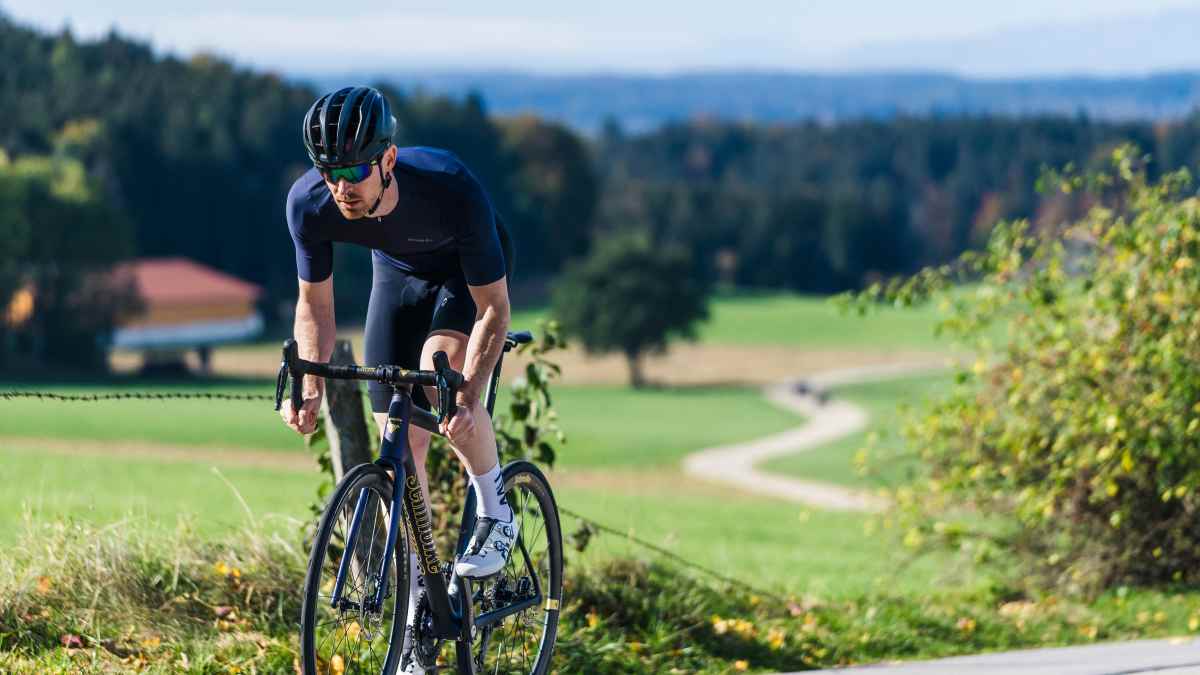
It’s immediately apparent that the proportions are different from those of standard road bikes. The delicate wheels with narrow tyres look almost a little out of place on the massive frame, whilst the substantial stem reinforces the impression of a certain visual top-heaviness. But this configuration is not about visual conventions; with it, Storck is once again getting the very most out of its lightweight racing bike in its fifth model year. Rather, the aim is to build the lightest possible road bike without compromising on function or safety. “With the Aernario.3 Platinum Max Performance, we wanted to demonstrate what is technically possible when you scrutinise every detail and consistently optimise for lightweight construction,” says Storck’s Head of Technology, Max Fetzer. Extreme lightweight construction has long been a speciality of the Storck brand, and the Max Performance is now set to continue this tradition. It is based on the highest-quality carbon used in the Aernario.3, which Storck calls ‘Platinum’. To achieve this record-breaking weight, the frames are specially selected – that is, particularly lightweight specimens are chosen from within the manufacturing tolerances. Even when building the bike with selected components, aerodynamics and ergonomic considerations take a back seat; weight is the primary consideration for all parts.
Carbon as far as the eye can see
These include many components from the tuning scene that you don’t see every day: a handlebar set from THM, a minimalist carbon saddle from Alpitude, and a carbon chainring from Gemini. But the wheels, with flat rims from Scope and 25-millimetre-wide tyres, are also deliberate choices designed to keep the figure on the scales as low as possible. After all, when it comes to safety-critical parts such as tyres and brake discs, you can rely on established components and don’t have to take the risk of using dubious lightweight parts. As a result, the test bike tips the scales at 5,400 grams – which is indeed a record for disc-brake road bikes – though Storck isn’t quite alone on the podium. The Leggerissima from German carbon specialist Schmolke, which we were able to test in 2024, weighed exactly the same – or rather, just as little – to the gram.

Stable on the road, but responsive to the driver’s input
The Storck passed the lab tests without any issues; the frame is sufficiently stiff and the comfort is very good – just as we remember from previous tests of the Aernario. We’re expecting the real ‘aha’ moment to come from a ride on the road anyway. Here, this lightweight bike translates the first few pedal strokes into acceleration with remarkable responsiveness; it constantly tempts you to break into little sprints. Throughout, the bike feels stable with all its components; nothing rattles or creaks, nor does it feel flimsy in any way. On our test bike, the maximum rider weight is determined by the saddle; the 70-gramm shell has a maximum weight limit of 85 kilograms. According to the manufacturer, the handlebars can withstand 110 kilograms, whilst there is explicitly no limit for the wheels. The riding position is sporty but not extreme, and is also suitable for longer rides. Inexperienced riders will need to get used to the bike’s responsive handling, as the very short frame reacts instantly to even the slightest steering movements. The lightweight wheels further enhance the lively steering response. That said, the bike rides safely and stays on track on the flat; on hills, its lightness is naturally the most enjoyable aspect, as the bike accelerates almost playfully with every turn of the cranks.
Bergrad without mountain passes
However, given certain details, one might well question whether the Platinum Max Performance, as a lightweight road bike, really requires no compromises whatsoever. The biggest compromises are made with the drivetrain, which makes do with just a single chainring and twelve sprockets. The 10–36 cassette – which is, after all, quite a wide-ranging set – combined with the 46-tooth chainring allows for smooth pedalling on the most undulating terrain. Whilst the relatively small chainring means there are fewer truly fast gears available – something one can live with on a bike like this – the lack of lighter climbing gears significantly limits one’s options. The narrow tyres also seem outdated and lack comfort and safety; despite the frame’s good comfort, the ride feels a bit bumpy. The smooth, slippery carbon saddle wasn’t to our taste either, but that’s certainly a matter of personal preference. The THM handlebars feel good in the hands.
A discerning audience
It’s not easy to picture the right kind of rider for the Max Performance. Anyone looking for a truly lightweight mountain bike to ride in marathons or on tours will need at least a different gear ratio. You’d be better off with the equally lightweight Schmolke, which features a full-spec road bike drivetrain and wider tyres. On flatter terrain, an aerodynamic set-up would make more sense; apart from that, even with pedals fitted, the bike falls below the prescribed minimum weight for a competition bike. That leaves well-heeled tech enthusiasts for whom the record-breaking weight is more important than everyday practicality. But you really do need to have just under 13,000 euros to spare. Alternatively, the Aernario.3 Platinum is available in standard top-spec configuration for around 10,000 euros; with SRAM Red or Dura-Ace, the bike weighs around 6.5 kilos. Prices start at 7,500 euros with Ultegra Di2. The somewhat unconventional range of frame sizes warrants attention: the bike is available in very large, but hardly any small, frame sizes – the second-smallest test size, M, suited our 1.80-metre-tall test riders well.

Jens Klötzer
Editor