


In this article, we use so-called affiliate links. With every purchase through these links, we receive a commission from the merchant. All relevant referral links are marked with . Learn more.
Visual inspection
The wear of the chain can be recognised relatively easily by pulling it radially away from the large chainring. If it sits tightly on the teeth and slides back again when you let go, it is in good condition (see image gallery). With increasing wear, however, the chain elongates and can then be pulled further and further away from the chainring (see image gallery). If the gap is so large that two adjacent teeth are almost completely visible, the chain and, if necessary, the chainrings should be replaced.
Measurement
With a Chain gauge chain wear can be measured precisely. It uses sensors to check the increase in length of a bicycle chain caused by wear on pins and plates. The gauge indicates when the tolerance has been exceeded, usually by the sensor sliding completely into the chain when the chain is appropriately lengthened (see picture gallery). In this case, the chain should be replaced.
Pinion wear
In heavily used drivetrains, wear often first appears on the teeth of sprockets and chainrings. If they lose their original shape and become asymmetrical or visibly sharper (similar to a shark's tooth), the risk of the chain jumping increases. It is therefore advisable to check the condition regularly; depending on the degree of wear, it is important to decide whether the cassette, chainrings or chain should be replaced individually or whether it makes sense to replace the entire drivetrain.
Pedal check
Clicking in and out of the pedal is a routine process that requires hardly any attention. Nevertheless, you should check the release hardness after long periods of standing and, if necessary, adjust it a little softer for the first ride so that the first traffic light stop does not end in a stable sideways position on the tarmac. It is also worth taking this opportunity to check that the pedal is firmly seated in the crank arm and that there is no bearing play on the pedal axle.
Wax change
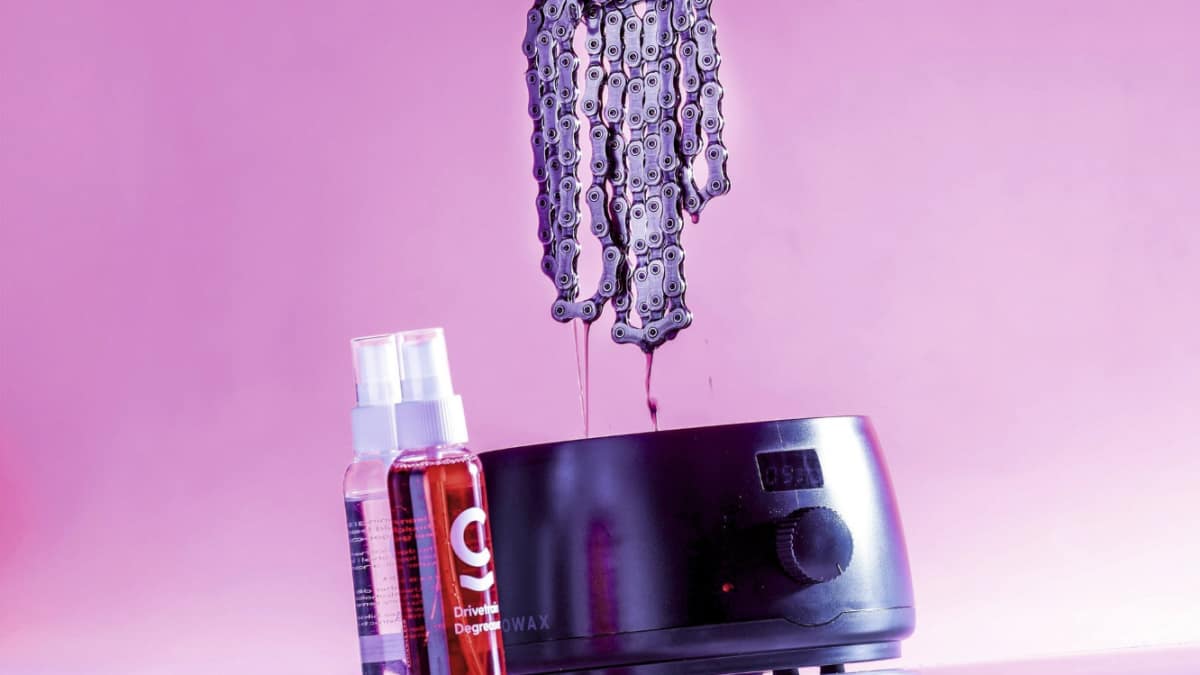
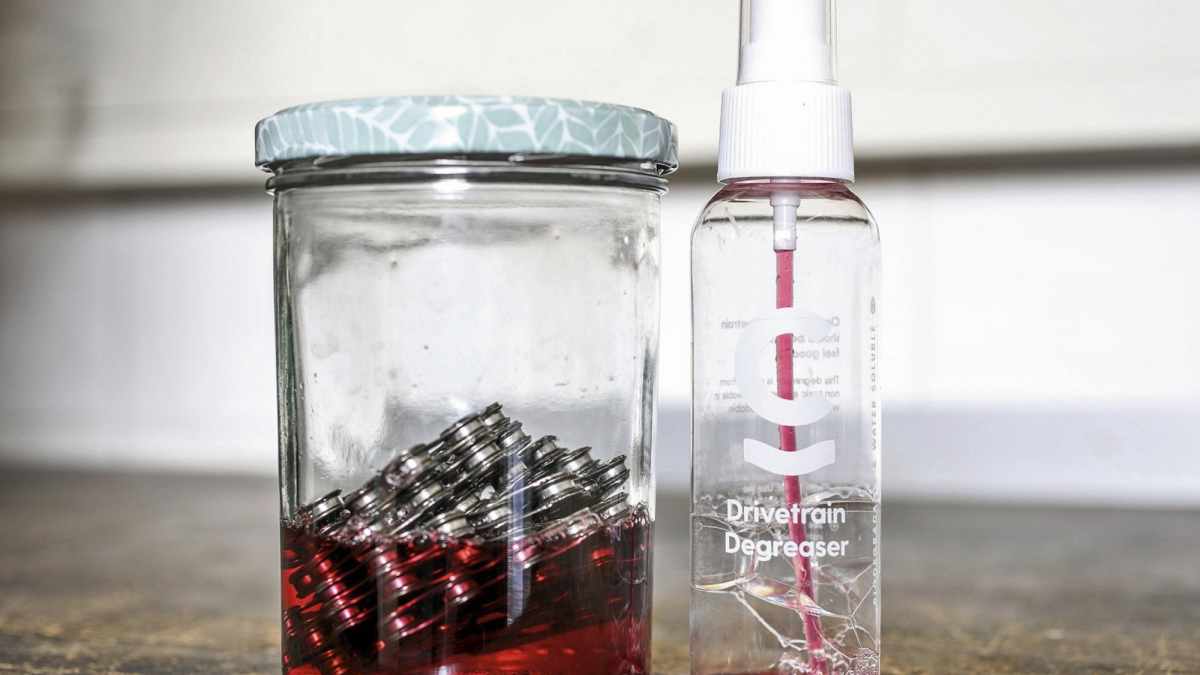
If the chain is due to be changed or the entire drivetrain replaced, this is the ideal time to switch from oil to wax lubrication. Chain wax has developed from a former insider tip into a serious alternative - above all because it keeps the drivetrain much cleaner in everyday use. While oil binds dirt and can create an abrasive "sandpaper paste", waxed chains have much less dirt sticking to them. This not only looks better, but also reduces wear on the chain, cassette and chainrings. In addition, wax can measurably reduce friction in the drivetrain, which is particularly interesting for those with sporting ambitions. However, the system has clear requirements. Preparation is crucial: A chain must be completely degreased before the first application of wax, otherwise the wax will not adhere properly. This step is the biggest obstacle for many. The choice of system also plays a role: hot wax delivers very even results, but requires a dismantled chain and some workshop discipline. Drip waxes are less complicated, but require drying time and, depending on the product, do not quite reach the level of a cleanly applied wax. Hot waxing.
In practice, wetness remains the biggest sticking point. Wax displaces water worse than oil and offers less corrosion protection. If you park your bike wet after riding in the rain and don't dry or re-wax it, you run the risk of flash rust. Durability depends heavily on the weather and surface: wax lasts a long time on dry roads, but often much shorter in winter or in permanently wet conditions. The bottom line is that wax is worthwhile for anyone who values cleanliness, efficiency and low wear - and is prepared to invest a little more care.


Matthias Borchers
Editor
