


Our conclusions on the restructuring plans for Accell Germany
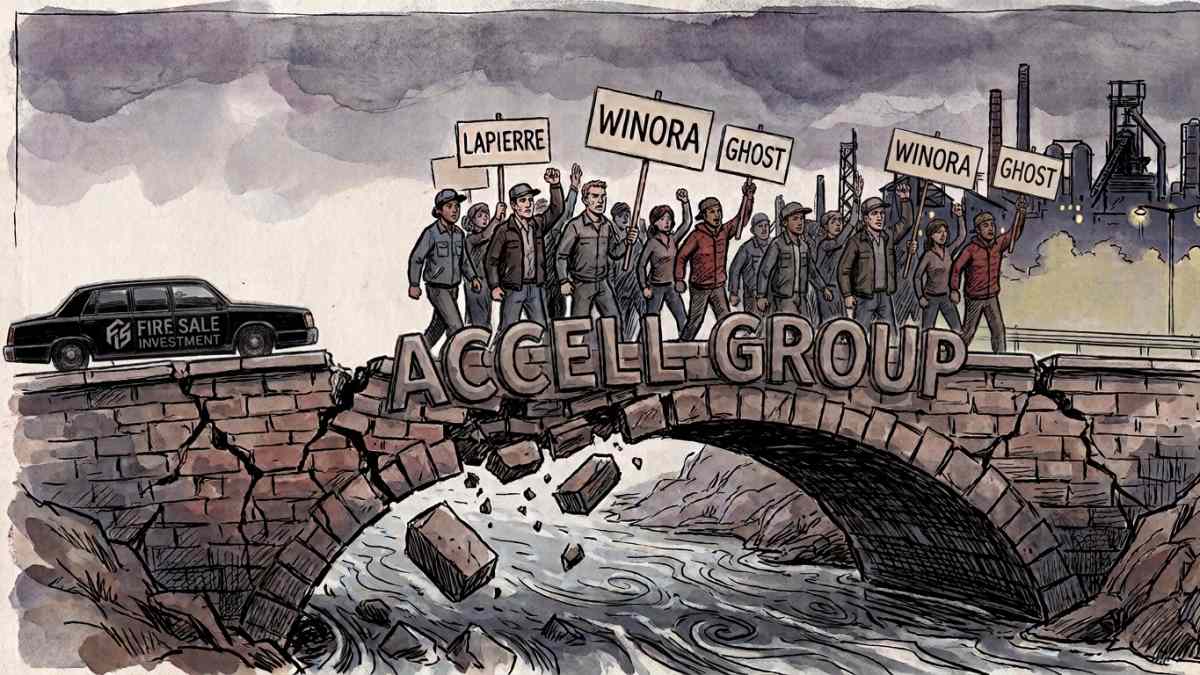
The crisis at the Accell Group serves as a prime example of how finance-driven takeovers, combined with market disruptions, can destroy long-established companies. However, for Accell Deutschland and its brands, German insolvency law under self-administration is proving to be an effective restructuring tool. Thanks to the successful go-ahead agreement with DZB Bank and the restored confidence of the dealer network, the signs in recent days point to a fresh start. If the M&A process bears fruit in the coming weeks, the Schweinfurt site could emerge from the overall crisis in a stronger position.
Escape from the corporate quagmire
It had been a difficult few weeks for the approximately 370 employees at the Sennfeld (near Schweinfurt) and Waldsassen sites. When the Dutch parent company, Accell Group B.V., was forced to file for insolvency in Amsterdam following failed restructuring efforts, crushing mountains of debt and costly product recalls, the collapse seemed inevitable. Yet in recent days, the tide has noticeably turned for the German subsidiaries.
At the Orderfestival organised by the Bike&Co retailer cooperative in Kassel, Hesse, the team led by Joost van Schaik, head of Accell Germany, presented itself to specialist retailers not as a company facing bankruptcy, but with a surprisingly strong showing. The key message to the specialist bicycle retail trade was unambiguous: Accell Germany and its family of brands will continue to supply products and remain on the market.

How legacy issues weighed heavily on the group
The parent company’s decline has its roots in the boom year of 2022: At that time, the US private equity firm KKR (Kohlberg Kravis Roberts & Co.), in a consortium with the investor Teslin, bought the then-listed bicycle giant for around 1.56 billion euros and delisted it from the stock exchange (Take-Private).
As is customary with such takeovers, a large part of the purchase price was financed through loans, which were passed on directly to the company as a debt burden. When demand in the bicycle market plummeted abruptly following the pandemic, full warehouses, demands for steep discounts and drastically risen interest rates collided with a debt burden that had recently stood at around 1.4 billion euros. Despite a dramatic debt write-off in the spring of 2026, the group could no longer be saved. The parent company’s ruinous financial structure ultimately dragged the operational business down with it.
Day-to-day business continues as normal
The fact that the German units are by no means being wound up is demonstrated by a significant development in recent days: the agreement between the restructuring team and the relevant DZB Bank. DZB Bank (Deutsche Zahlungsverkehrs- und Dienstleistungsbank) acts as a specialist credit institution within the specialist bicycle retail sector, handling central settlement between suppliers and specialist retailers. It assumes the risk of bad debts and safeguards payment transactions.
For specialist retailers, the uncertainty surrounding financial settlements following the insolvency filings was the biggest cause for concern. Thanks to the direct commitment from DZB Bank, the regular delivery of goods and payment processing for the German brand companies and the spare parts wholesaler E. Wiener Bike Parts are now guaranteed. This removes the risk of non-payment for retailers and provides certainty for the coming season.
An opportunity through self-administration and an experienced restructuring team
The fact that operations are continuing without restriction is due to the legal structure of the reorganisation: The German entities concerned – Accell Germany GmbH and the operating subsidiaries Winora-Staiger GmbH, Ghost-Bikes GmbH and E. Wiener Bike Parts GmbH – are subject to insolvency proceedings under self-administration at the Schweinfurt Local Court.
Under self-administration, the management team led by Joost van Schaik (Managing Director of Accell Germany GmbH) remains fully in post and retains operational control. The management team is being supported in this by the renowned restructuring law firm Grub Brugger: the restructuring experts have joined the companies as general authorised representatives. A court-appointed administrator is overseeing the proceedings on behalf of the Schweinfurt Local Court and safeguarding the interests of creditors. As the staff’s wages and salaries are safeguarded by the insolvency allowance, the team in Lower Franconia is working flat out alongside the restructuring experts to steer the brands and the site back into calm waters.
Decoupling from the parent company
The restructuring team’s overarching objective is clearly defined: the targeted separation of the German business operations from the insolvent international holding company. In contrast to the Dutch parent company, which has run into difficulties, the German subsidiaries are fundamentally sound. With established premium brands such as the e-bike pioneers Haibike and Ghost, the long-established brand Winora and the wholesaler E. Wiener Bike Parts, the group has a portfolio that enjoys an excellent reputation amongst specialist retailers across Europe.
According to industry reports, the global search for investors, which is currently in full swing, is meeting with keen interest. Both financial investors and strategic partners regard the Franconian subsidiaries as prime assets that offer great potential, free from the legacy issues of the KKR deal. Many insiders even regard the separation from the Dutch group structure as a long-overdue liberating move.

Josh Welz
Editor-in-Chief