Your bike is gone. The initial shock is profound, but then comes the relief: "I'm insured!" But wait - will the insurance pay the full new price? And what about the expensive e-bike battery that suddenly gives up the ghost in winter? In this section, we clarify which insurance model makes sense for whom.
Household contents insurance: solid basic cover
For many everyday cyclists, household contents insurance is the first port of call. Here, the bicycle is often insured as an additional module. The clear advantage: it is inexpensive, as all bikes in the household are often covered as a lump sum.
But there is also a disadvantage: It usually only offers protection in the event of theft. Vandalism, crash damage or wear and tear (e.g. brakes, chain) are almost never included.
The second problem is that the usual insured value is often only 1-2 per cent of the agreed sum insured. In practice, this often corresponds to only 500 to 1200 euros per bike. In the case of expensive sports bikes, this is often only a fraction of the purchase price. So here too: Check the small print and ask the insurance company if necessary. Many insurers allow an increase in bicycle cover.
Another important point: Make sure that the "night-time clause" is cancelled. Your bike should also be insured outside your front door at 3 a.m., not just in the locked cellar.
The special insurance: the all-round carefree package
Independent comprehensive insurance is often worthwhile for e-bikes and high-quality sports bikes in particular. It goes far beyond theft protection. Here, battery protection is usually included: insured against short circuit, moisture and - particularly important - loss of capacity (wear and tear).
Another component is the cover for wearing parts: With intensive use, brake pads, tyres and chains are often replaced once a year free of charge. The pick-up service is particularly cool: If you break down on a tour with a defect, you and your bike will be picked up.
Here are some current cost examples. However, these are to be understood as approximate values. Prices vary depending on where you live (big cities are more expensive than villages) and the purchase price. Here are some typical market value examples:
| Bike type | Purchase price | Type of insurance | Approx. costs / year |
| Used city bike | 500 € | Household contents (supplement) | 15 € - 30 € |
| New city bike | 1.500 € | Special theft protection | 50 € - 80 € |
| E-bike / pedelec | 3.500 € | Fully comprehensive cover (incl. battery & wear and tear) | 90 € - 150 € |
| Premium E-MTB | 6.000 € | Fully comprehensive cover (incl. crash & racing cover) | 180 € - 250 € |
Battery check: When does the insurance pay?
The battery is the centrepiece of your e-bike and, at 600 to 1,000 euros, the most expensive spare part. The 60% threshold must be observed here: Many insurance companies will only provide a replacement if the capacity of the battery permanently falls below a certain level (usually 50% or 60%).
Another tricky issue is moisture: make sure that damage caused by cleaning (e.g. high-pressure cleaners - even if you should avoid them!) or heavy rain is covered.
Your insurance checklist:
- Compensation for replacement value: Does the insurance company pay the price that a new comparable bike costs today, or only the (lower) current value?
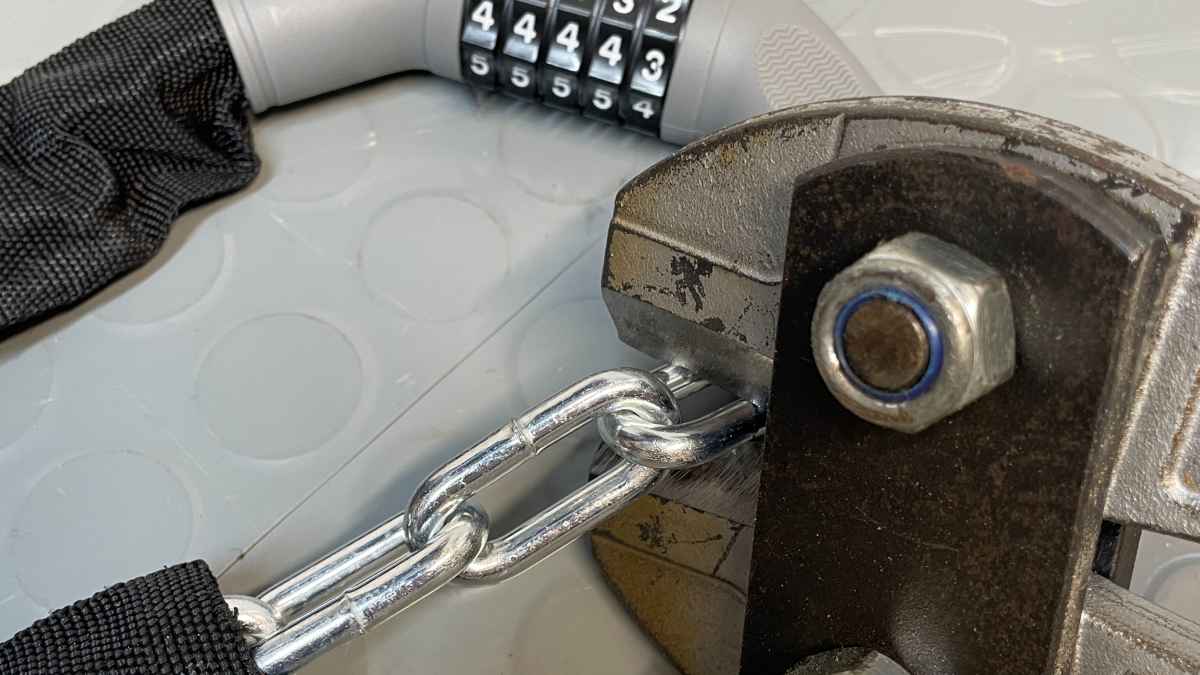
- Locking obligation: Does the insurance require a lock with a minimum value (e.g. €50) or a certain security level?
- Accessories: Are the lock, speedometer and panniers also insured?
Finally, our expert tip: If you use your bike for sport (racing, bike park), be sure to check whether "damage caused by falling" and participation in "competitions" are explicitly included. This is often excluded from standard policies.