


In this article, we use so-called affiliate links. With every purchase through these links, we receive a commission from the merchant. All relevant referral links are marked with . Learn more.
The bicycle has long been more than just a mechanical means of transport. With radar systems, GPS trackers and smart helmets, it has become an intelligent companion that actively ensures your safety. Not all gadgets are useful for every cyclist - but the selection is large enough for everyone to find the right technology for their needs. One thing is certain: the digital revolution on two wheels has only just begun.
We show you which smart gadgets make cycling safer, more comfortable and smarter:
1. radar systems: Your "eye" at the back of your head
Constantly looking over your shoulder to keep an eye on the traffic? That was yesterday. Modern radar systems have revolutionised road cycling and commuting and provide a completely new sense of safety by detecting approaching cars and displaying them on the navigation device.
Garmin Varia - the top dog
The Varia series from Garmin is considered the gold standard among bicycle radar systems and has practically dominated the market for a long time. The way it works is as simple as it is ingenious: a small sensor on the rear light detects approaching vehicles from a distance of up to 140 metres. The information is transmitted directly to your bike computer or smartphone, where you receive colour-coded warning signals: Green means the road is clear, orange signals an approaching car and red warns of vehicles approaching very quickly.

The Top model RCT716 goes one step further: it has a built-in camera that automatically saves data in the event of an accident - an invaluable advantage for preserving evidence.
The new competition: movement in the market
For a long time, Garmin was almost alone in the field, but the past year has really shaken up the radar market. Several manufacturers have launched their own systems - some with features that are even slightly ahead of the top dog.
Particularly exciting: the Sigma RECO 80 LINK from Germany. For 179.95 euros, the system recognises vehicles at distances of up to 140 metres and offers something that the StVZO-compliant Garmin RTL516 lacks: an integrated brake light function. The rear light therefore lights up brighter as soon as you slow down - a real safety advantage in city traffic. It also has a battery life of up to 15 hours.
Also Wahoo has with the Trackr Radar is a serious alternative in the programme. The device is also compatible with bike computers from other manufacturers via ANT+ and Bluetooth, recognises vehicles at distances of up to 150 metres and automatically adjusts its flashing frequency to the traffic situation. Visually, it is much slimmer than the bulky Varia - a plus point for aerodynamics-conscious racing cyclists. Due to the flashing function, it is not StVZO-compliant.
Lezyne in turn brings with the Radar StVZO Rear is also launching a combination device on the market that combines a rear light (40 lumens, StVZO-compliant) and radar (150 metre range). Waterproof to IPX7, USB-C charging socket, up to nine hours of runtime - solid key data for the price point.
In short: There is no longer no alternative to Garmin when it comes to radar systems. If you value StVZO conformity, brake lights or a different look, there are now real alternatives.
2. theft protection 2.0: invisible guards
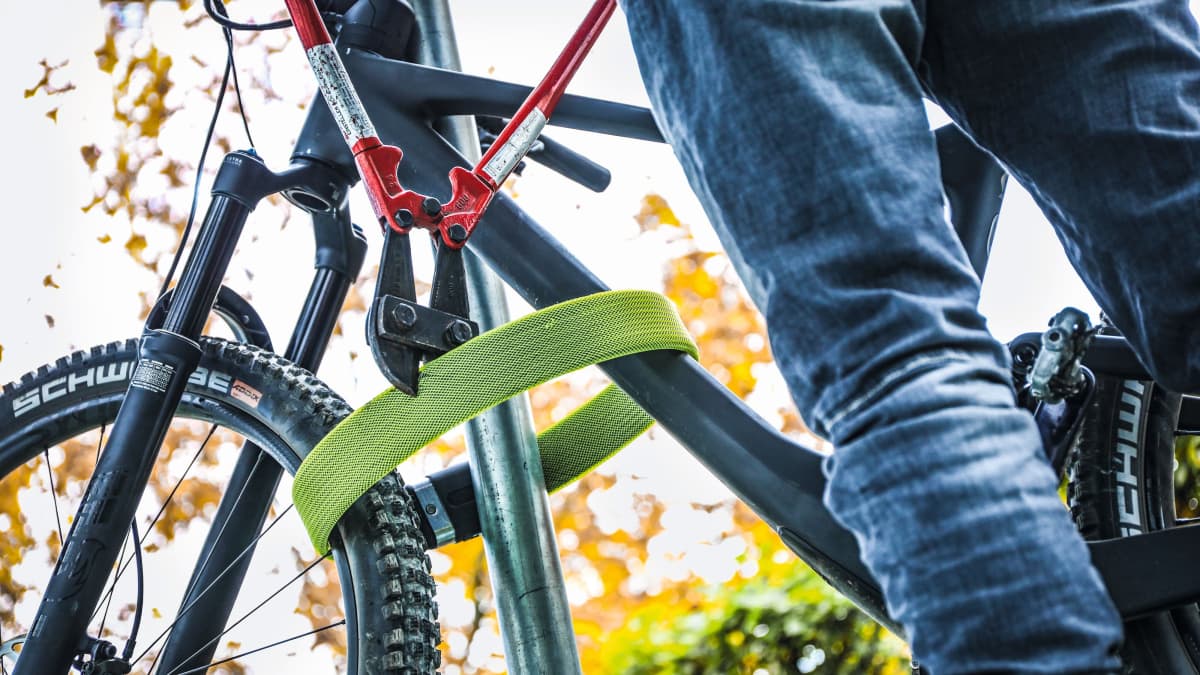
A solid lock is still part of the basic equipment - but modern trackers offer an additional layer of security and a realistic chance of finding your bike in an emergency. The safest strategy is always a Two-factor lockingMechanical (a massive lock that costs time) plus digital (a tracker that records the track in an emergency).
Apple AirTag - affordable and cleverly hidden
The small, round trackers from Apple have democratised theft protection. There are now numerous hidden mounts, especially for bicycles: under the bottle cage (for example from Muc-Off), in the tax rate or even Tubeless valves with Airtag holder. The advantage: AirTags are comparatively inexpensive and utilise Apple's gigantic "Where is?" network, which consists of millions of iPhones worldwide. The disadvantage: the location is not accurate to the metre, and a thief with an iPhone receives an anti-stalking warning - including an indication that a foreign AirTag is travelling with them.
Smart locks: convenience meets alarm
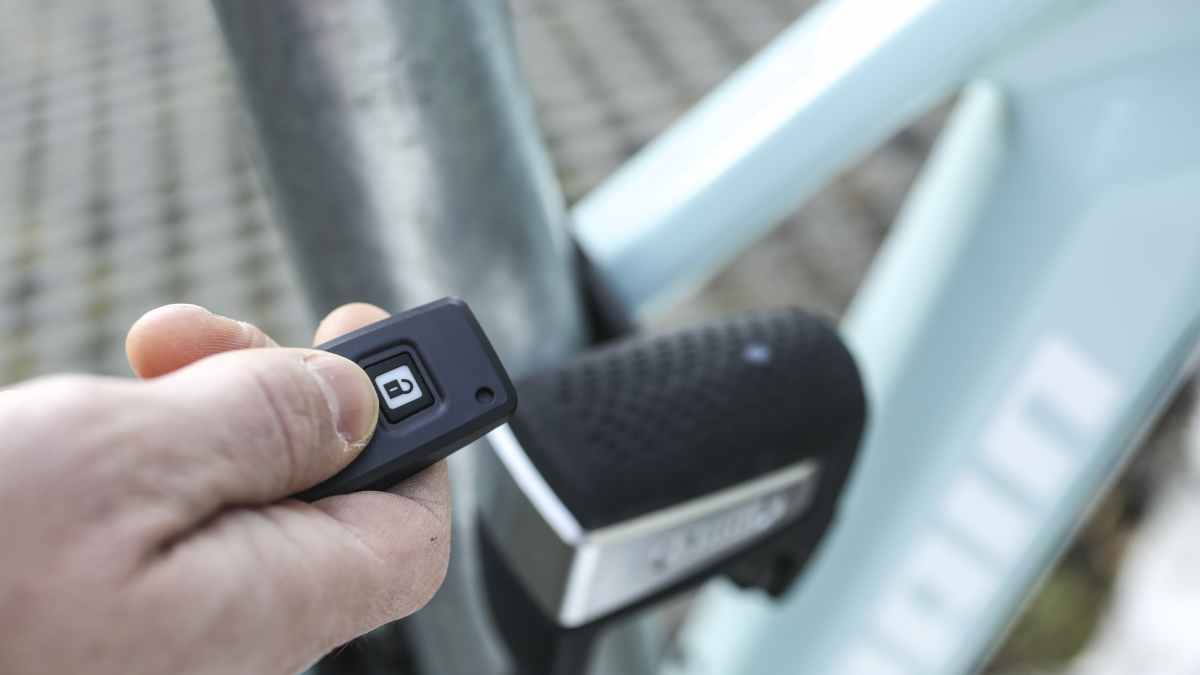
A more recent development is smart U-locks and folding locks from manufacturers such as Abus (SmartX), I Lock It or Trelock. They completely dispense with a mechanical locking cylinder - the classic weak point in picking - and are opened via Bluetooth or fingerprint. Access authorisations can be shared digitally with friends or family, making a lost key a non-issue. Many models also come with 3D sensors and a 100-decibel alarm that goes off when the lock is shaken, scaring thieves away. The only catch: the lock battery needs to be charged regularly.
In short: No system is impregnable, but the combination of a good lock and an inconspicuous AirTag in the frame significantly increases the chance of recovery. And very important: in an emergency, never go on a "manhunt" yourself - live data belongs in the hands of the police.
3. smart helmets and communication: staying connected
The bicycle helmet is evolving from a purely protective function into a multifunctional control centre - and smart audio systems that can be retrofitted independently of the helmet have recently become available.
Visibility rethought
Brands like Lumos have developed helmets equipped with bright LED strips at the front and rear. The highlight: you can activate indicators via a remote control on the handlebars - just like in a car. Even more impressive is the automatic brake light, which reacts to delays and warns following road users. An enormous safety benefit, especially in the darker months of the year.
Communication in the group
The company Senaknown from the motorbike scene, has developed Bluetooth intercom systems for bicycle helmets. This allows entire groups of cyclists to communicate over distances of up to 900 metres - no more shouting into the wind.
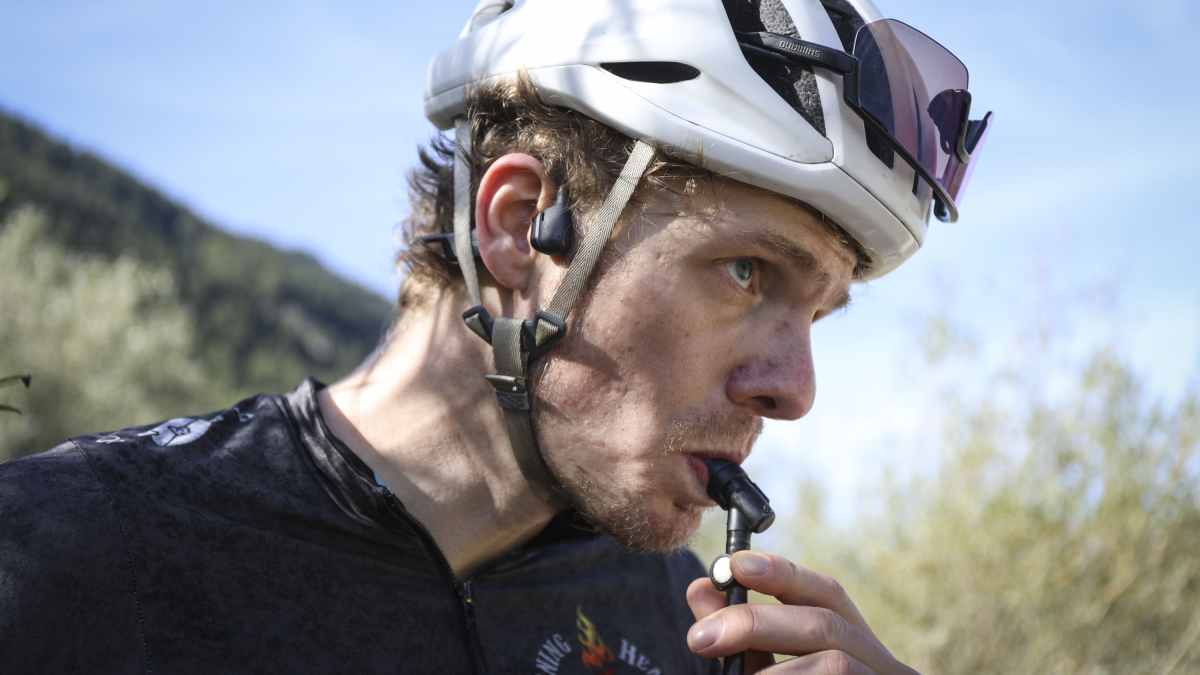
Brand new in the game is Lazer with the VeloVox, a communication and audio system developed in cooperation with Cardo. The system consists of two audio units weighing just 19 grams that can be attached to the helmet strap and are compatible with most helmets and goggles. Up to 30 riders can be connected via the two-button operation. For 160 euros, you get a complete set for two people - including up to eleven hours of battery life and IP54 protection against splash water. A special feature: the system can be controlled via Shimano Di2 shifters or STEPS e-bike systems without taking your hands off the handlebars.
To be honest, at first I thought it was completely superfluous. Then I went gravel biking with my partner, we tried out the Lazer system - and were quickly impressed. Until we lost mobile phone reception. Because that's the catch: the system works in combination with the smartphone. On remote gravel tours or in alpine valleys, the call experience can quickly end before it really begins. For urban commuter routes or group rides on well-developed routes, however, this is an exciting gadget.
Audio without earphones
A different philosophy is pursued by LivallBone-sound loudspeakers are used directly in the helmet. As with the Lazer VeloVox open-ear concept, the ears remain free of ambient noise. This is not only a safety advantage (you can still hear approaching cars), but also more relaxed from a legal point of view: In many countries, classic in-ear headphones are not permitted while driving, whereas open-ear systems are.
In short: Helmets are no longer just protective covers. Anyone who rides a lot in a group or commutes can now find solutions that sensibly combine communication, music and visibility - without sacrificing the perception of the surroundings.
4. AI sports goggles: Strava and action cam on the bridge of the nose
What long sounded like science fiction has been a reality since autumn 2025: sports glasses that think, film and talk to you. Oakley and Meta have come up with the Oakley Meta Vanguard launched the first AI performance glasses on the market that are explicitly aimed at endurance athletes.
The principle: the glasses connect seamlessly with Strava and Garmin and provide you with real-time insights directly via voice command. "Hey Meta, what's my heart rate?" - the answer comes via small LED notifications and the open-ear speakers. Important milestones are automatically recorded via the Garmin integration without you having to take your eyes off the handlebars.
There is also a 12 megapixel POV camera with a 122-degree wide-angle lens and a resolution of up to 3K - including slow motion, hyperlapse and adjustable video stabilisation. So if you don't just want to ride your tour, but also document it for your Instagram reel at home, you no longer need an additional action cam on your helmet.
The hard facts: up to Nine hours of battery lifesix hours of continuous audio playback, fast charging function (20 minutes for 50 per cent), IP67 against dust and water. The included charging case adds another 36 hours. Plus Oakley's proven PRIZM lens technology with interchangeable lenses and the Three-Point-Fit system for a stable fit even on the wildest descents. The brand ambassador is none other than Mark Cavendish.
Viewed critically: At Cyclingworld in Düsseldorf, I consciously saw someone wearing video goggles for the first time - and I have to say: I find it creepy how inconspicuously you can film with them. With smartphones, it's probably also relatively inconspicuous because it's become normal for people to hold a mobile phone in their hand. But the glasses are next level. As exciting as the technology is, whether we want a world in which everyone potentially wears a 3K camera on the bridge of their nose is a question that the industry still has to answer.

Sandra Schuberth
Editor