


In this article, we use so-called affiliate links. With every purchase through these links, we receive a commission from the merchant. All relevant referral links are marked with . Learn more.
Compact, lightweight and always to hand
Mini locks are designed for situations where the bike is left unattended for only a short time. Their main purpose is to prevent a opportunistic thief from getting hold of the bike quickly. However, these compact models offer only limited protection against organised thieves or high-quality tools. This is also consistent with the findings of more extensive bike lock tests, in which sturdy folding, U-shaped and chain locks provide significantly greater resistance.
In the test, two models secure the bike with a thin coiled cable. Four others use a metal-reinforced strap based on the principle of a lockable cable tie. Both types are fitted with a plastic sheath designed to protect the paintwork from scratches. In terms of pack size and weight, the locks are very similar, but there are clear differences when it comes to ease of use.
Combination locks with light and shadow
All six mini locks operate using a numerical code. This makes them straightforward to use, as there’s no risk of losing a key. However, the ease of use varies between the different number dials. Some models have clearly discernible detent points and easy-to-read digits. Others require almost watchmaker’s precision, particularly when setting the code or opening the lock under time pressure.
Visibility also plays a part. When BBB Minisafe The number code is easy to make out in daylight. At twilight, however, it is difficult to read. This isn’t a major problem for a quick stop on a bright afternoon, but it can be a nuisance when visiting a beer garden in the evening.
Security remains the weak point
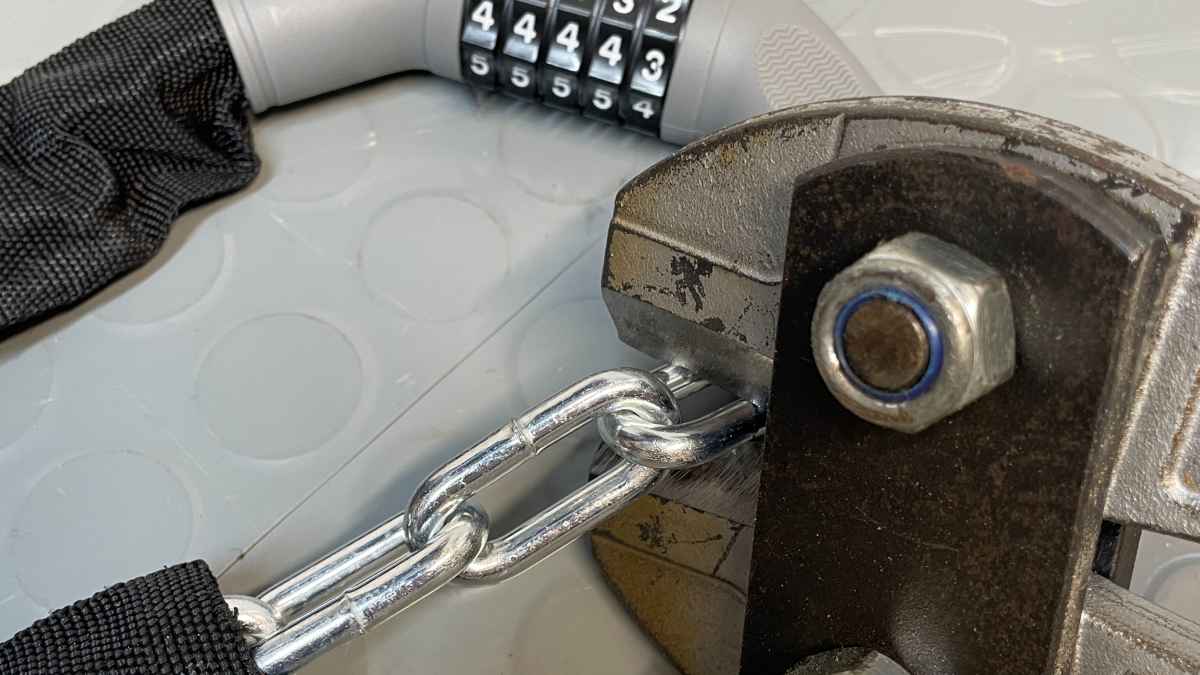
The design plays a key role in determining how much resistance a mini lock can withstand. Thin coiled cables are light and flexible, but can be cut through relatively quickly with the right tools. Metal straps are considerably more robust and, in a direct comparison, usually offer better protection for the bike. However, even they cannot reliably withstand a heavy-duty side cutter or bolt cutter.
Here’s our verdict on the BBB Minisafe
Weighing in at 57 grams, the BBB Minisafe is the smallest and lightest lock in the test. Priced at 13.95 euros (available here) It is also one of the most affordable models. However, when it comes to theft protection, it only scores two out of five stars. A small pair of side cutters can cut through the cable in no time at all. It fares better in terms of ease of use, scoring 3 out of 5 stars in this category.

Matthias Borchers
Editor
