


The latest generation of road bikes is once again pushing the boundaries of speed achieved through muscle power. In our test, a bike from the USA sets a new world record. In this test report, we present this bike and three others we have tested, and explain the current state of aerodynamic technology.
The record almost fell at customs. But only almost. Because Stromm Cycles, a three-man firm from San Juan Bautista in California, USA, was determined to take part in TOUR’s wind tunnel test at any cost. And so Ben Rothacker, one of the co-founders and chief developer, hopped on a plane to take matters into his own hands where the parcel service had failed: flying the bike across the Atlantic to Lake Constance for the final validation of the promising wind tunnel data from the US. Stromm had already tested its bike against a Cervélo S5 in the San Diego low-speed wind tunnel and claimed clear advantages for itself.
The only problem is that, for a small manufacturer, measurements carried out at their own expense do not carry the same weight as those carried out by an independent body. Only then can the credibility and comparability required to make an impact on the market be guaranteed. (see below: “The TOUR Wind Tunnel Standard“).
Aerodynamics is the name of the game in motor racing
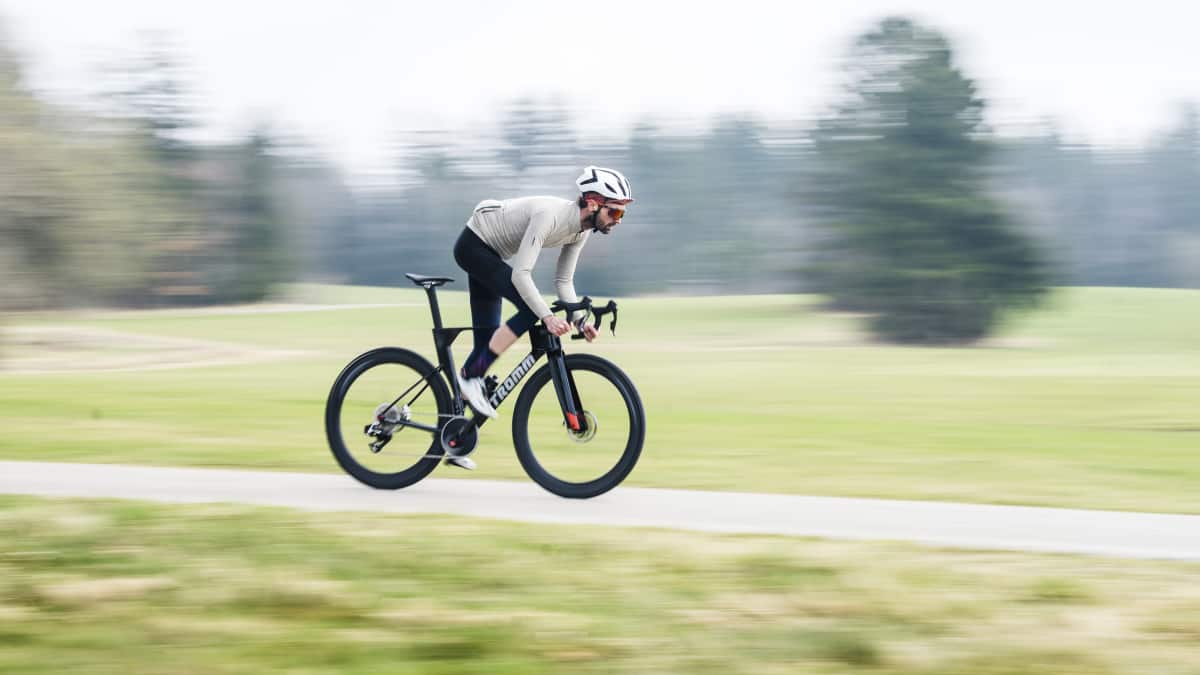
So, one Friday morning in February, Ben Rothacker – having just arrived from the US – dropped off his bike at the Windkanalpforte, adding a completely different take on the theme to our illustrious line-up of test bikes. Next to the Factor One, with its massively flared fork legs and overall burly appearance, the Stromm Raktt looks like a filleting knife. ‘Epee versus sabre’ springs to mind when thinking in terms of ‘weapons against the wind’. We’ve never seen such a sharply cut head tube before, and the fork, too, hugs the front wheel as closely as possible.

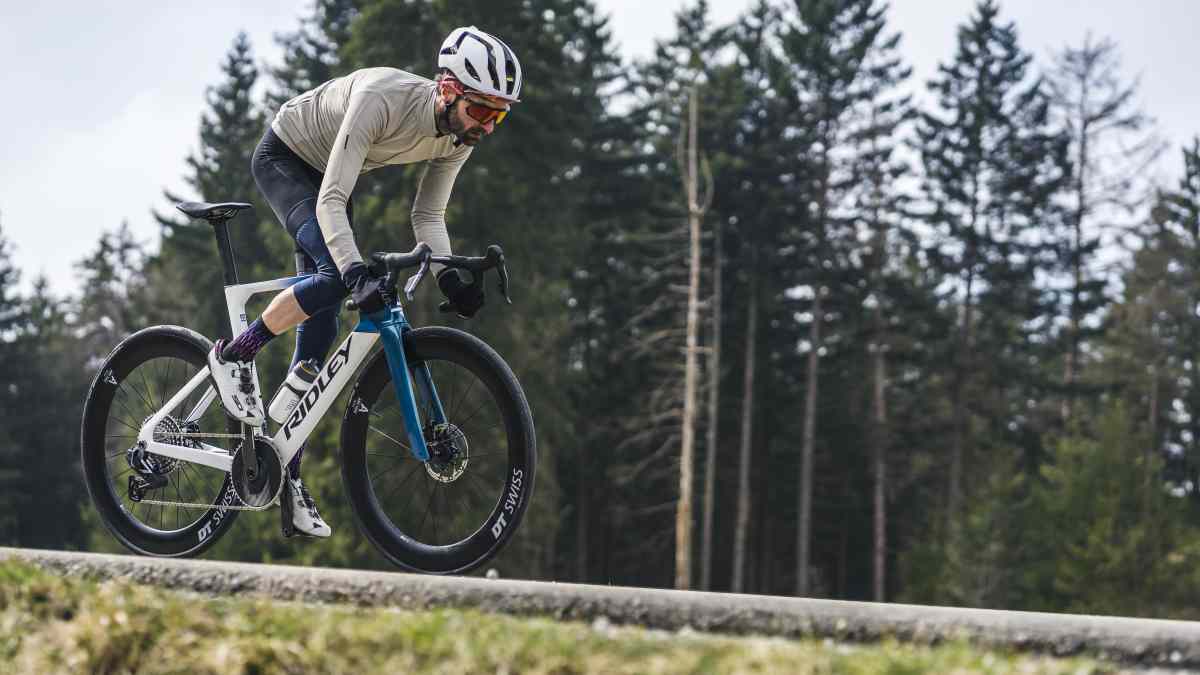
Who’ll win the race? The beefy Taiwanese-British Factor machine with a professional background or the cutting-edge speedsters from the USA? Our range of new high-end road bikes is rounded off by the the new Merida Reacto, now in its fifth edition with much more distinctive lines and a sleeker silhouette, as well as the Ridley Noah Fast, a wide-profile aero road bike from Belgium with very deep profiles.
The striking design raises expectations. For top-of-the-range bikes, we expect weighted average figures of under 200 watts. Simplon was the first manufacturer to break this barrier with the Pride 2, clocking 199 watts, and Storck followed suit with the Aerfast. Tadej Pogačar’s bike, the Colnago Y1Rs, clocked 199 watts with the TOUR tuning upgrade – a few watts better than the standard bike with less aerodynamic wheels and tyres.
Moments of truth in the wind tunnel
As the first data points appear on the screen, it becomes clear: the Stromm delivers. The bike takes off with very low readings in oblique flow, meaning it handles crosswinds very well. But things get particularly spectacular around the mid-range. The further the curve creeps across the screen, the clearer it becomes that we’re breaking new ground. In headwinds, the Stromm outperforms everything we’ve seen so far. This is where the ultra-thin head tube has the greatest measurable effect.
Perfect conditions for pedalling hard, because the faster you go, the more the angle range around the neutral position comes into focus – especially when there’s little wind. The computer spits out the result: 196.4 watts – a new world record!
But it can go even faster: as an experiment, we fitted the DT Swiss ARC 1100 65 wheelset to the bike, with 26-millimetre-wide Continental Aero 111 tyres. Result: 194.9 watts. Stromm is the first bike to dip below the 195-watt mark. However, as our test of all the bike’s other features from page 36 onwards shows, the price to pay for this is very low frame stiffness.
Rapid development
When we started measuring the aerodynamics of road bikes at GST in Immenstaad 13 years ago, figures below 210 watts were rare. These figures are now commonplace – and at the very top of the sport, the best bikes require around 7 watts less, despite having disc brakes. The difference compared to a conventional road bike, which achieves 235 to 240 watts without aero features, is striking.
This also proves that technology plays a part in making the sport ever faster. However, it is also true that what we see and measure in the wind tunnel accounts for only about half of the aerodynamic progress. Riding position and clothing, including the helmet, are further major factors in reducing aerodynamic drag. The incredible speeds achieved by the professionals are the result of numerous efforts across all areas: the aerodynamics of both rider and machine are the most significant factor, but other sources of resistance have also been further reduced: The tyres roll more efficiently, the chains run more smoothly, and the riders are much better nourished. The bottom line is that much higher speeds are achievable, and these can be sustained for longer.
A leap forward for the Merida Reacto
But back to the topic of aerodynamics: Merida has made an impressive leap forward with the Reacto. Development engineer Arne Burkhardt and his team have not only made the frame and cockpit faster, but also offer the bike ex-works in a version that consistently maximises its aerodynamic potential: Top-of-the-range wheels, an aero front tyre, an aero crankset and Classified in-hub gears combine to push the aero measurement up to 197.4 watts. In absolute terms, this is the second-best figure ever recorded for a production bike. Above all, however, the Reacto is a fully-fledged bike without any compromises. Given its outstanding result, the frame is actually not that extreme. It’s a shame that the bike won’t be competing in the World Tour in 2026, following the expiry of the Bahrain Victorious team’s sponsorship at the end of 2025. However, a return to the top flight of racing is planned for 2027.
By comparison, the eccentric Factor One is almost a little of a let-down. At 202.3 watts, the bike is also very good, but its extreme shape does not translate into a corresponding performance advantage. Its performance is on a par with other good aero road bikes such as the Cervélo S5 or the Canyon Aeroad.
We want to find out whether there is even more potential in this speed machine, so we start by swapping the standard wheels for the set-up we’d previously used to tune the Stromm. With this, the Factor One breaks through the 200-watt barrier, clocking 198.2 watts. We then remove the front derailleur to simulate a single-chainring setup, similar to Merida’s. This brings the bike’s power output up to 196.8 watts – a figure that is more in line with what one might expect from its bold design. The Factor One thus exemplifies that it is not the extremely sculpted frame that makes the difference; rather, it is the overall package that counts, much like with weight optimisation. A bike only becomes truly light when every single component is put on a diet.
Suitable for everyday use and fast: Ridley Noah Fast
The fourth Superbike review: the Ridley Noah Fast, achieves 202.3 watts in the factory set-up, putting it firmly in the ranks of good aero road bikes. However, the bike is already fitted with fast DT Swiss wheels featuring the Conti Aero 111 tyres, and it also comes with a single-chainring crankset. The Ridley therefore offers no further potential for tuning.
Aerodynamically optimised road bikes such as those presented here represent the cutting edge of a development that now stretches back a long way. As early as the beginning of the 1990s, carbon pioneer Look introduced the KG 196, an aero bike that, with its bayonet steering and flat frame sections, foreshadowed today’s developments. In 2002, Cervélo launched the Soloist, initially as an aluminium model. It was used extensively by Team CSC in the years that followed, including by long-distance breakaway specialist Jens Voigt.
What else matters in the race
These days, no rider can break away from the peloton without a sophisticated aerodynamic set-up. When Voigt’s successor, Ben Healy, launches his breakaway, everything is aerodynamically optimised. The one-piece racing suit fits without a single crease, the bike is, of course, tuned for aerodynamics, and the Irishman is wearing an aero helmet.
It is not just the breakaway riders who opt for a streamlined look. Even on mountain stages, general classification contenders wear aero kits. This is because it is now widely accepted that, in the vast majority of race scenarios, aerodynamics take precedence over low weight.
The teams include race engineers who work out for the riders which equipment strategy is most likely to bring success. However, the International Cycling Union’s 6.8-kilogramme rule, which stipulates the minimum weight of the wheels, is also likely to have played a major part in the aero trend. Modern aero road bikes come close to this limit, whilst all-rounders such as the Tarmac SL 8 can even be slightly lighter.
The relationship between weight and aerodynamics
The weight limit, which was once set arbitrarily, creates scope for aerodynamic optimisation. That was not its original aim. The rule was intended to ensure the safety of the bikes, and perhaps even to curb development costs. This has not happened. Without a weight limit, 4.2-kilo bikes would also be possible – less aerodynamic, admittedly, but so light that they could at least level the playing field with aerodynamic all-rounders and aero road bikes in the mountains.
The 6.8-kilo rule is therefore one reason why aerodynamic bikes have become so popular in racing. With the latest generation of these bikes, the idea that a single bike (such as a Specialized Tarmac) is best for all types of terrain is once again under pressure. The latest bikes are significantly faster still, which offers advantages – at least on flat to undulating terrain – that the pros are not willing to do without. However, the fastest bikes weigh more than 6.8 kilos if meticulous attention isn’t paid to the weight of the components. This once again creates scope for distinguishing between lightweight and aerodynamic bikes.
As a recreational cyclist, you don’t need to worry about that. If an aero road bike suits you and its looks inspire you, why not? But nobody needs to ride a flat-bottomed bike when there’s no clock ticking and no opponent stretching out and lying low. We have a choice of very different, fantastic road bikes that not only perform brilliantly on the road but also captivate as works of art.
The TOUR wind tunnel standard
TOUR has been carrying out tests in the GST wind tunnel in Immenstaad since 2012. Since 2013, we have established a standard test set-up using a torso-less dummy with pedalling legs. This set-up has become the globally accepted standard. Half the cycling industry makes the pilgrimage to Lake Constance to develop bikes in the ‘TOUR wind tunnel’, which is owned by GST.
Our wind tunnel testing has a long history. More than 30 years ago, TOUR testers carried out their first wind tunnel tests. But it is only with the standardisation and the unique test procedure, developed in collaboration with GST, that the test provides the guidance the industry needs: reproducible, real-world data against which everyone can measure their performance.
The problem with wind tunnels is that the absolute values vary from facility to facility. This is because wind tunnels are, after all, only approximations of reality. Structural conditions and the measurement procedure itself influence the result. That is why a weight measurement in a wind tunnel is not as comparable as one taken with a kitchen scales, which gives the same readings all over the world. Manufacturers’ figures, which have been determined using other methods, are therefore not directly comparable.
Key features of our test include the high resolution of the oblique flow, the interaction between the frame and the moving legs, and the excellent reproducibility. We have been measuring our reference bike for twelve years with a margin of error of +/- one watt; within a single measurement campaign, we are significantly more accurate (+/- 0.25 watts). The fact that the dummy has no torso enhances measurement accuracy. We focus on the interaction between the frame, wheels and legs, and exclude the rider’s posture from the equation, as our primary aim is to measure material effects. A human generates significantly more drag than the bike with dummy legs. We take this into account in our simulations and theoretical analyses.
Tips for reaching top speed
Manufacturers focus most of their efforts on aerodynamic optimisation of the frames, forks and handlebars. However, the wheels and tyres – particularly the front tyre – also contribute to the overall aerodynamics, as do the other components.
The rule is: less is more – above all, a smaller frontal area exposed to the wind increases speed.
This applies all the more to the rider, who accounts for at least three-quarters of the total drag, with only a quarter attributable to the bike. So if you lean further over your bike, keep your arms close to your body (narrow handlebars), wear aerodynamically optimised clothing and use fast wheels and tyres, you’re already realising much of your potential for speed. That’s how you really get going.
To maximise the bike’s acceleration, the frame’s silhouette should be clean and its frontal area minimal. Slim tubes are the norm, particularly at the front of the frame. The fork legs must also be thin and deep. Aero handlebars, wheels and tyres can save a total of 15–20 watts. Single-chainring drivetrains are the icing on the cake, saving a further 2–3 watts.
The latest innovation, first introduced by Hope on a track bike: flared, sheet-metal-style seat stays to stabilise the leg movement. None of the bikes in the test field feature this characteristic to any significant degree. Under current regulations, a seatstay spacing of up to 145 mm would be permitted. There is therefore still some scope for further development.
| Stromm Rakkt | Merida Reacto One | Factor ONE | Ridley Noah Fast | |
| Aero-Watt (45 km/h) | 196 W | 197 W | 198.2 W* | 202 W |
| Weight | 7.27 kg | 7.66 kg | 7.38 kg | 7.80 kg |
| Circuit | SRAM Red AXS | Shimano Dura-Ace Di2/Classified | Shimano Dura-Ace Di2 | SRAM Force AXS |
| Wheel set | Zipp 454 NSW | DT Swiss ARC 1100/650 | Black Inc Sixty Two | DT Swiss ARC 1400 |
| Price | €11,563 | €10,999 | €15,099 | €8,809 |
| TOUR rating | 2.4 | 1.8 | 2.1 | 2.0 |
| Who is it for? | Time trial type, solo rides, going flat out | All-rounder – a bike for everything | Eye-catcher, racetrack and everyday life | Individualist, best value for money |
*measured with alternative wheels and without a front derailleur
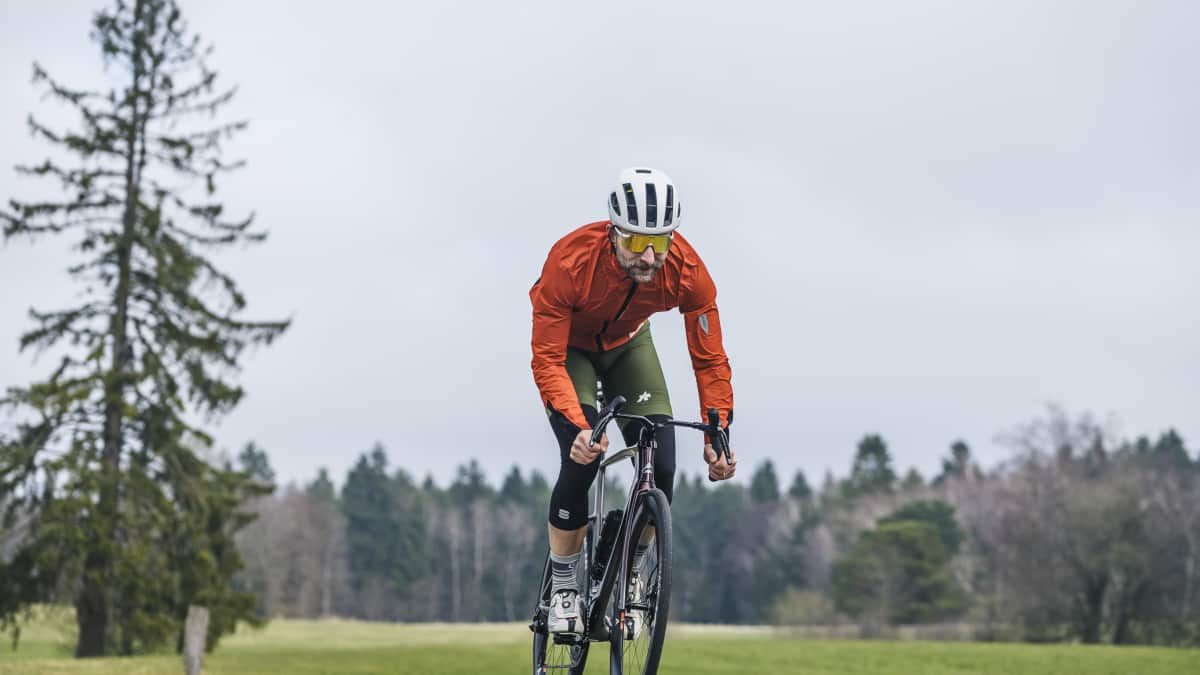
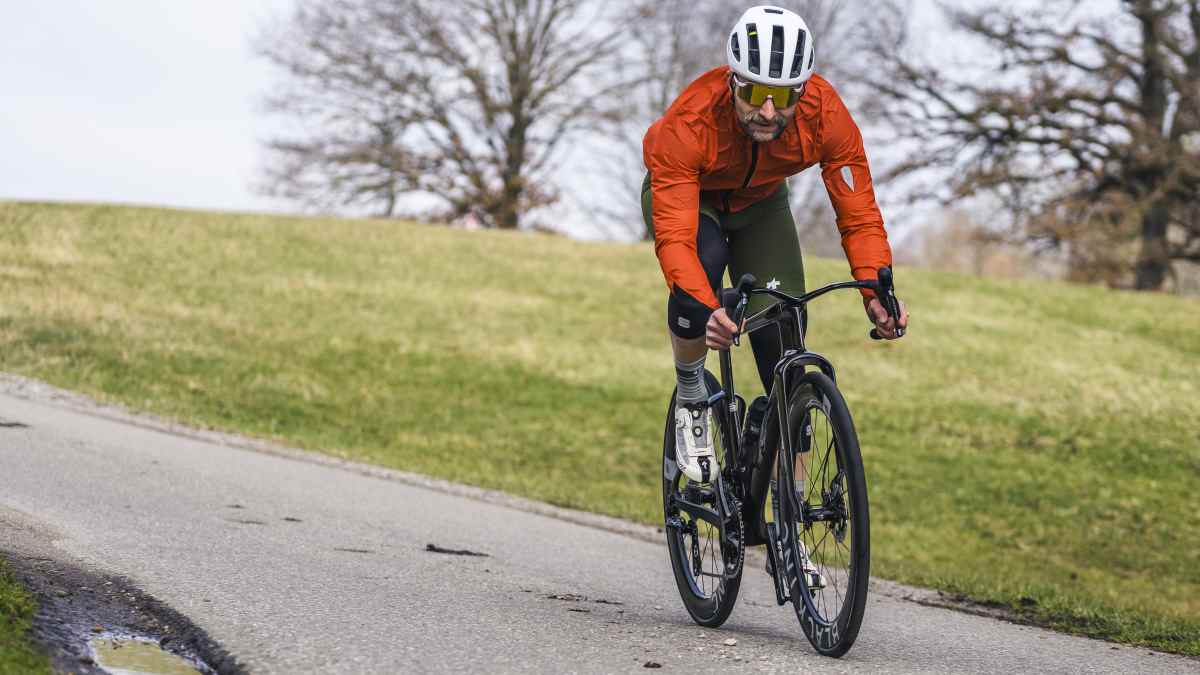
The four aero road bikes in the test

Robert Kühnen
Editor