2026 Tour de France: Preview of Stage 7: A classic sprint finish in Bordeaux
Sebastian Lindner
· 09.07.2026

Key information on Stage 7 of the 2026 Tour de France
- Friday, 10 July: Hagetmau – Bordeaux
- 175.1 kilometres, 850 metres of elevation gain (flat)
- Mountain classifications: KM 137.3 (4th category)
- Intermediate sprint: 120.2 km
- Start: 1.15 pm, Finish: approx. 5.13 pm
- Live updates and results
The route of the 7th stage of the Tour de France

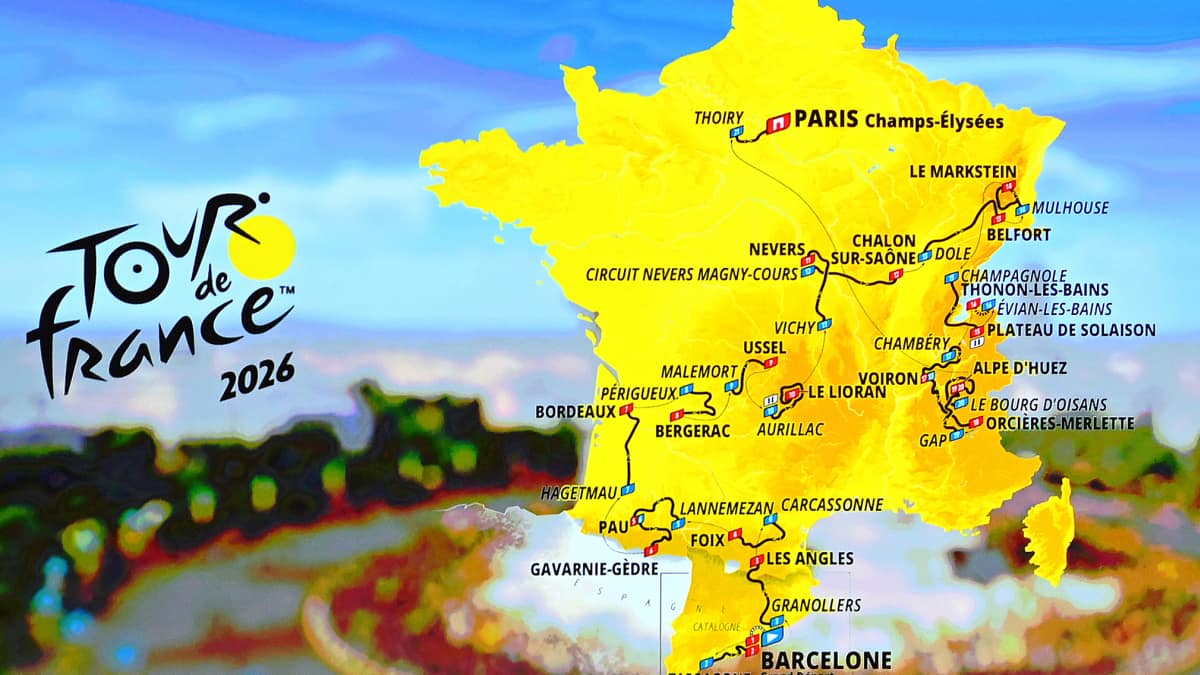
Newcomers and established favourites will face off on Stage 7. From the small starting town of Hagetmau – which features on the Tour’s itinerary for the first time – the route heads straight north to Bordeaux, which is serving as a start or finish location for the 82nd time. Only Paris has hosted the Tour de France more frequently. The route to the French metropolis is completely flat. There are just 850 metres of climbing over the 175 kilometres. No other stage – apart from the time trials – features less climbing, not even the finale in Paris.
The entire day’s route takes the riders through rural France; towns are almost entirely avoided, with Mont-de-Marsan – 25 kilometres in, with a population of just over 30,000 – being the only major settlement they pass through. Just as there are no major towns, there are also no significant topographical challenges. However, there is a 4th-category climb about 40 kilometres from the finish. A 1,200-metre ascent with an average gradient of 4.4 per cent must be tackled there.
The rest of the day’s stage takes place almost at sea level. Bordeaux lies just six metres above sea level. The final kilometres of the day run alongside the Garonne, and the sprint for the day’s victory takes place right on the riverbank, on a slightly curved home straight almost 4,000 metres long.

A sporting analysis of Stage 7 of the 2026 Tour de France
For the second time in this tour, it’s the sprinters’ turn to shine. The sprinters last faced off in Bordeaux in 2023, with Jasper Philipsen emerging victorious on that occasion. That could well be the case again this time; the Belgian certainly goes into the stage as one of the favourites.
There is, however, little doubt that the sprinters will decide the winner amongst themselves. The stage offers no opportunities for breakaway riders; the only chance of success would be if the teams of the fast men seriously miscalculated. However, as there are plenty of other teams besides Philipsen’s Alpecin – Premier Tech who are banking on the sprinters, foremost among them Soudal Quick-Step with Tim Merlier, the likelihood of something going wrong is extremely low.